Free patterns are one of my favorite ways to keep stitching playful. If you are new, they let you practice without the pressure of “wasting” a fancy kit. If you have been stitching a while, they are perfect for quick gifts, sampler hoops, and those nights when you just want something soothing to work on.
This list focuses on legitimate sources: brands, designers, publishers, and well-known craft platforms that share patterns (or link to them) with clear credit. A few entries are directories, roundups, or inspiration libraries rather than traditional pattern shops, and I call that out where it matters so you know what you are getting.
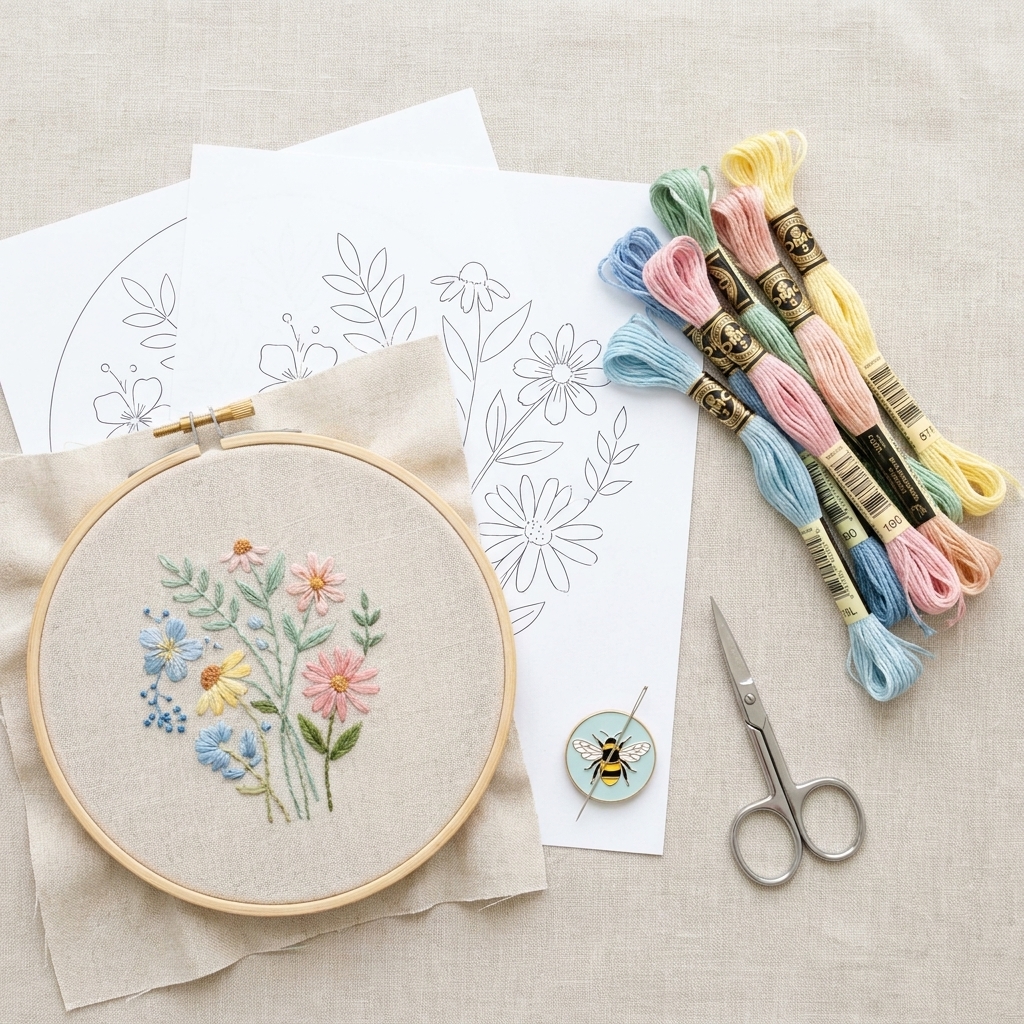
Before you download
- Check the usage terms. Many free patterns are for personal use only. If you plan to sell finished pieces, look for explicit permission.
- Look for a clear designer or publisher. Reputable sites credit the artist and host the download on their own domain or a known platform.
- Confirm what you are getting. Some downloads include a stitch guide, thread colors, and placement. Others are line art only, which is totally fine, just know what you will need to decide yourself.
- Know the file type. PDFs usually print to scale more reliably. JPGs and PNGs are easy to resize, but you will want to set dimensions before printing so nothing gets stretched.
My practical tip: I save patterns into a “Stitch Later” folder and include a text file with thread notes, the rights or usage notes, and the original link. Future me is always grateful.
15 best sites for free modern patterns
1) DMC (Free Patterns)
DMC’s free pattern library is a classic starting point. You will find a mix across crafts, including hand embroidery and cross stitch. Many downloads are printable PDFs and typically include DMC color numbers, which makes shopping your stash a lot easier. Availability can vary by country site, so if you cannot find a pattern you saw shared, try switching to your region’s DMC site.
- Best for: printable PDFs, floss suggestions, florals and quick motifs
- Quick navigation: filter by craft so you land in embroidery or cross stitch
2) Brother Creative Center
Brother’s Creative Center leans heavily toward printable crafts and templates, but it can still be useful for hand stitchers. The sweet spot is simple, transfer-friendly line art (think motifs and outlines) that you can trace onto fabric for a fast little hoop or a monogram-style project. Some projects skew machine-focused, so I treat this as a template source first, and a hand embroidery pattern library second.
- Best for: printable templates and quick, giftable motifs
- Watch for: projects written for machine embroidery, not hand stitching
3) Sublime Stitching (Free Stuff)
Sublime Stitching is known for playful, modern motifs. Their free downloads are limited compared to their paid transfers, but the freebies are usually beginner-friendly and fun to stitch.
- Best for: quirky icons and simple line drawings
4) Cutesy Crafts (Free Embroidery Patterns)
Cutesy Crafts publishes a large set of free patterns with approachable guidance. The style leans cheerful and homey, with lots of modern florals and small motifs.
- Best for: beginners who want a pattern plus instructions
- Nice bonus: lots of small designs for patches and mini hoops
5) Sarah Hearts (Free Embroidery Patterns)
Sarah Hearts is a reliable stop for bright, happy designs with a modern craft vibe. The patterns are typically clean and bold, which makes them great practice for satin stitch, backstitch, and simple fills.
- Best for: cute motifs and quick wins
6) Craftsy Blog (Posts and pattern links)
Craftsy’s blog is more of a browsing hub than a single pattern library. Over time, Craftsy has shifted its model, so the experience can vary from post to post. I use it as a way to discover project ideas and designers, then follow links to the original source. If a download requires a login, subscription, or a checkout step, you will usually find out quickly.
- Best for: finding project ideas and designer links
- Tip: click through and confirm the download is truly free before you plan a whole weekend around it
7) LoveCrafts (Free Patterns)
LoveCrafts hosts patterns across crafts, and the free section tends to be especially strong for cross stitch charts. You can also find some surface embroidery designs depending on what is currently featured and how you filter. Some downloads may prompt you to create a free account to access the file.
- Best for: modern cross stitch charts and a mix of designers
- Tip: use filters and double-check the craft type before downloading
8) Gathered (Mollie Makes and more)
Gathered is packed with crafty projects, and their free embroidery patterns tend to be contemporary and seasonal. Many downloads include step photos and stitch suggestions, which is helpful if you learn visually. As always, click through and confirm whether a specific download is truly free or tied to a subscription offer.
- Best for: modern surface embroidery projects and holiday makes
9) Needlepointers (Embroidery directory)
Needlepointers is a directory, not a single publisher. It is useful when you want to browse themes quickly, but treat it like a map that points you to other sites. Always click through, verify the designer’s original posting when possible, and confirm the usage terms on the destination site.
- Best for: browsing categories quickly
- Sanity check: confirm the original source and usage terms on the destination site before you download
10) The Metropolitan Museum of Art (Open Access)
Not a pattern site, but hear me out. The Met’s collection includes high-resolution images of textiles, prints, and decorative arts that make beautiful embroidery inspiration. You can trace motifs, borders, botanicals, and symbols into your own pattern. Rights are item-level, so check the rights statement on each record and filter for Open Access when possible. Even within the same collection, you cannot assume the same reuse status.
- Best for: building your own patterns from historic motifs
- Tip: use the Open Access filter and save the rights info with your download
11) New York Public Library (Digital Collections)
NYPL’s digital collections are a strong source for artwork, including botanical drawings, ornamental letters, and decorative borders. These work beautifully for minimalist outline embroidery or for designing a modern sampler. Rights and reuse labels vary per item, so check the rights statement on each record, and look for markers such as public domain or no known restrictions when available. Again, it is item-level, not collection-level.
- Best for: monograms, botanicals, ornamental motifs you can transfer
- Quick check: confirm the rights statement per item before you reuse an image
12) Victoria and Albert Museum (Collections)
The V&A collections include textiles, pattern books, and decorative arts that are perfect for motif hunting. It is especially good for florals, repeating designs, and stylized shapes that translate into satisfying stitching. As with any archive, reuse permissions vary per object, so confirm the rights note on each record before you reuse an image beyond personal crafting. Do not assume a single rights label applies to the entire museum site or even a single collection.
- Best for: repeats, florals, and pattern inspiration
- Tip: search within textiles and prints for the most stitchable finds, then check rights per record
13) Library of Congress (Digital Collections)
The Library of Congress has a deep archive of imagery, including florals, folk motifs, and decorative prints. If you enjoy designing your own pattern from a reference image, this is a rabbit hole worth falling into. Rights guidance varies per item, so look at the record’s rights information and prioritize items labeled public domain or similar when you want fewer restrictions. Even inside the same collection, rights can differ.
- Best for: vintage motifs that trace into clean line art
- Quick check: confirm rights per record, even within the same collection
14) Aunt Martha’s (Free Patterns)
Aunt Martha’s leans traditional, but many small motifs stitch up in a surprisingly modern way if you choose fresh colors and keep the fills simple. I love these for tea towels, napkins, and upcycled vintage linens.
- Best for: simple transfers, kitchen linens, quick motifs
15) Canva (Line art elements you can export)
This is not a pattern publisher in the traditional sense, but Canva’s line art elements can be arranged into your own simple embroidery patterns, then exported and printed. Think minimalist sprigs, icons, and modern shapes you can combine into a hoop design. Licensing is nuanced and can change by element and plan, so check the license for each element you use, especially if you sell finished work. Also, a “free” element does not automatically mean you can resell it as a standalone pattern file or bundle, even if you rearranged it. Even when commercial use is allowed, reselling the elements themselves as pattern downloads is often restricted, so read the asset terms carefully. And avoid anything that looks like a logo, brand mark, or trademark-style icon.
- Best for: making your own modern pattern fast
- Important: verify licensing per element and be extra cautious with any commercial use
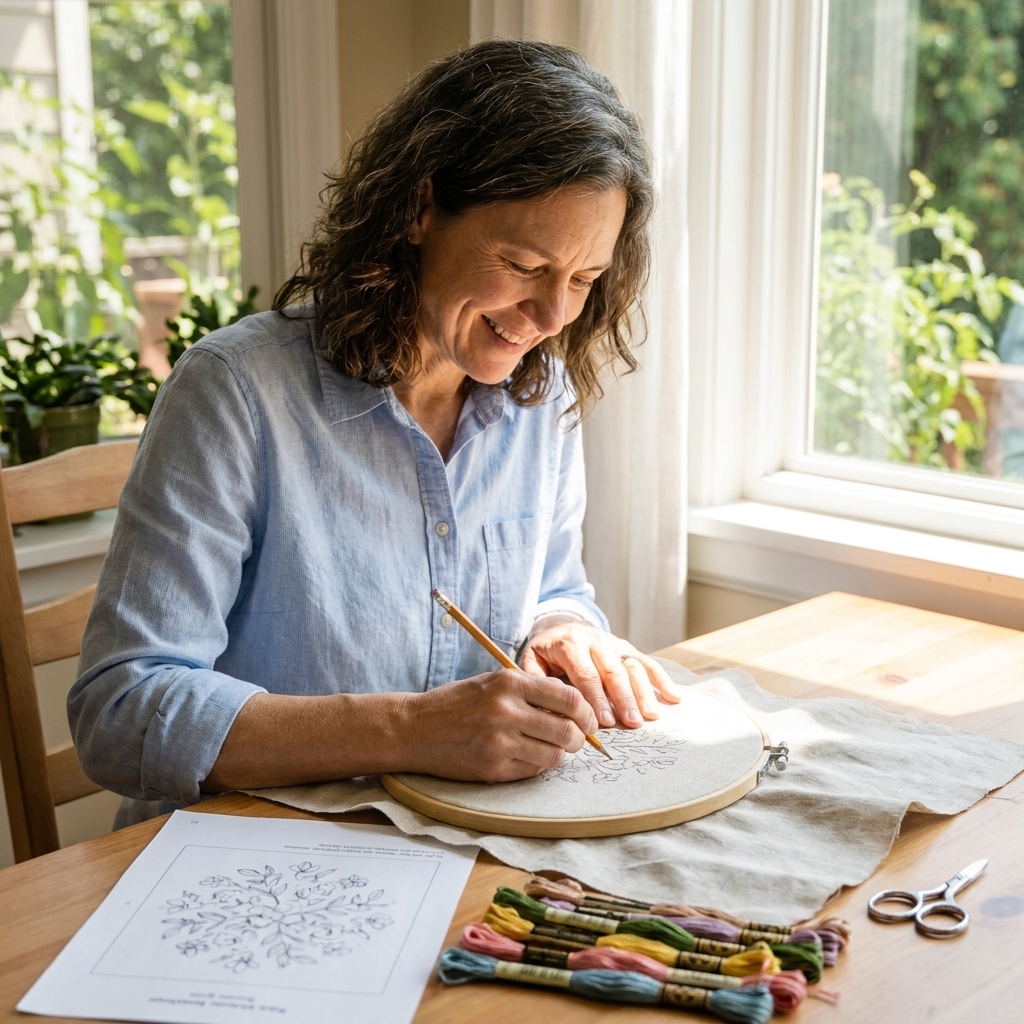
Printing and sizing
If a pattern looks perfect on screen but prints tiny, you are not alone. Here is what helps most:
- Print at 100% or “Actual size.” Avoid “Fit to page” unless the designer specifically suggests it.
- Look for a test square. Some PDFs include a 1 inch or 5 cm test square. If it is off, your printer scaled the page.
- Check hoop size before transferring. Measure the inner hoop opening, then scale the pattern to match.
- Do a test print. I print on plain paper first, then hold it behind my fabric to confirm the scale.
- Resize without distortion. If you are scaling an image file, lock the aspect ratio so the design does not stretch wider or taller.
Regular printer paper is totally fine for most patterns. If you like making sturdier templates for repeated use, freezer paper can be handy, but it is optional.
If the download is an image file (like a museum motif), drop it into a document, set the size you want, and print from there.
Easy transfer methods
Most modern patterns are clean line drawings, which are wonderfully beginner-friendly. Pick one transfer method and keep it simple.
My go-to options
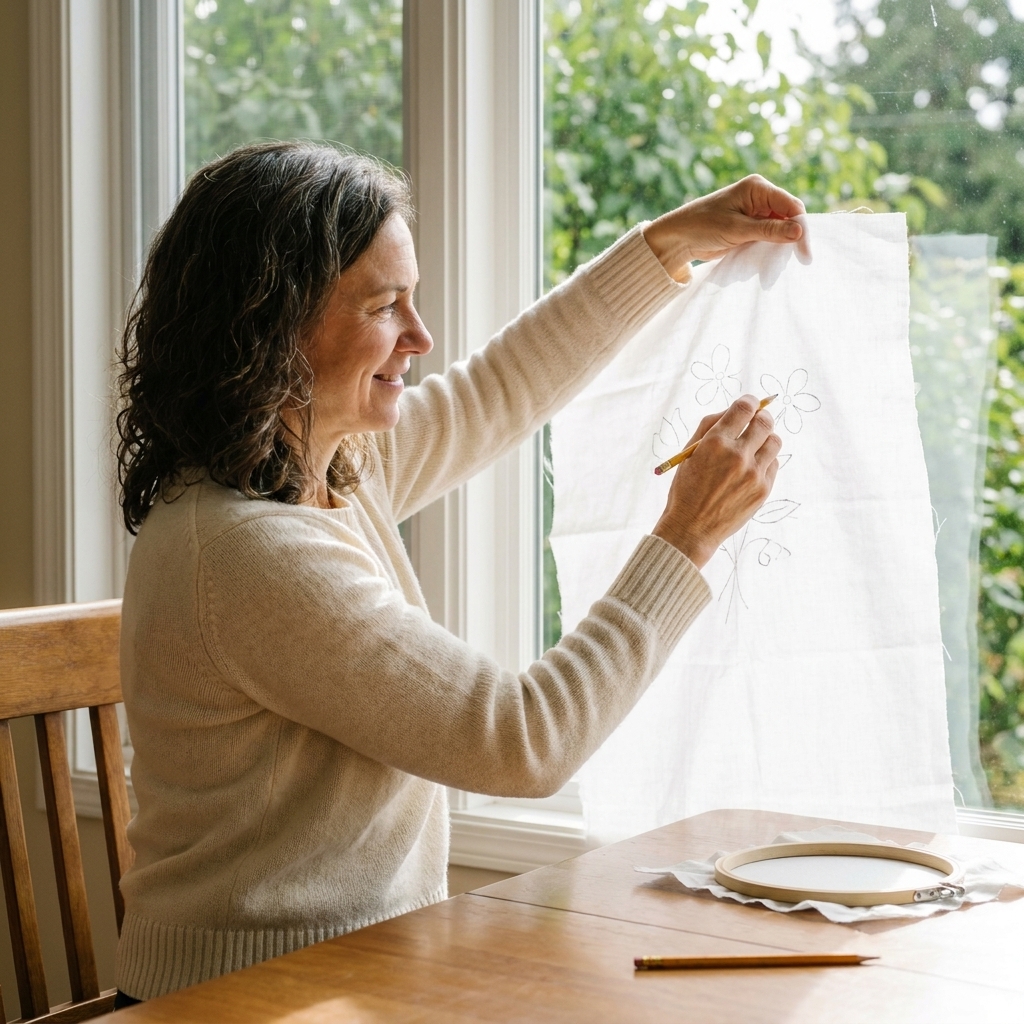
- Light source tracing: Tape the pattern to a bright window or use a light pad, then trace onto your fabric with a water-soluble pen. This works best on light fabrics that let light through, especially tighter weaves where the lines stay crisp.
- Dressmaker’s carbon paper: Great for darker fabrics or thicker weaves. Transfer with a stylus or blunt pencil, then stitch over the lines.
- Iron-on transfer pencil: Trace the design onto paper, then iron it onto fabric. This is handy for towels and clothing, but test first.
If you want one simple rule of thumb, here it is: water-soluble pens are easiest on light fabrics, while chalk pencils or transfer paper tend to behave better on dark fabrics.
Friendly reminder from someone who has absolutely learned this the hard way: always test your marking tool on a scrap of fabric first.
FAQ
Are free embroidery patterns actually okay to use?
Yes, as long as they are published by the designer or a legitimate distributor, and you follow the usage terms. “Free” does not automatically mean “free for commercial use,” so check the fine print if you plan to sell finished pieces.
Can I turn a hand embroidery pattern into a cross stitch pattern?
Often, yes. Simple line art can be charted by hand on graph paper or in cross stitch software. For crisp results, choose designs with clear shapes and avoid super thin, wispy lines unless you are comfortable simplifying.
What if an archive image is not a pattern?
That is normal. Museums and libraries are great for reference images you can trace and adapt into your own embroidery pattern. Keep your design beginner-friendly by simplifying details and focusing on bold outlines. Always check the rights statement on each record since labels like Open Access, public domain, or no known restrictions are item-level and cannot be assumed across an entire collection.
One last cozy tip
If you are overwhelmed by options, pick just one small motif and stitch it in two colors. Modern embroidery looks especially lovely when you keep it simple, and your hands get the calming rhythm either way. And if your thread tangles, welcome to the club. My couch is basically a tiny confetti field of thread snippets at this point.