If you are standing in the craft aisle holding a hoop in one hand and Aida cloth in the other, you are in very good company. Embroidery and cross stitch are cousins, not twins. They use similar tools, but they feel different to stitch, they teach different skills, and they scratch different creative itches.
I learned them in the messiest order possible, made all the classic beginner mistakes, and still ended up completely smitten with both. So let’s make this simple. What are you actually doing with the needle? What do you need to buy, and which one will feel easier and more fun for you right now?
The quick difference
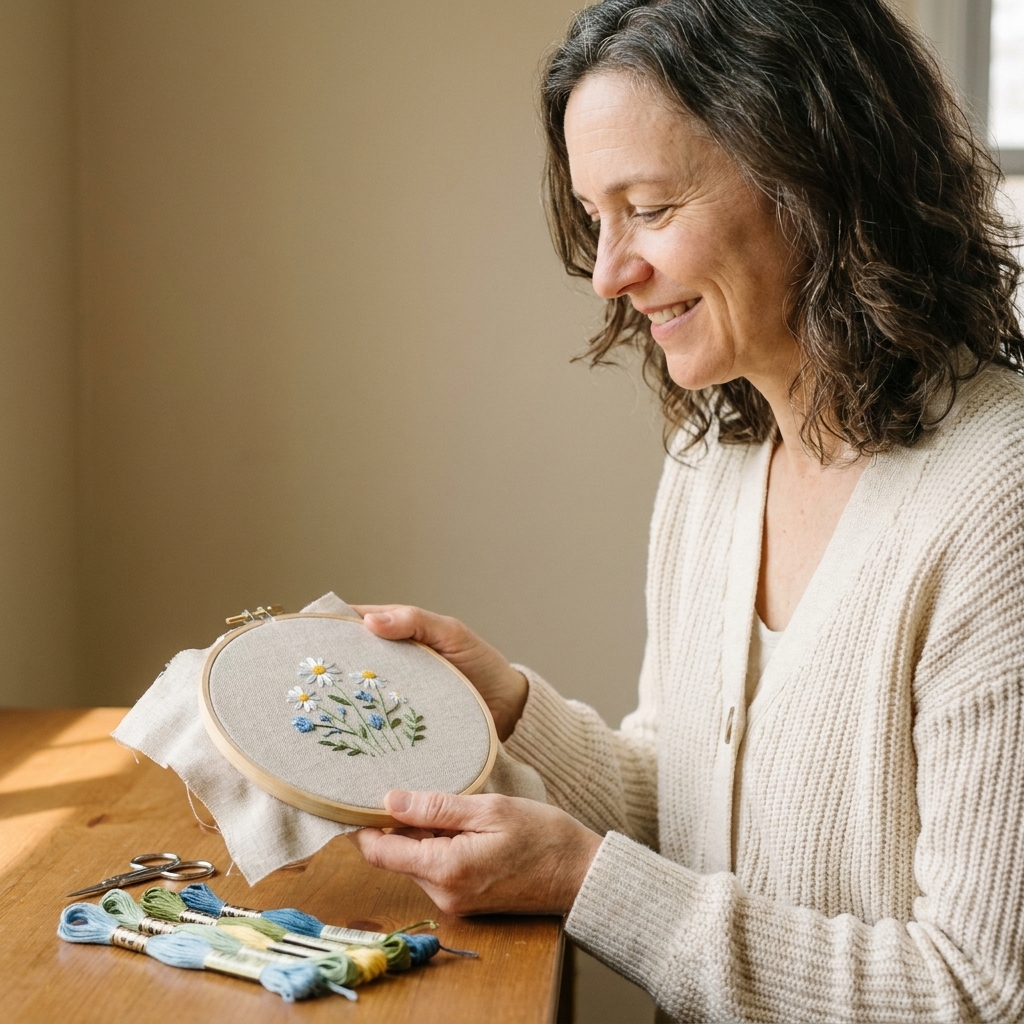
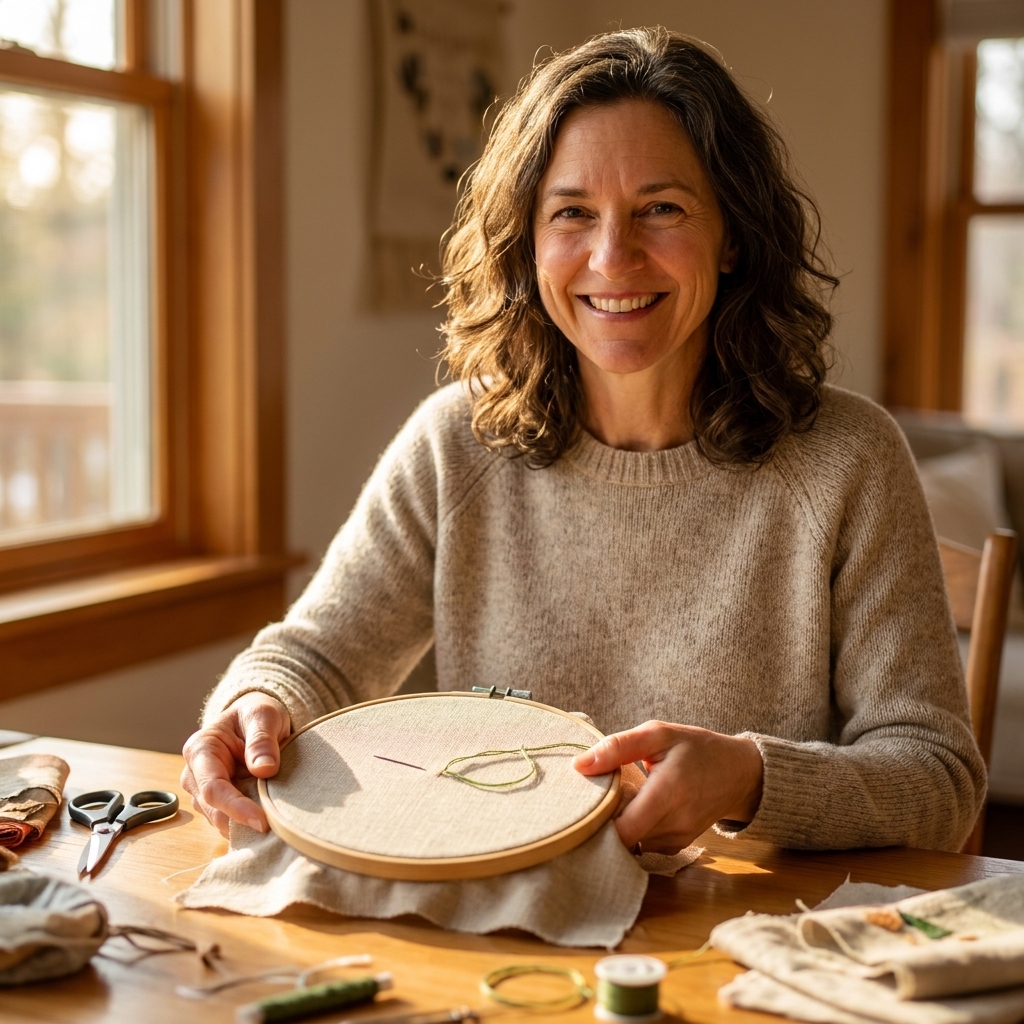
Embroidery is free-form stitching on fabric. You draw or transfer a design, then “color it in” with different stitches and textures.
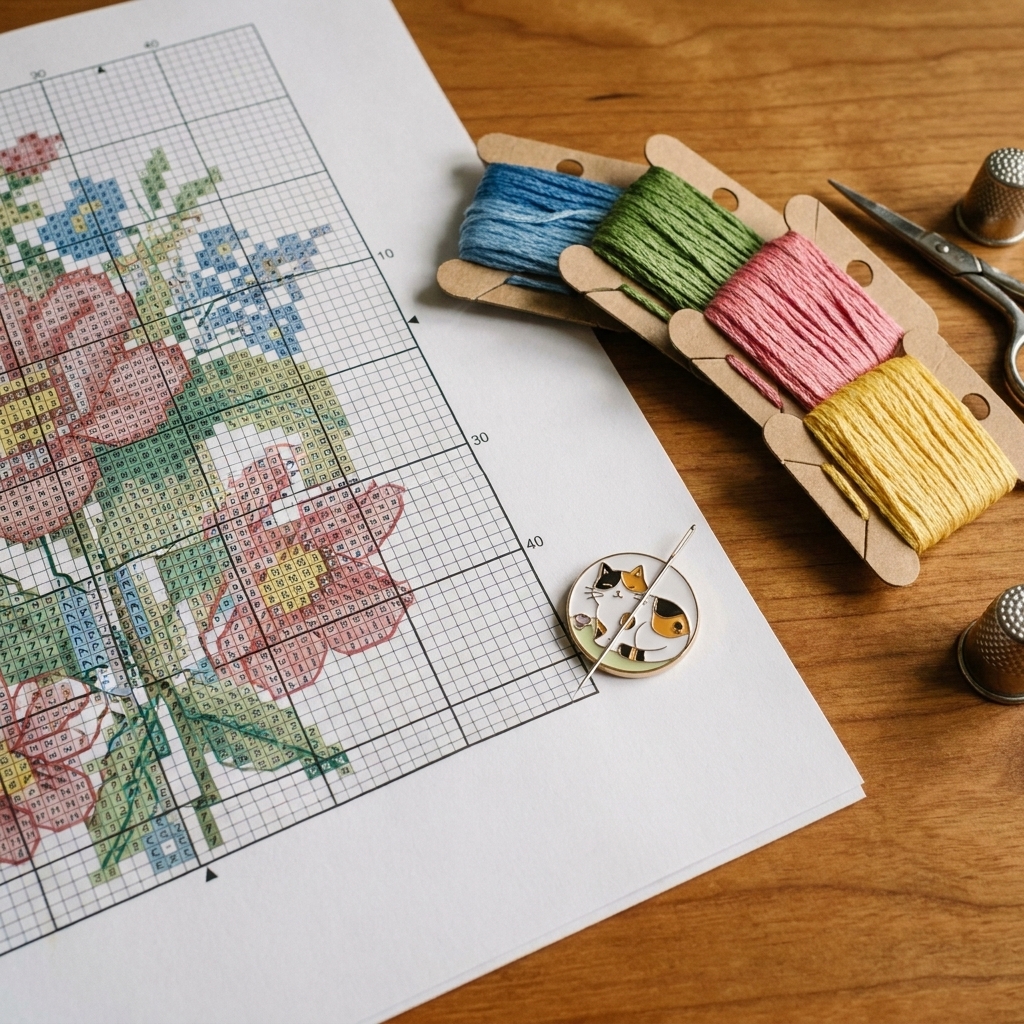
Cross stitch is counted stitching on a grid. You follow a chart and make X-shaped stitches, one square at a time, to build a picture like pixel art.
- If you like structure and clear steps: cross stitch often feels calmer and more predictable.
- If you like improvising and texture: embroidery often feels more expressive and artsy, even when you are following a pattern.
Technique
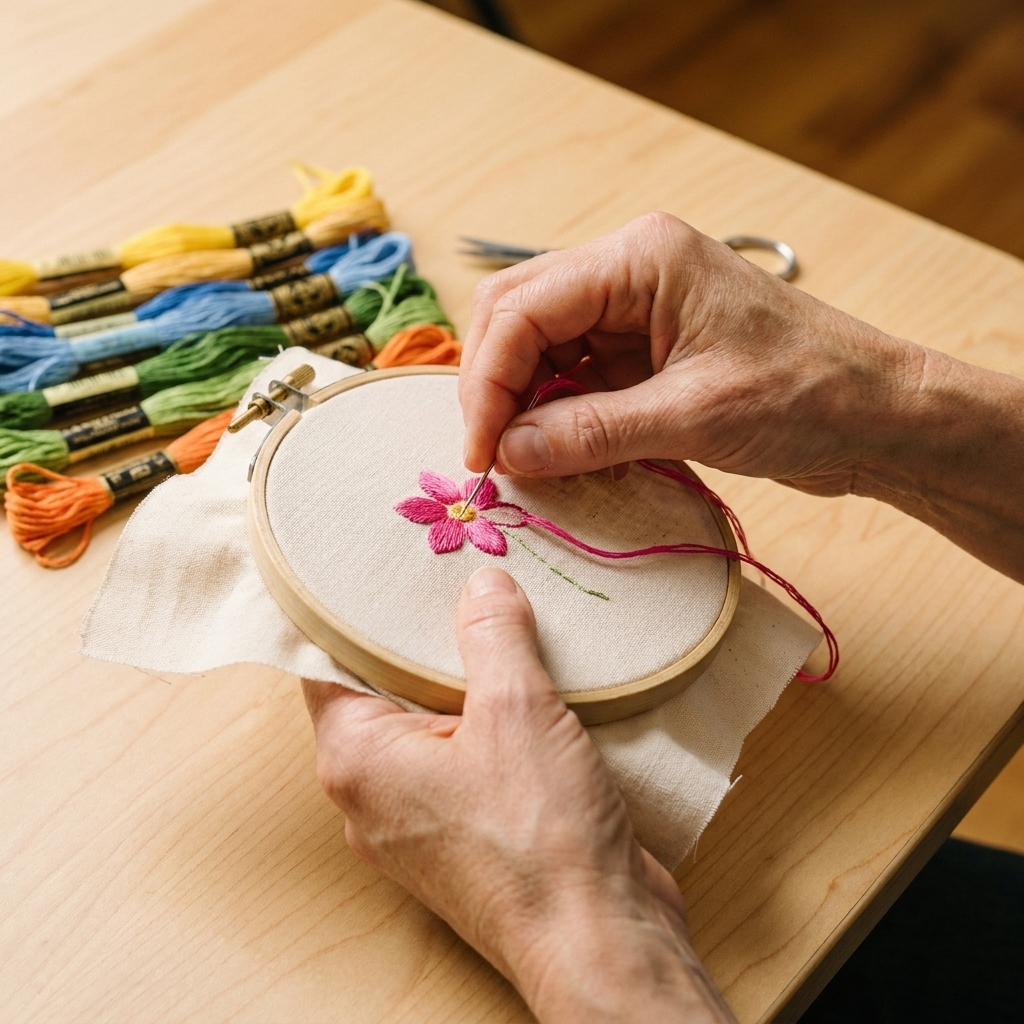
How embroidery works
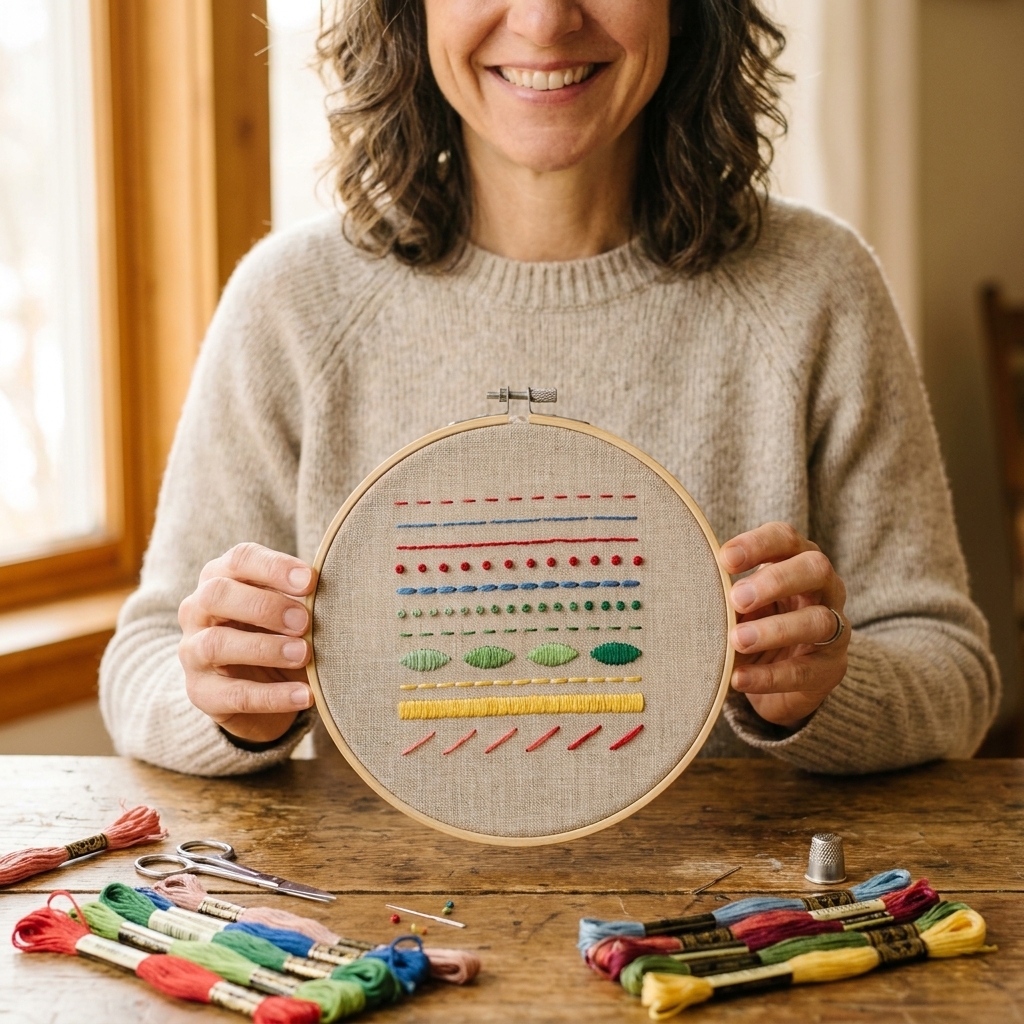
Embroidery is a collection of stitches. The most beginner-friendly projects usually rely on a small “starter set” of stitches, like:
- Backstitch for outlines and lettering
- Satin stitch for smooth filled shapes
- Split stitch for softer outlines
- French knots for dots and texture
- Lazy daisy for quick petals and leaves
Because you are not stitching on a strict grid, embroidery asks you to make judgment calls: stitch length, direction, spacing, and how to fill an area neatly. The upside is that it is forgiving. Slightly uneven stitches rarely ruin a design. They just look handmade, which is the whole point.
How cross stitch works
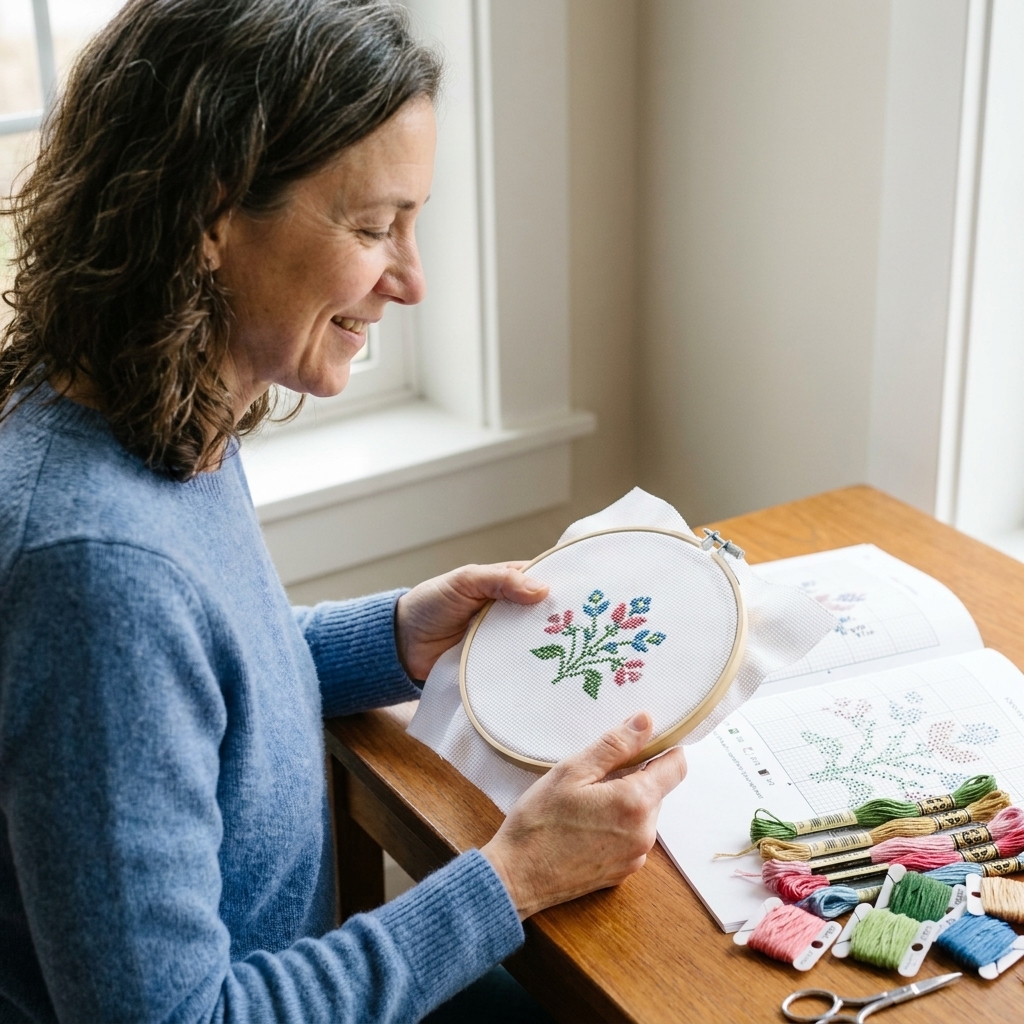
Cross stitch is built primarily from one main stitch: the X. Many patterns also add details like backstitch, half-stitches, or French knots, but you can absolutely start with a simple chart that uses only full X stitches.
You usually work it on Aida or evenweave/linen fabric, which has a clear grid. Instead of transferring a drawing, you follow a chart that tells you:
- which color to use
- where each stitch goes on the grid
- how many stitches wide and tall the design is
Your biggest technique decisions are about counting and consistency: keeping your X stitches facing the same direction, and placing them in the right squares. It can feel wonderfully meditative if you enjoy methodical progress.
Materials
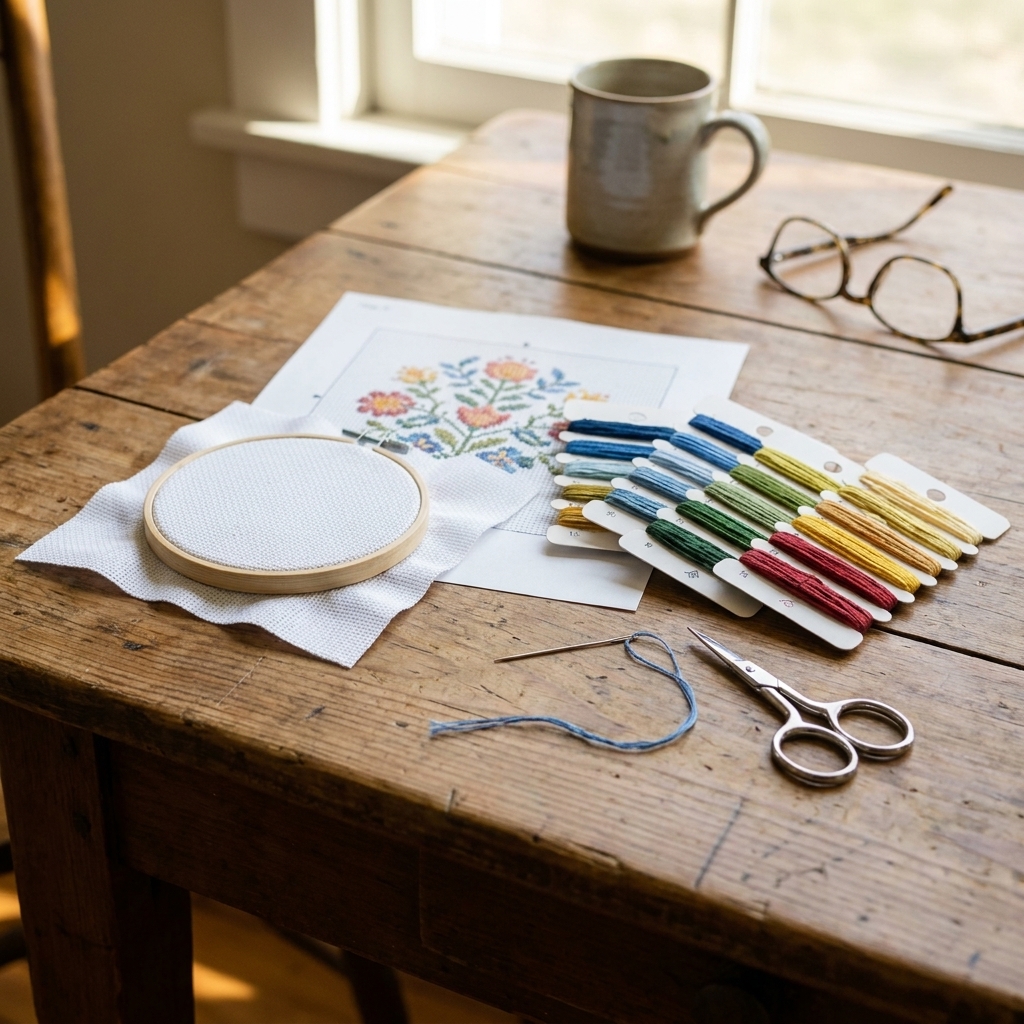
Good news: both crafts share a lot of supplies. You do not need a huge shopping spree to start.
Shared basics
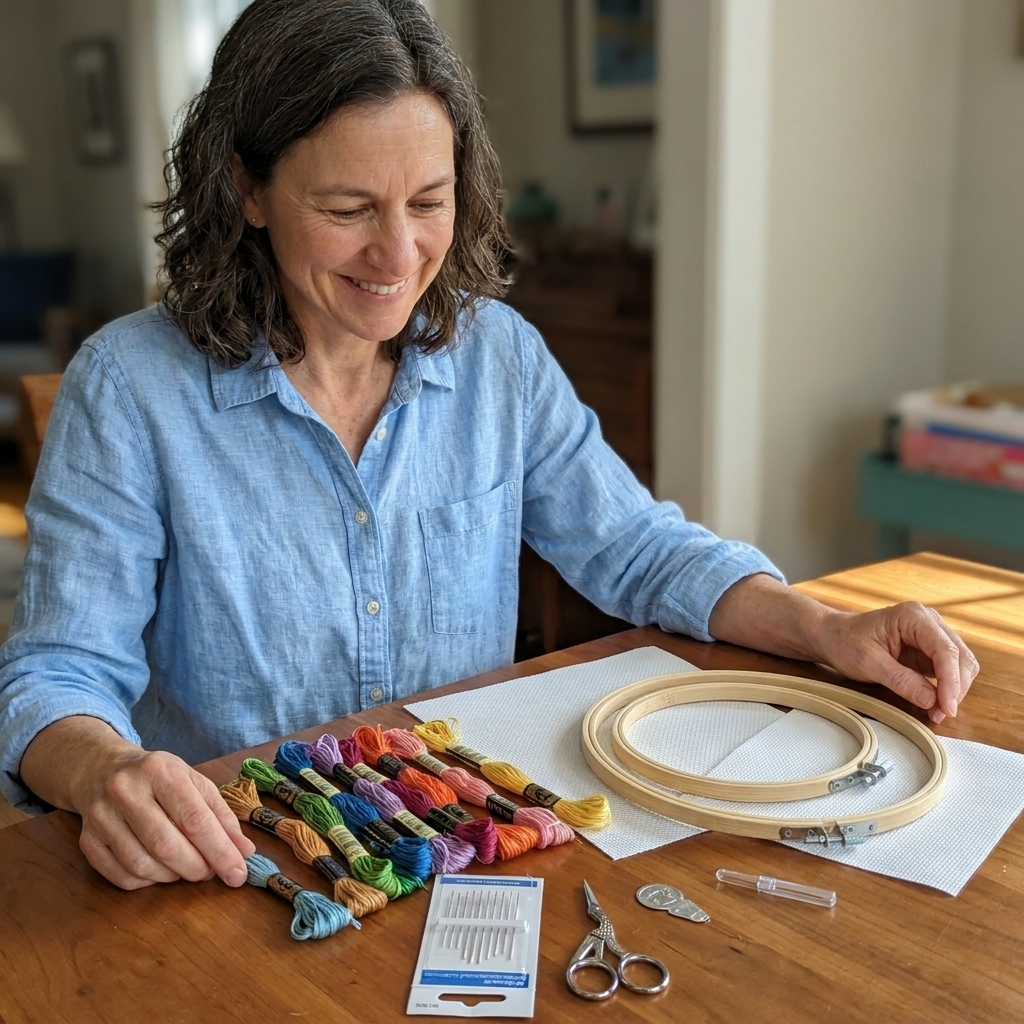
- Embroidery floss (DMC is a classic for a reason)
- Needles (different types, but inexpensive)
- Scissors (tiny snips are surprisingly joyful)
- Hoop (common in embroidery and also widely used in cross stitch, though it is still optional)
- Good light (seriously, it counts as a supply)
Embroidery-specific essentials
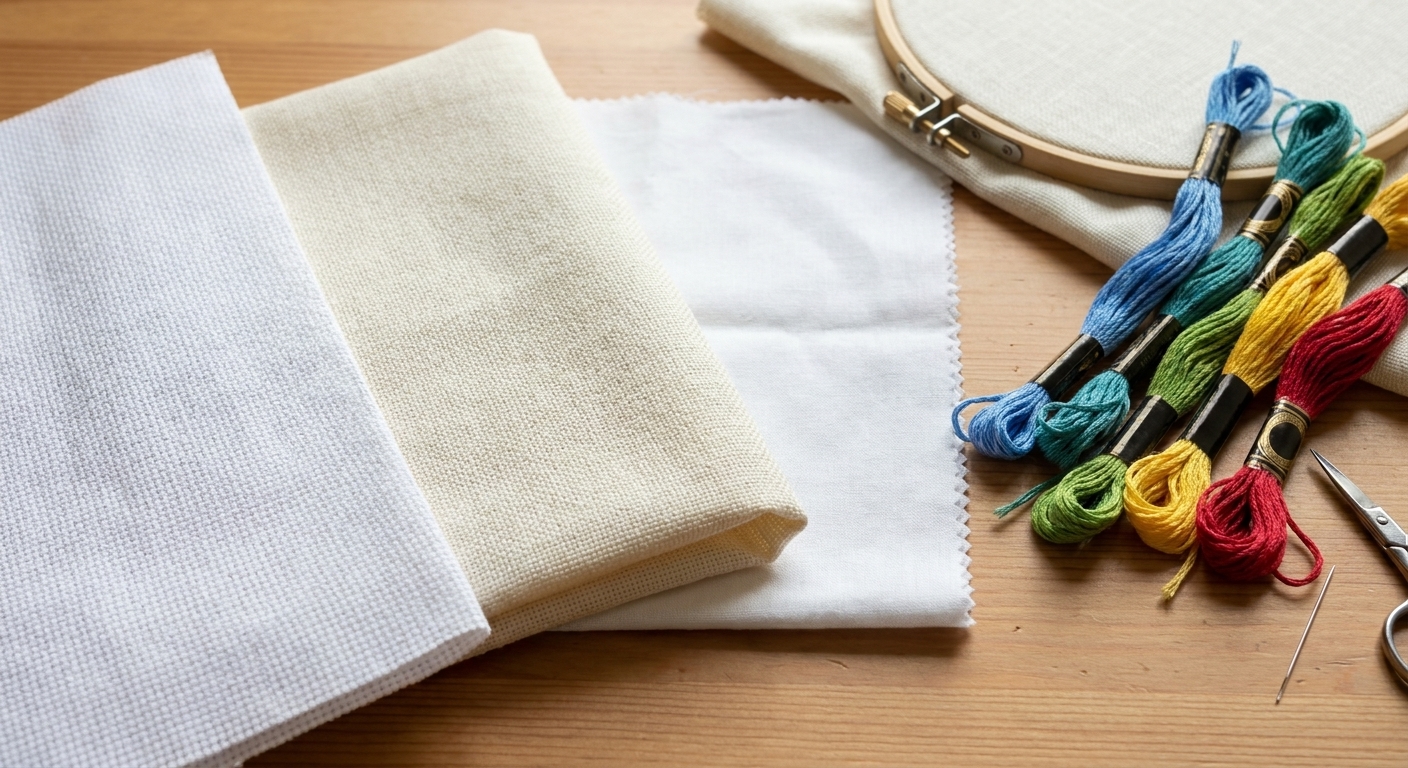
- Fabric: cotton, linen, quilting cotton, canvas, or whatever your pattern recommends
- Embroidery needles (crewel needles): sharp tip to pierce non-grid fabric
- Transfer method: water-soluble pen, heat-erase pen, tracing, iron-on transfer, or a stick-and-stitch stabilizer
Embroidery fabric choice affects your experience a lot. A stable, medium-weight cotton or linen is friendlier than something stretchy or slippery.
If you are stitching on clothing or anything with stretch, add a stabilizer. It is the difference between “cute and crisp” and “why is this puckering like that.”
Cross stitch-specific essentials
- Fabric: Aida is the easiest to learn on because the holes are obvious, and evenweave or linen are popular once you want a softer look
- Tapestry needles: blunt tip to slide between fabric threads instead of splitting them
- Chart and symbol key: printed or digital
- Optional helpers: a needle minder, highlighter, and a frame or Q-snap if you dislike hoops
If you want the simplest start, grab a small cross stitch kit. It usually includes fabric, floss, needle, and chart. The fewer decisions you have to make on day one, the faster you get to the satisfying part.
Learning curve
This is the part everyone wants a definitive answer to, and I promise the truth is nicer: both are beginner-friendly, just in different ways.
Cross stitch tends to feel easier at the start
If you can count and make an X, you can cross stitch. Early progress feels clear because each stitch is a little unit you can check off. Many beginners find it steady and soothing because there are fewer technique choices to make.
The common beginner hurdles are:
- miscounting and realizing your design is drifting
- starting in the wrong spot and running out of margin
- tangles from using too long a strand
A small habit that helps: find the center of your fabric and the center of your chart before you take your first stitch. Some stitchers also grid their fabric with a washable marker, totally optional, but it can save your sanity on bigger patterns.
Embroidery can feel easier once you are comfortable with the basics
Embroidery asks you to learn a few different stitches, and some (hello, French knots) can be stubborn at first. But it is also forgiving. If a satin stitch edge is a little wobbly, the piece can still look charming and intentional.
The common beginner hurdles are:
- transferring the design cleanly
- keeping stitch direction consistent in filled areas
- choosing strand count (how many strands of floss to use)
If you are the type of person who gets discouraged when you have to rip out mistakes, embroidery may feel gentler. If you love following clear instructions and seeing steady progress, cross stitch can feel like a quiet treat for your brain.
Strand count
One quick detail that saves a lot of frustration: standard floss is usually six strands twisted together, and you can separate them.
- Cross stitch: a very common starting point is 2 strands on 14-count Aida (patterns may specify something else).
- Embroidery: you might use anywhere from 1 to 6 strands depending on the stitch and the look you want. Outlines often look crisp with fewer strands, fills can look lush with more.
If you are unsure, check your pattern. If you do not have a pattern, test a few stitches on scrap fabric and pick what looks best to you.
Design freedom
Cross stitch
Cross stitch is perfect if you love:
- patterns that tell you exactly what to do
- classic motifs like samplers, florals, landscapes, and cute characters
- the satisfying look of neat, uniform stitches
You can absolutely customize cross stitch, but the customization usually happens at the planning stage: swapping colors, changing fabric count, combining motifs, or adding backstitch details.
Embroidery
Embroidery is perfect if you love:
- mixing stitches like you are mixing paintbrushes
- adding texture, dimension, and playful details
- working from drawings, templates, or even your own doodles
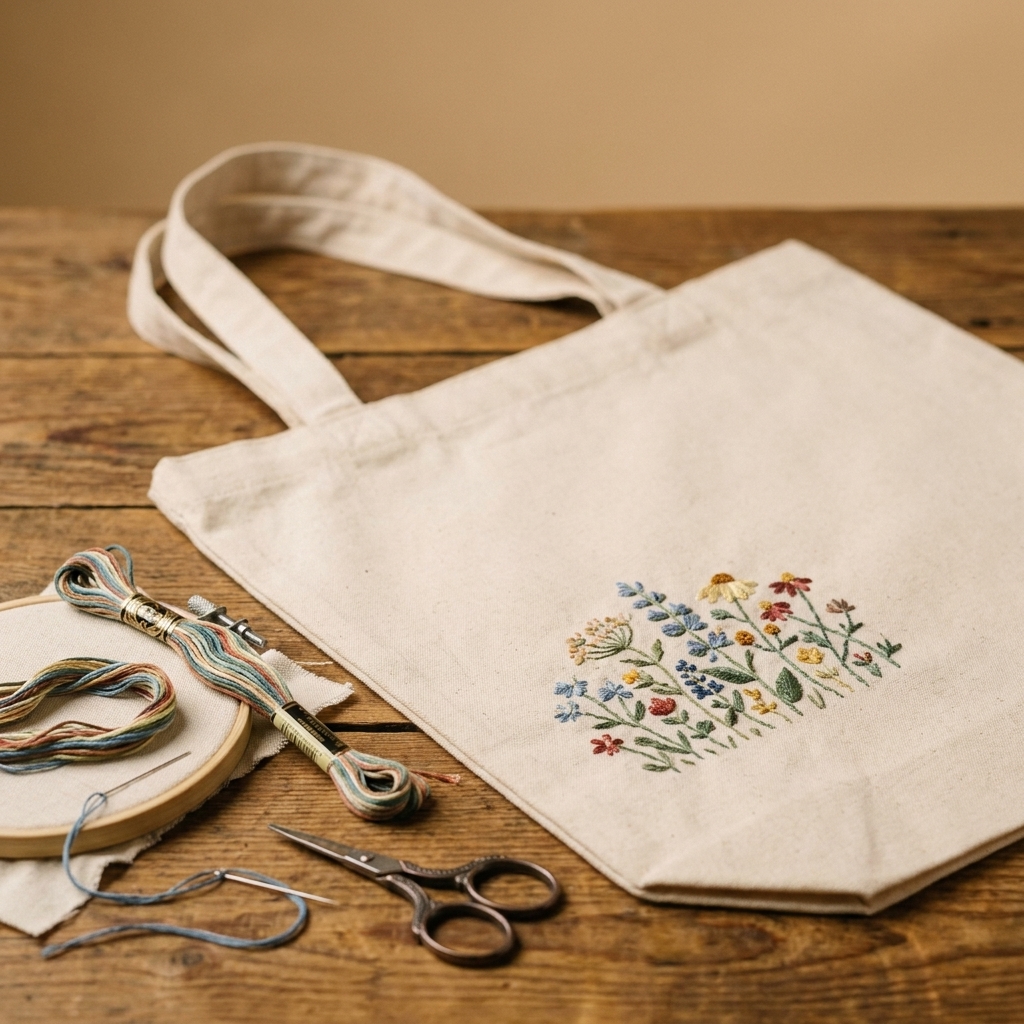
Embroidery also plays nicely with mending and upcycling. If your dream is to stitch on a tote bag, jacket, or vintage linen napkin you found treasure-hunting, embroidery gets you there quickly.
Time and patience
Cross stitch can take longer
Because you are building a design stitch by stitch across a grid, even a small pattern can be surprisingly time-consuming. That is not a bad thing, it is part of the appeal. But if you want a finish in one or two evenings, choose a tiny motif or a beginner kit labeled “mini.”
Embroidery can feel finished faster
Many embroidery designs look complete once the main outlines and a few filled areas are done. You can stop at a simpler finish or keep going with shading and extra details when you have time.
Comfort and ergonomics
Your body matters in this decision more than most people admit.
- Eyes: Cross stitch on higher-count fabric (smaller holes) can be hard on the eyes. Starting on 12 to 14-count Aida is often comfortable.
- Hands: Cross stitch uses a repetitive motion, which some people find soothing and others find a little stiff. Embroidery varies motion more because you switch stitches.
- Tension: Cross stitch tension affects how neat your X stitches look. Embroidery tension affects puckering and how smooth fills look. In both crafts, the goal is snug, not strangled.
If you get hand fatigue, try a slightly larger hoop or Q-snap, shorten your stitching sessions, and make sure your shoulders are not creeping up to your ears. I still have to remind myself of this weekly.
Which to learn first
Start with cross stitch if you want…
- a clear, step-by-step system
- one main stitch to master first
- steady, grid-based progress you can do while watching a show
- patterns that feel like paint-by-number, but with thread
Start with embroidery if you want…
- more freedom and creativity right away
- to stitch on clothing, bags, or vintage linens
- texture and variety in your stitches
- projects where imperfect still looks lovely
My practical recommendation
If you are truly undecided, choose based on what you tend to enjoy:
- If you like guardrails: you might prefer cross stitch. The grid keeps things orderly.
- If you like experimenting: you might prefer embroidery. You can play without counting.
And if you have a specific project goal, follow that. Want to frame a cute pattern for your wall? Cross stitch. Want to personalize a denim jacket or make a quick hoop for a gift? Embroidery.
Beginner project ideas
Easy first cross stitch projects
- a small heart, star, or simple flower motif
- a two to three word quote with chunky letters
- a mini sampler that practices only a few colors
Easy first embroidery projects
- a simple line-art face or botanical outline using backstitch
- a three-flower bouquet using lazy daisy and French knots
- monogramming a napkin or handkerchief with backstitch or split stitch
FAQ
Is cross stitch a type of embroidery?
Yes. Cross stitch is technically a form of embroidery. In everyday crafting conversations, we usually separate “embroidery” (meaning free-form surface embroidery) from “cross stitch” (meaning counted X stitches on a grid) because the experience is so different.
Do I need a hoop for cross stitch?
Not always. Many stitchers use a hoop, Q-snap, or scroll frame to keep tension even. Some people stitch in hand on smaller pieces of Aida. If your fabric is getting wavy or your hands feel tired, a hoop or frame can help.
What is the cheapest way to try each craft?
For cross stitch, buy a small kit. For embroidery, pick one simple pattern and buy a hoop, a fat quarter of cotton, and two to four floss colors. Either way, start small so you can finish and feel that little burst of pride.
Can I use the same floss for both?
Absolutely. Standard six-strand cotton embroidery floss is used for both embroidery and cross stitch. You just change how many strands you separate out for your needle.
Any beginner tips for washing and mark removal?
Test your marking method on a scrap first. Water-soluble pens can leave faint residue if they sit too long, and heat-erase pens can reappear in cold temperatures. If you plan to wash a finished piece, gentle soap, cool water, and air-drying are the safest default.
Which one is more relaxing?
Whichever one matches your brain. Cross stitch is repetitive and steady. Embroidery is rhythmic but more varied. If counting stresses you out, choose embroidery. If open-ended choices stress you out, choose cross stitch.
A gentle final nudge
You cannot pick wrong. The best first needlecraft is the one that makes you want to sit down again tomorrow. Start with a tiny project, keep your thread lengths short, and remember that every tangled mess is just proof you are learning something real.
And if you end up falling in love with both, welcome to the club. My floss stash would like a word.