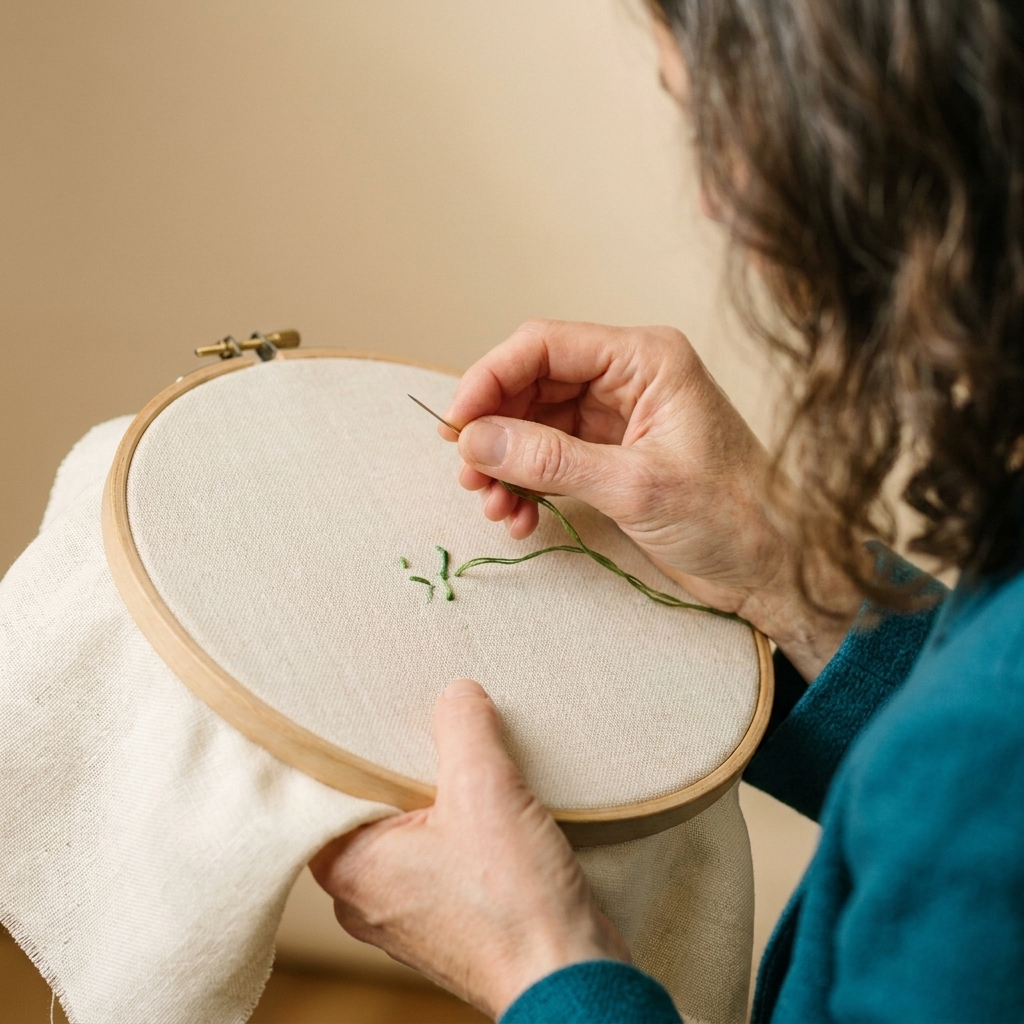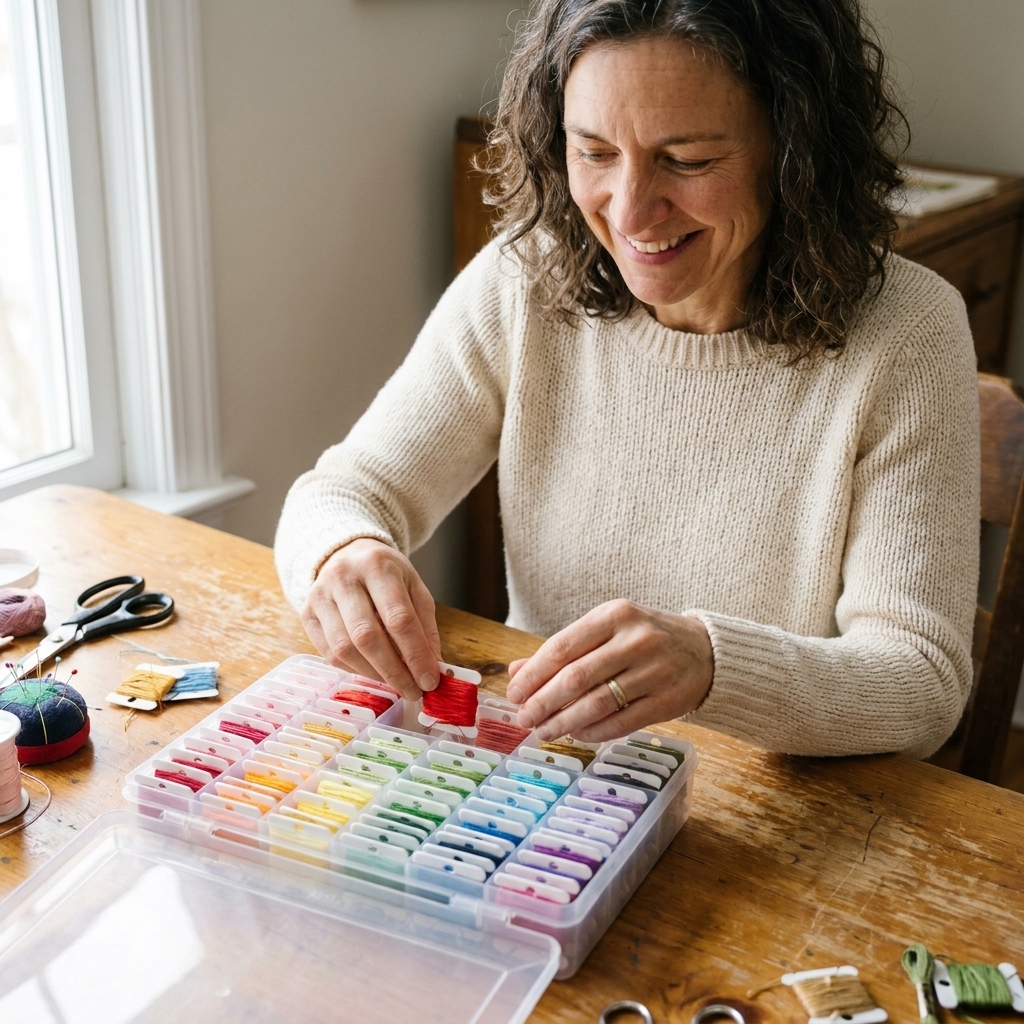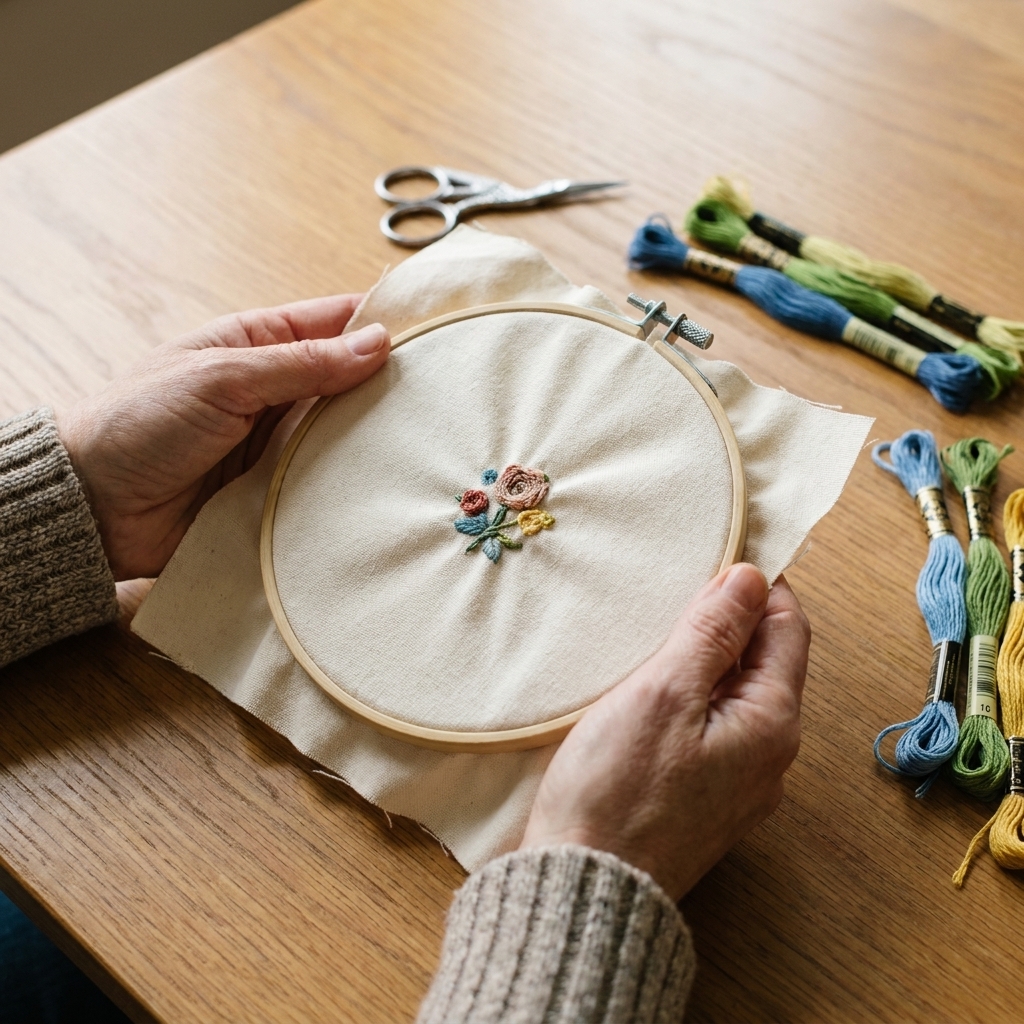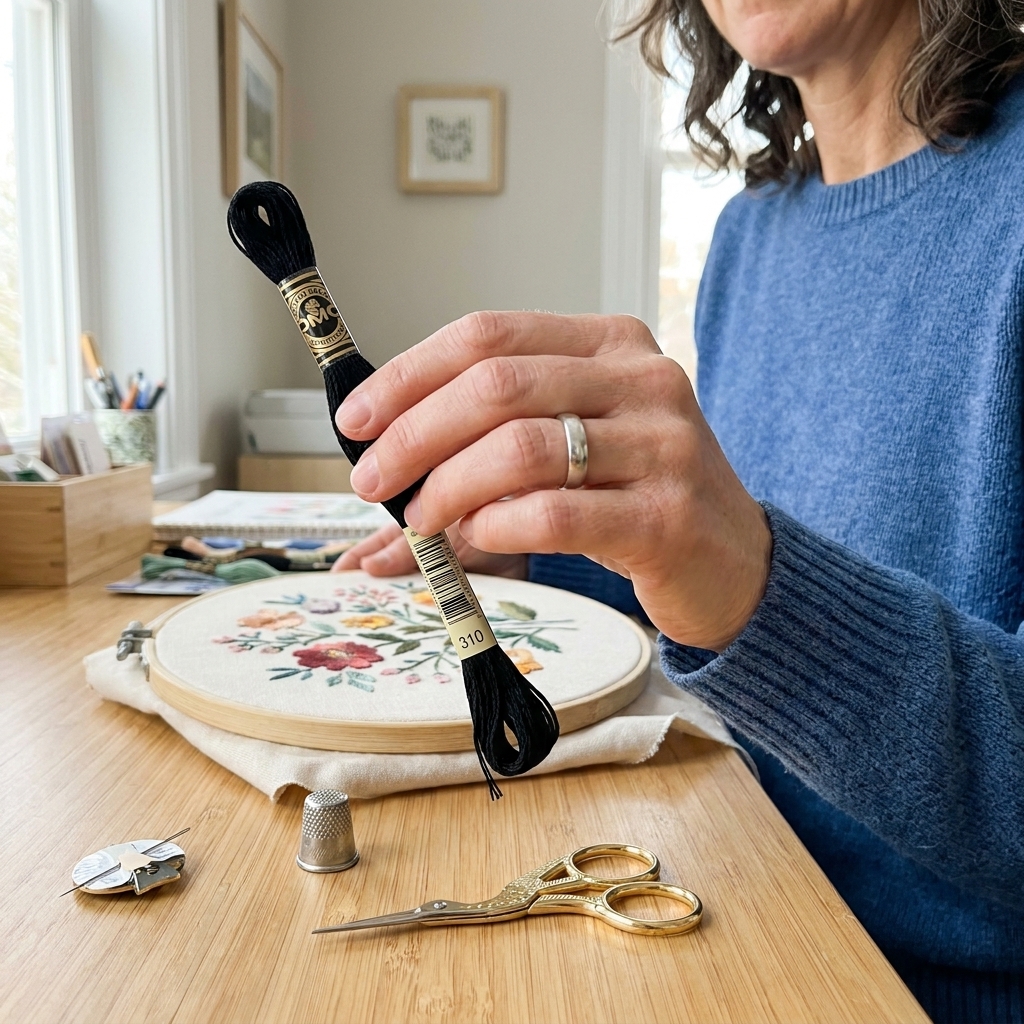
If you also own a “totally reasonable” bag of leftover floss bits that has somehow become a second craft pet, welcome. Those short lengths from finished patterns are pure creative gold, as long as you pick projects that like scraps. Think: tiny motifs, dense texture, happy chaos, and anything where color changes are a feature, not a flaw.
Below are eight scrap-thread-friendly embroidery and cross stitch projects you can start tonight, plus a few sanity-saving tips I wish I had learned before I sprinkled thread snippets across my couch for the thousandth time.
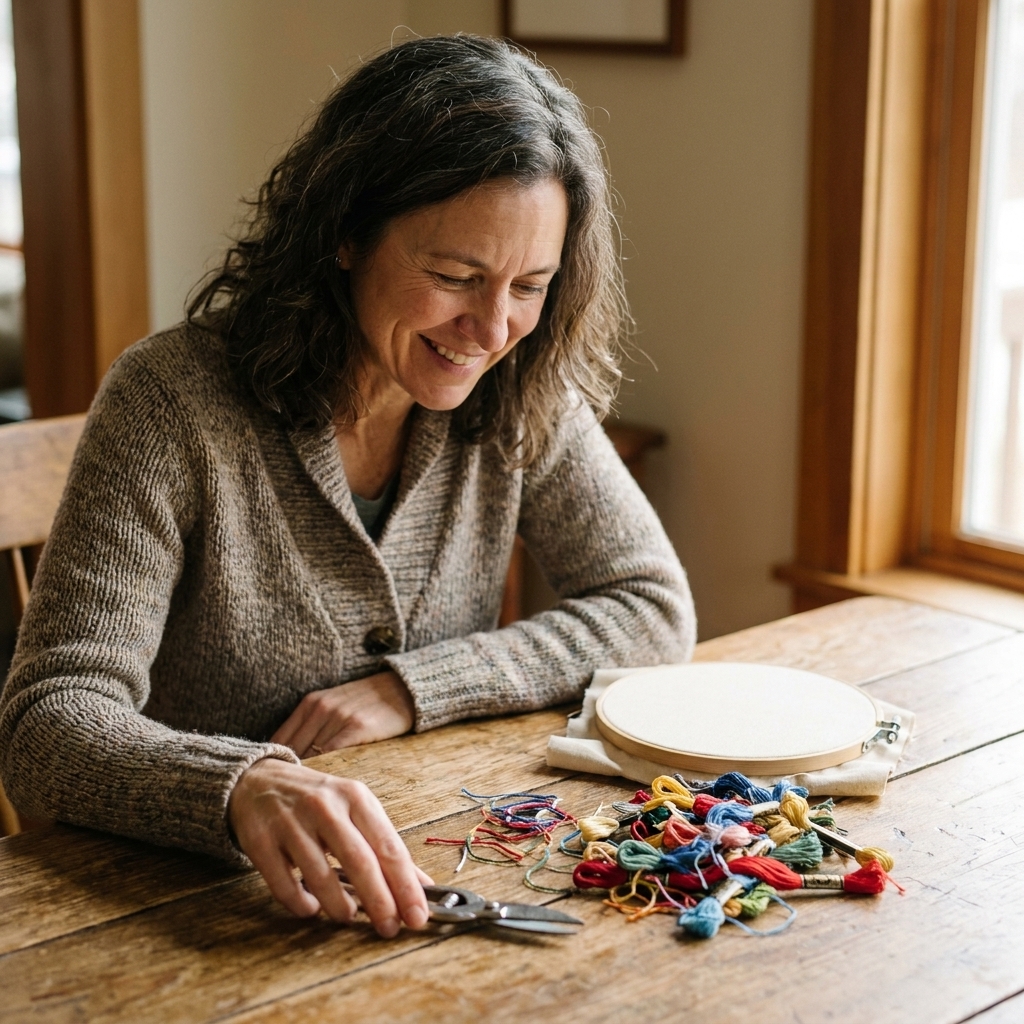
Before you start: make scraps easier to stitch
Scrap projects are at their best when you stop fighting the thread length. A few tiny tweaks make a huge difference.
- Sort by length, not just color. Make three groups: under 6 inches (save for tiny accents), 6 to 12 inches (perfect), and over 12 inches (treat like regular floss).
- Use short working lengths. With scraps, I often stitch with 8 to 10 inches max to reduce tangles and fraying.
- Pick a needle that plays nice with scraps. A slightly larger eye (or a needle threader) makes short pieces much less annoying. Use a tapestry needle for Aida and evenweave (it slides between holes), and a sharp for tightly woven cotton or linen.
- Pick the right number of strands. For surface embroidery on medium fabrics, 2 strands is a sweet spot. For cross stitch on 14-count Aida, many stitchers start with 2 strands, and go up to 3 for extra coverage. Coverage depends on fabric color, floss brand, and your tension, so treat this as a starting point, not a law.
- Condition fussy thread (optional). If you have older or kinked floss, thread conditioner can calm it down. If the piece will be washed, test first (some stitchers skip conditioner on laundered items to avoid lint grab or finish changes).
- Start with a waste knot, away knot, or pin stitch. Scraps are often too short for a comfortable tail. Waste knots and away knots are great starters. For cross stitch, a pin stitch is a tidy option when you want a clean back and minimal thread waste.
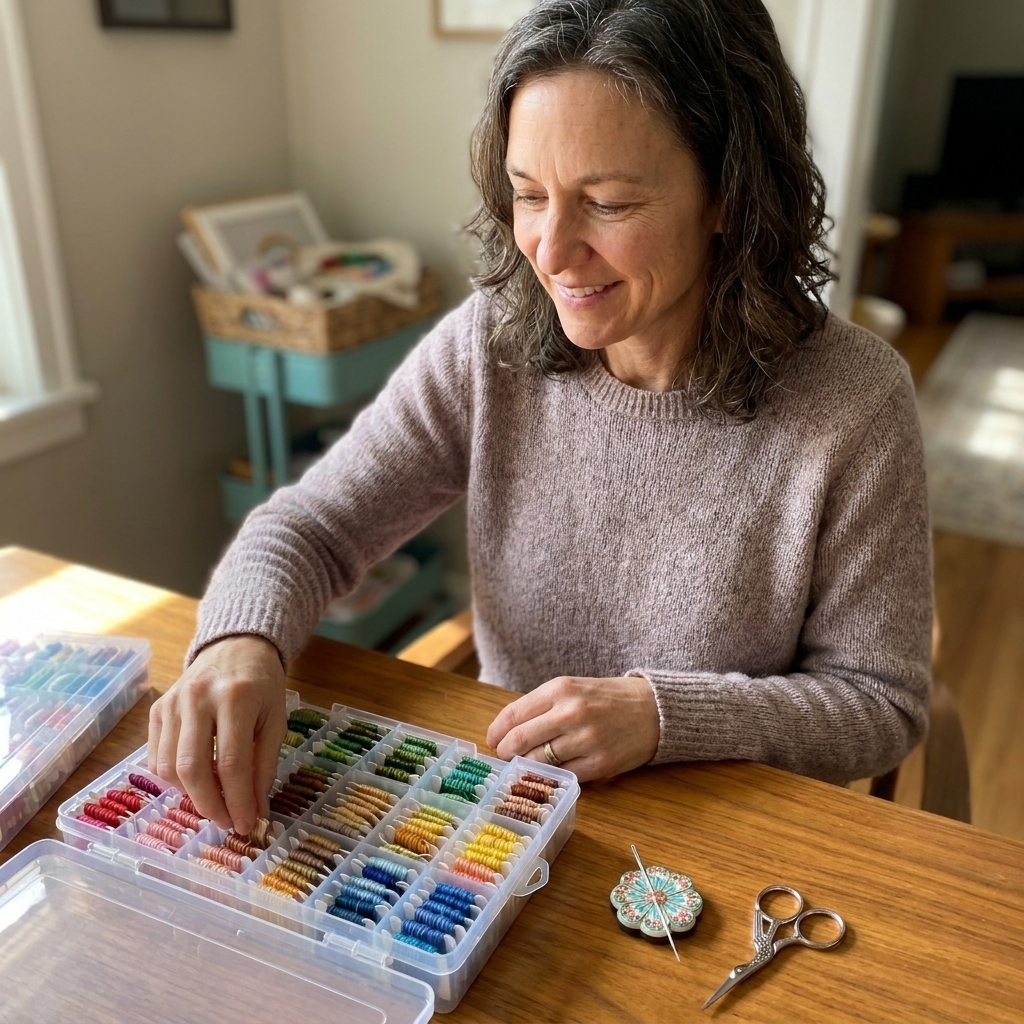
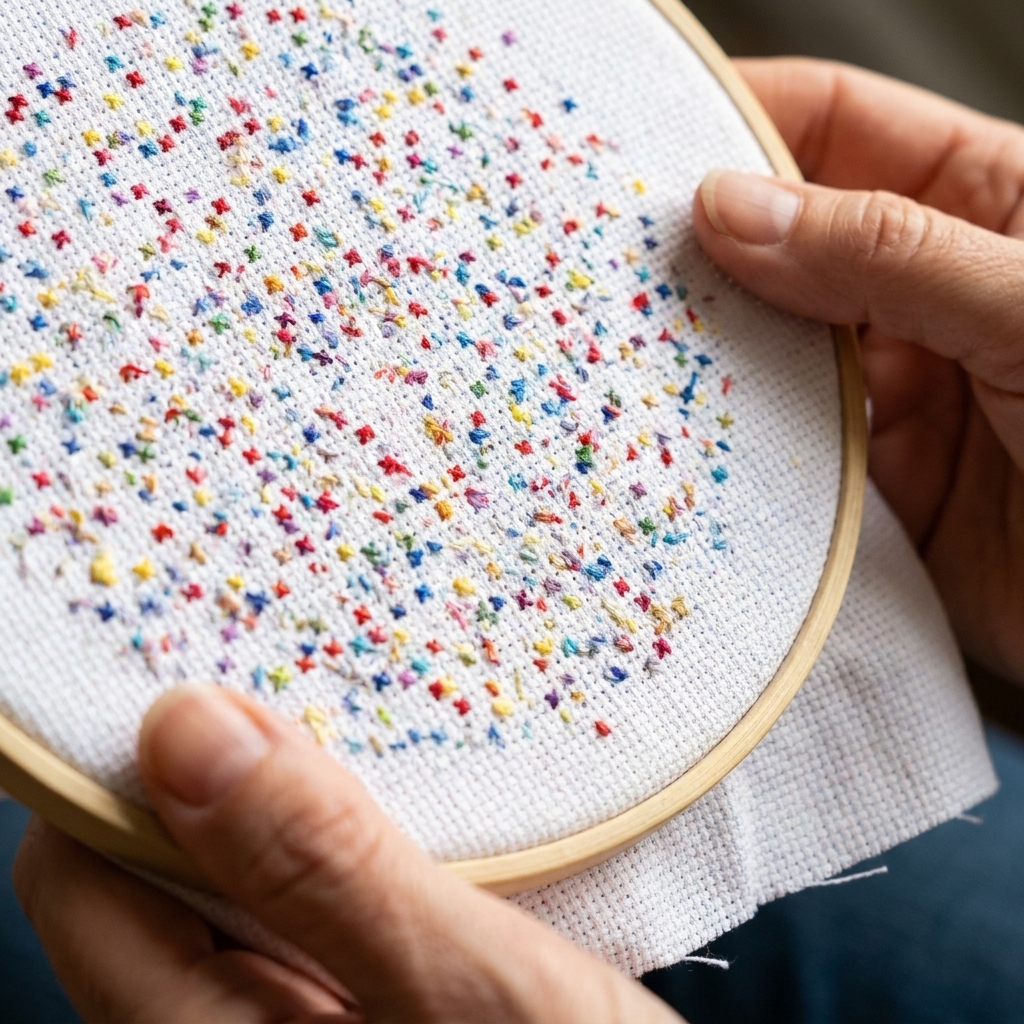
1) Confetti cross stitch filler
If you have ever stitched a pattern with a confetti-heavy background, you already know the magic here. Confetti filler is permission to use every random color you own.
Best for
Very short lengths, even the awkward ones.
What to make
- Abstract “sprinkle” background behind a simple silhouette
- Galaxy or underwater texture
- Pixel confetti border around a name or date
How to do it
- Choose a small area, like a 3×3-inch square on 14-count Aida.
- Pick a loose palette (warm sunset, cool ocean, rainbow chaos).
- Stitch single crosses scattered randomly, then fill in until it feels balanced.
- Keep the “rule” simple, like no two identical colors touching, or clusters of three.
Scrap saver tip: End threads by running the tail under nearby stitches on the back. Confetti gives you lots of anchor points.
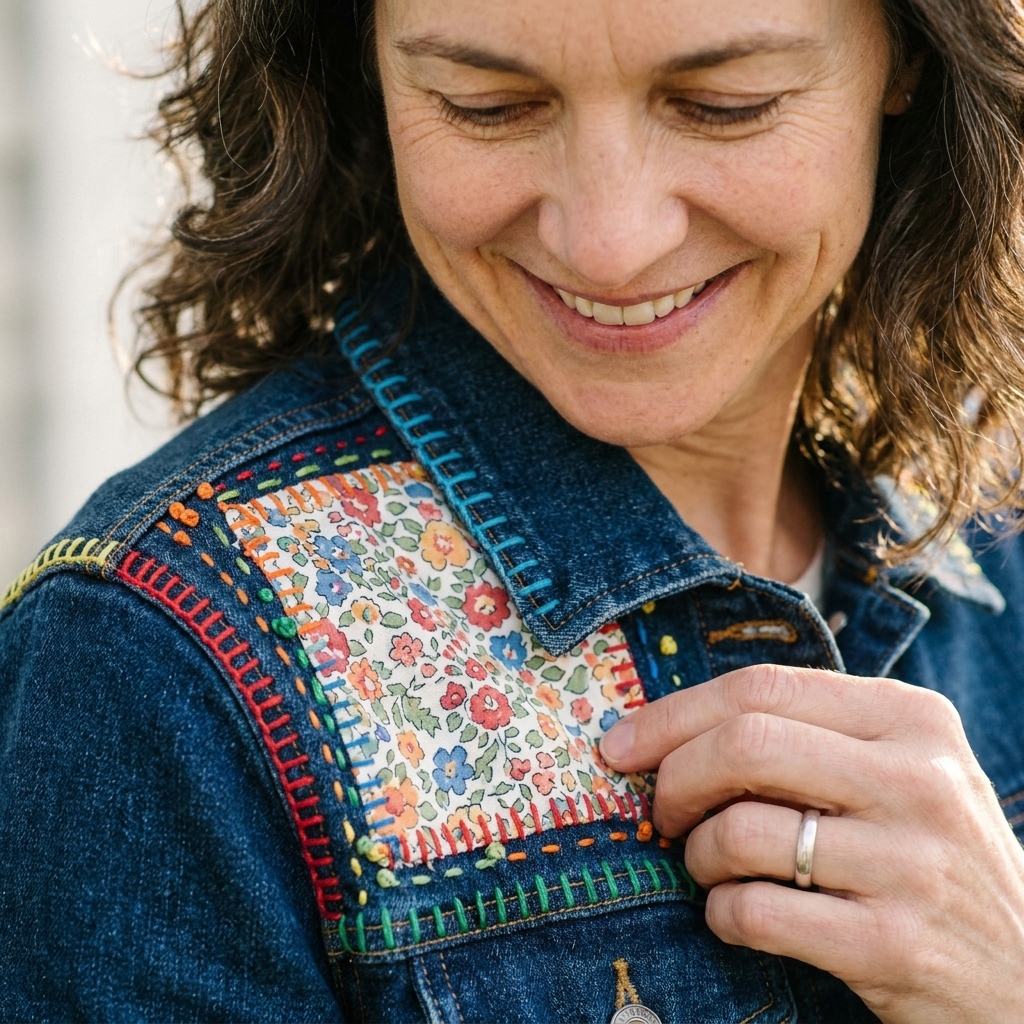
2) Crazy quilt patch embroidery
This is one of my favorite ways to use scraps because it celebrates mismatched thread. You can stitch over fabric patches, vintage linen offcuts, or even a sturdy cotton tote.
Best for
Mixed lengths, especially 6 to 12 inches.
What to make
- A “mended” pocket on jeans
- A decorative patch on a canvas bag
- A mini wall hanging made from linen scraps
How to do it
- Attach a patch with a simple running stitch or fusible web.
- Cover seams with decorative stitches: feather stitch, herringbone, chain stitch, and lazy daisies.
- Switch colors whenever you run out. It adds charm, not mess.
Beginner-friendly win: Small wonky stitches look intentional in crazy quilt style. This is the perfect “crafting should be fun, not perfect” project.
Wear-and-wash note: If this is going on something that gets abused (totes, jeans), back the patch with interfacing or a second layer of fabric and secure your thread ends extra well.
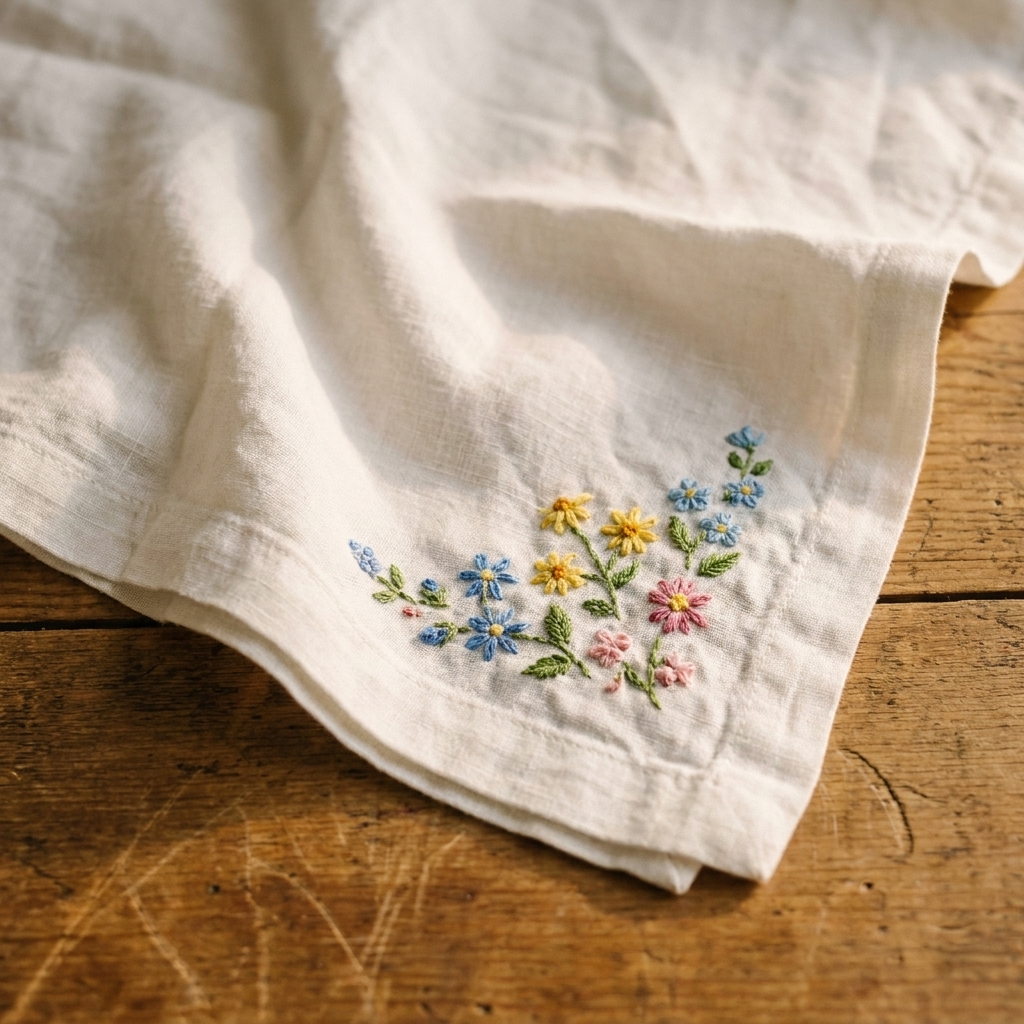
3) Tiny florals on vintage linens
If you collect thrifted linens, you probably have a napkin or pillowcase that’s almost perfect but has one stubborn stain or thin spot. Tiny florals are gentle, quick, and incredibly scrap-friendly.
Best for
Short lengths in greens, pinks, yellows, and “mystery colors.”
What to stitch
- Mini daisies (lazy daisy petals + French knot center)
- Sprigs (straight stitch leaves + tiny satin stitch buds)
- Trailing vines (stem stitch + detached chain leaves)
How to do it
- Mark a light scatter area with a washable pen, or go freehand.
- Keep each motif tiny: 1/4 to 1/2 inch wide.
- Repeat one or two stitches so it feels cohesive even with varied colors.
Scrap saver tip: Stitch leaves with 1 strand for a delicate look. It doubles your usable length.
Laundry note: If the linen will be washed, pre-wash it first and consider doing a quick floss color test on a damp white cloth, especially with reds and dark blues.
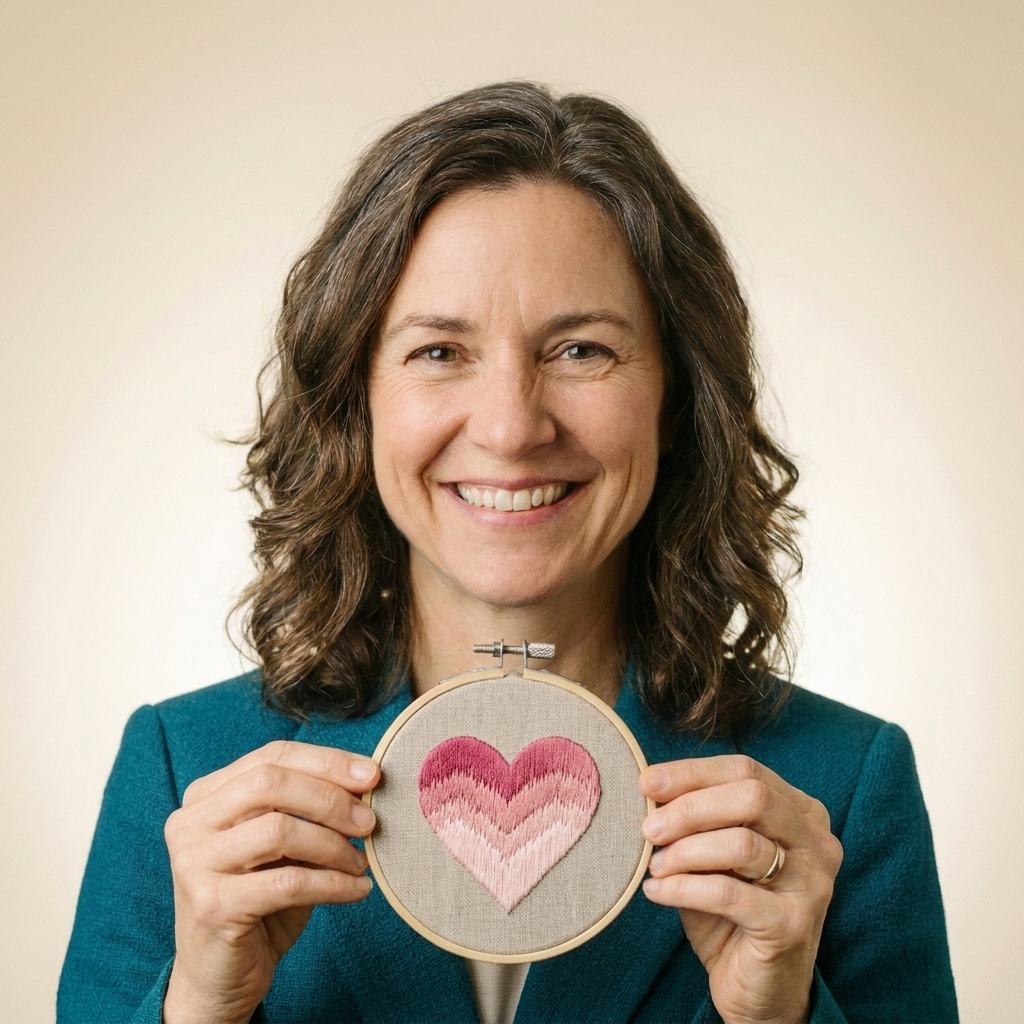
4) Ombre satin stitch heart
This one looks fancy, but it is secretly very forgiving. You will use multiple related colors in short runs, so scraps are perfect.
Best for
Scraps in the same color family, like five blues or a handful of pinks.
What to make
- A small heart in a 3-inch hoop
- A single monstera leaf on a patch
- A bookmark motif on cotton twill
How to do it
- Draw a simple shape on your fabric.
- Work satin stitch in sections, changing color every few rows.
- Blend by alternating stitches: one stitch in Color A, one stitch in Color B, repeat for a row.
Beginner-friendly win: If your satin stitch is not perfectly smooth, use 1 to 2 strands and keep stitches shorter. Shorter stitches behave better.
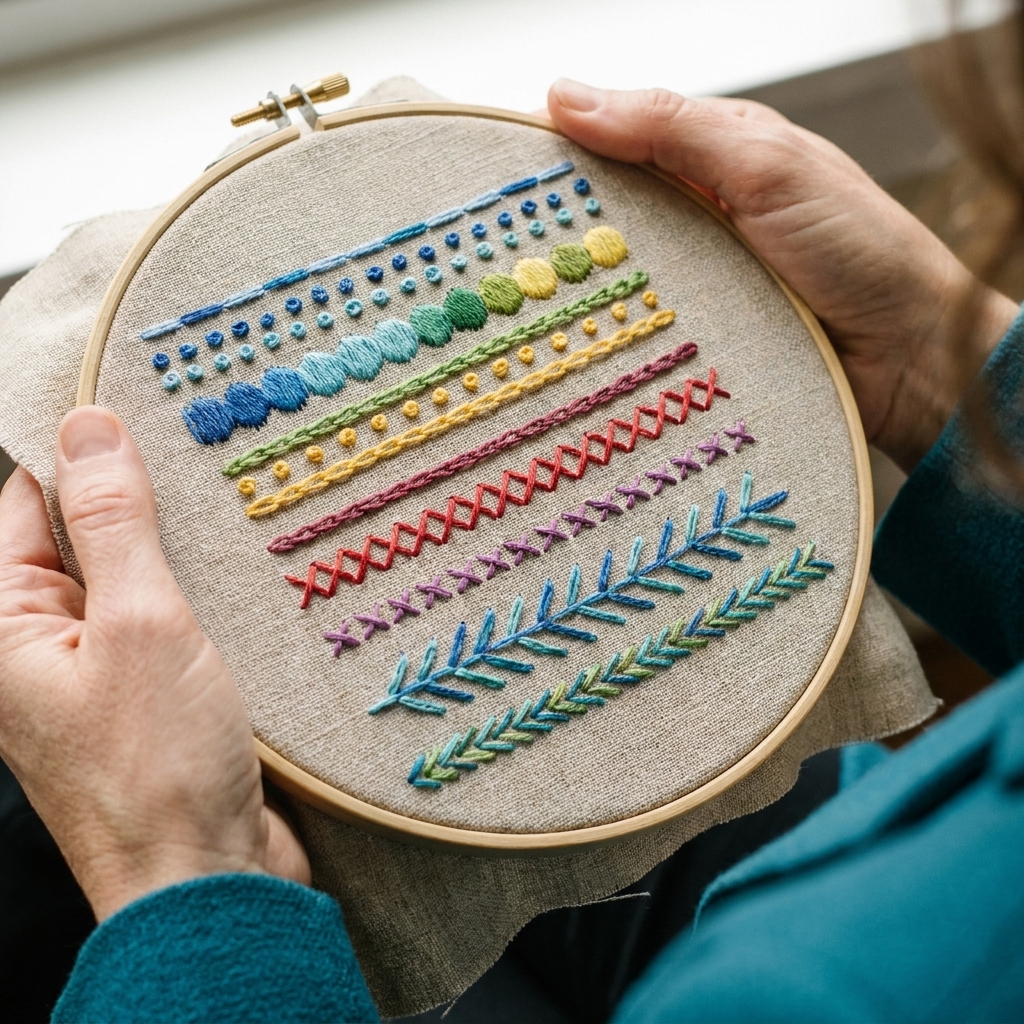
5) Scrap stitch sampler
When you have lots of colors but not enough of any one shade, make a sampler that celebrates variety. This is also my favorite “warm up” project when I do not feel like committing to a big pattern.
Best for
All scraps, especially odd colors you never know how to use.
What to stitch
- A grid of stitch rows: running, back stitch, chain, feather, herringbone
- A circular sampler: each wedge is a different stitch and color
- A cross stitch border sampler with different mini motifs
How to do it
- Draw a simple grid with a washable pen.
- Assign each square a stitch or motif.
- Use whatever scrap fits, then move on. No guilt, no matching required.
Scrap saver tip: Keep a note of any combo you love. Samplers are your future color recipe book.
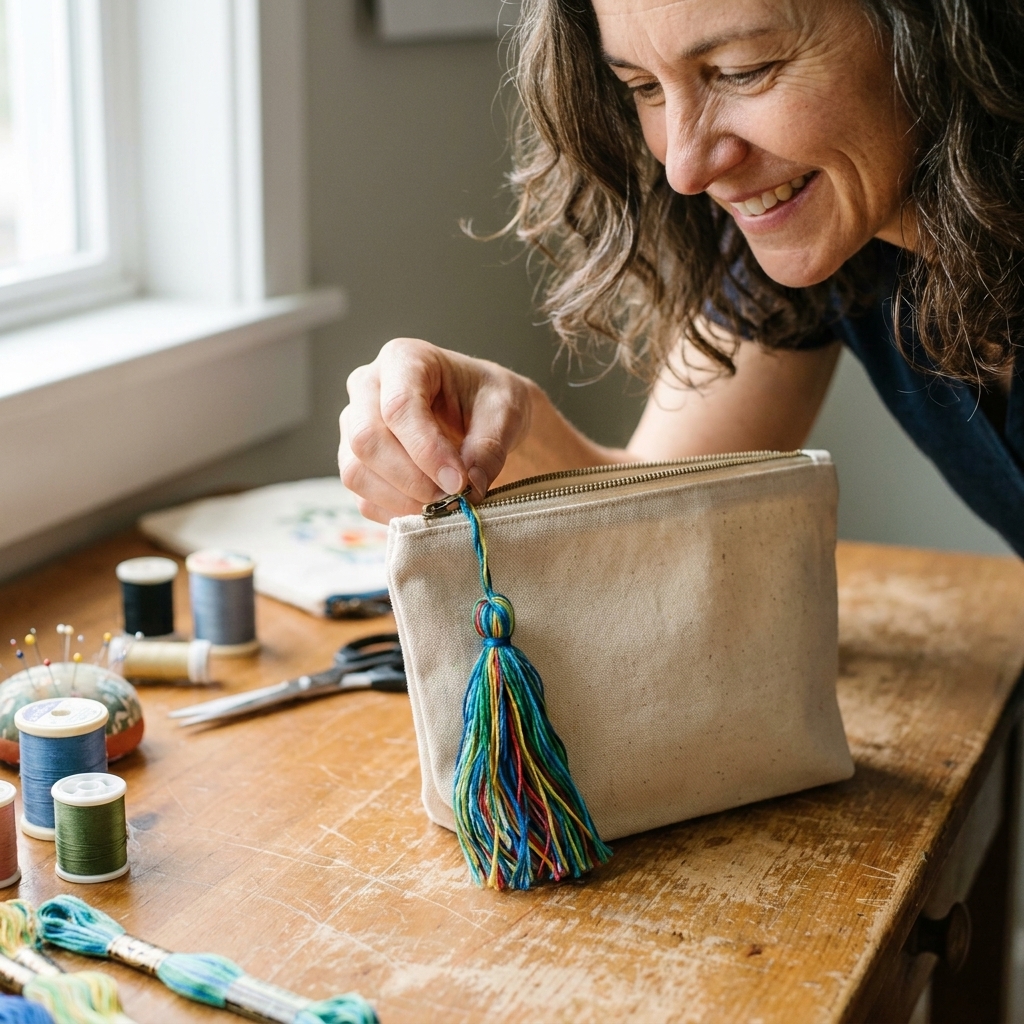
6) Floss tassels and charms
Not every scrap has to become a stitched motif. Some scraps want to be texture. Tassels and tiny wrapped charms are fast, satisfying, and excellent for the very short ends.
Best for
Short lengths, even mixed fibers, plus any slightly frayed pieces.
What to make
- Tassels for scissor fobs
- Bookmarks with a wrapped top loop
- Zipper pulls for project bags
How to do it
- Wrap scraps around two fingers or a small piece of cardboard 20 to 40 times.
- Tie off the top tightly, then wrap the neck with another scrap and knot at the back.
- Trim the ends to even them out. Slight unevenness still looks cute.
Safety note: If you are making charms for bags used by kids, secure knots well and avoid small detachable beads.
7) Mini hoop thread doodles
Thread painting sounds intimidating, but mini doodles are the low-pressure version. Think of it like sketching with stitches. Scraps work because you will be switching colors constantly anyway.
Best for
Small and medium scraps in a range of shades.
What to stitch
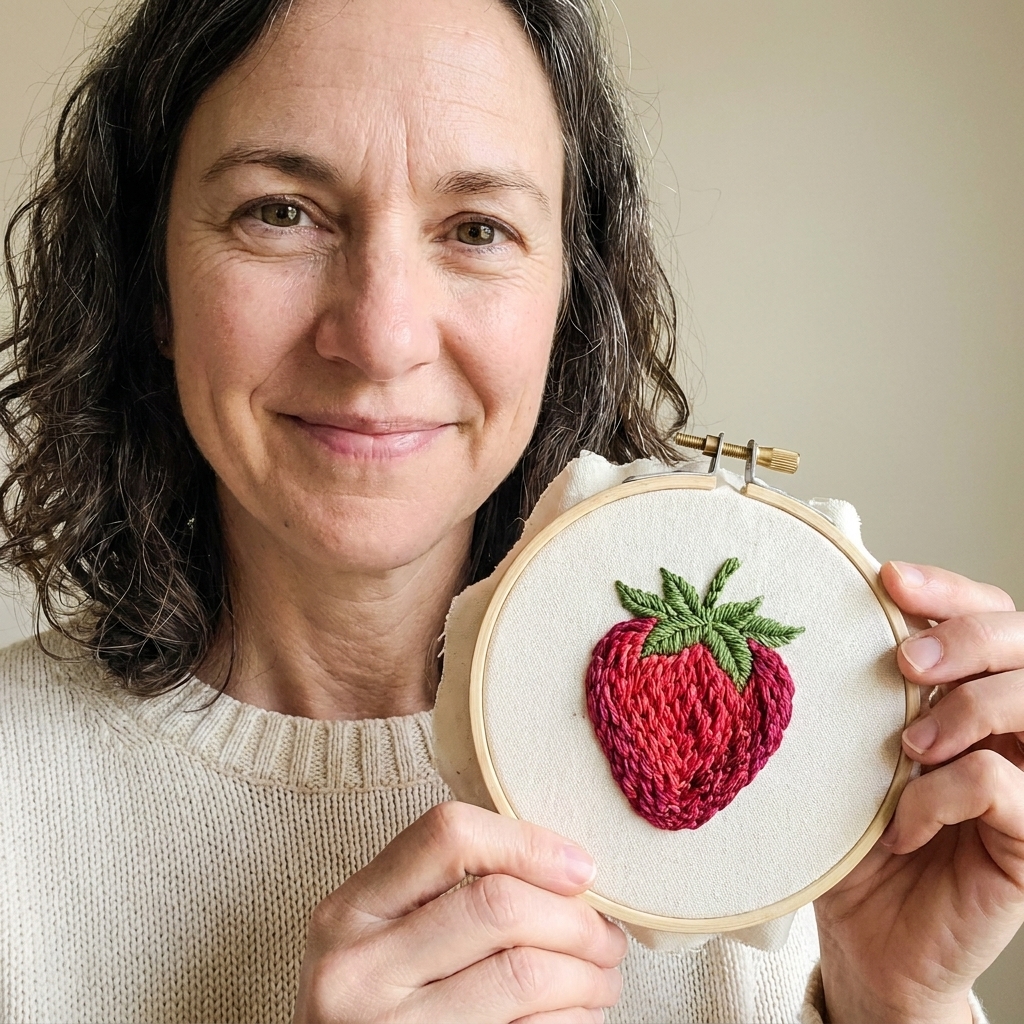
- A tiny strawberry
- A simple sunset over hills
- A single mushroom cap with speckles
How to do it
- Use a 3-inch or 4-inch hoop and tightly woven cotton or linen.
- Outline the shape lightly, then fill with long and short stitch.
- Layer lighter colors on top of darker ones to blend, even if each piece is short.
Beginner-friendly win: Imperfect blending looks artsy at mini scale. Your eye reads it as texture.
8) Cross stitch key fob
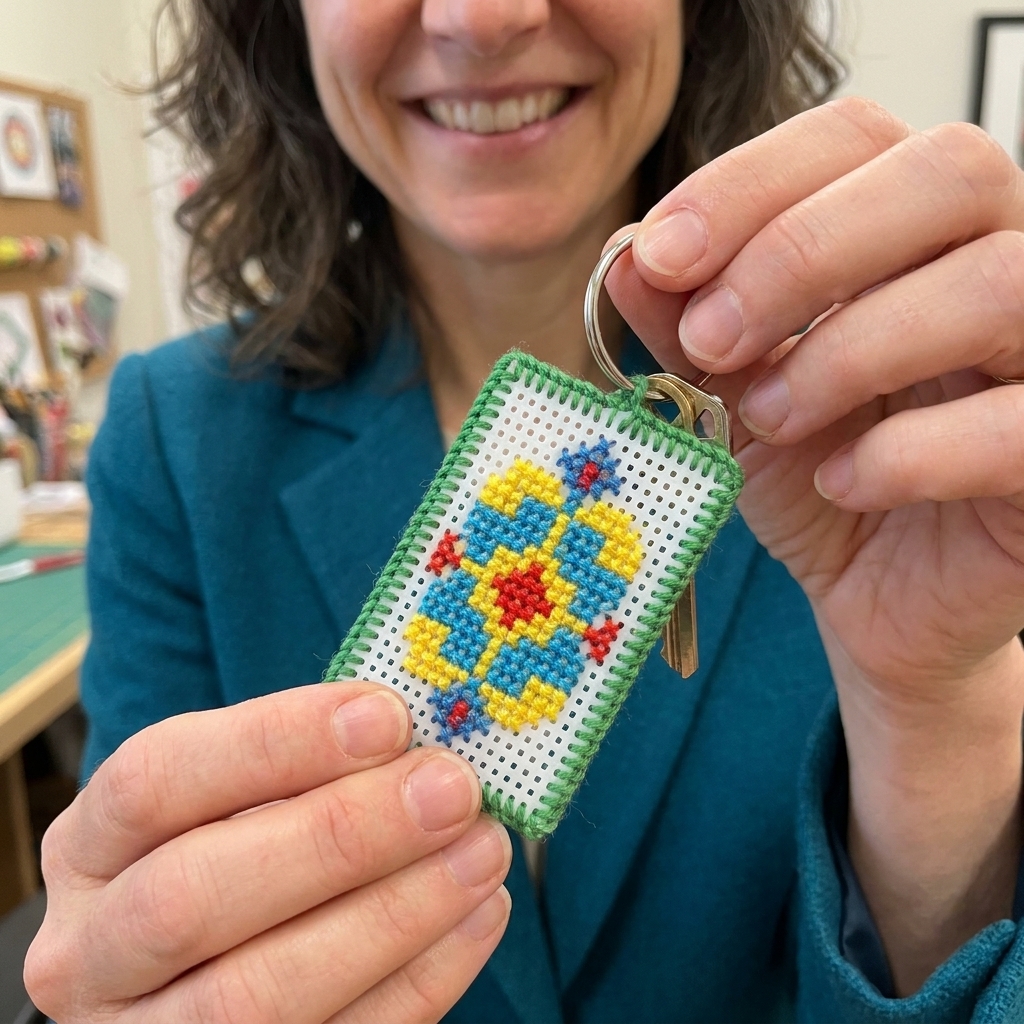
Key fobs and patches are fantastic scrap projects because they are small, sturdy, and useful. They also make sweet gifts that do not require weeks of stitching.
Best for
6 to 12-inch lengths, especially bold colors for legibility.
What to stitch
- A simple initial
- A tiny icon: heart, star, flower, smiley
- A micro quote abbreviated to 3 to 5 letters
How to do it
- Stitch on plastic canvas (easy) or a small piece of Aida backed with felt (softer).
- Finish edges with whip stitch using contrasting scraps.
- Add hardware: key ring, swivel clasp, or a ribbon loop.
Durability tip: For anything that lives on keys or a bag, secure ends under multiple stitches and consider a backing (felt or interfacing) so rubbing does not wear the threads as quickly.
Scrap saver tip: Use your shortest lengths for backstitch details like outlines, faces, or tiny sparkles.
Quick fixes for scrap stitching
My thread is too short to end neatly
Skip knots. Instead, slide your needle under 3 to 5 nearby stitches on the back to make a little tunnel, then pull the tail through.
If the tail is too short to stay threaded, try this: make the tunnel first with an unthreaded needle, then thread the tiny tail through the needle eye and pull it under. A needle threader (or a simple loop tool made from thin wire) is a lifesaver here.
If you are cross stitching and have room, a pin stitch or a tiny anchoring stitch under existing work can also lock down a stubborn short end without bulk.
My scraps keep knotting
Shorten your working length, drop to fewer strands, and let the needle dangle occasionally so the floss can untwist. If a piece is already fuzzy, it may behave better as 1 strand or as a backstitch detail instead of a long run.
Colors look messy, not playful
Limit yourself to one unifying rule: keep backgrounds mostly warm or mostly cool, repeat one “anchor color” throughout, or stick to a seasonal palette (spring brights, autumn earthy tones).
Scrap storage that you will use
The best scrap system is the one you will keep doing. Mine is low-tech:
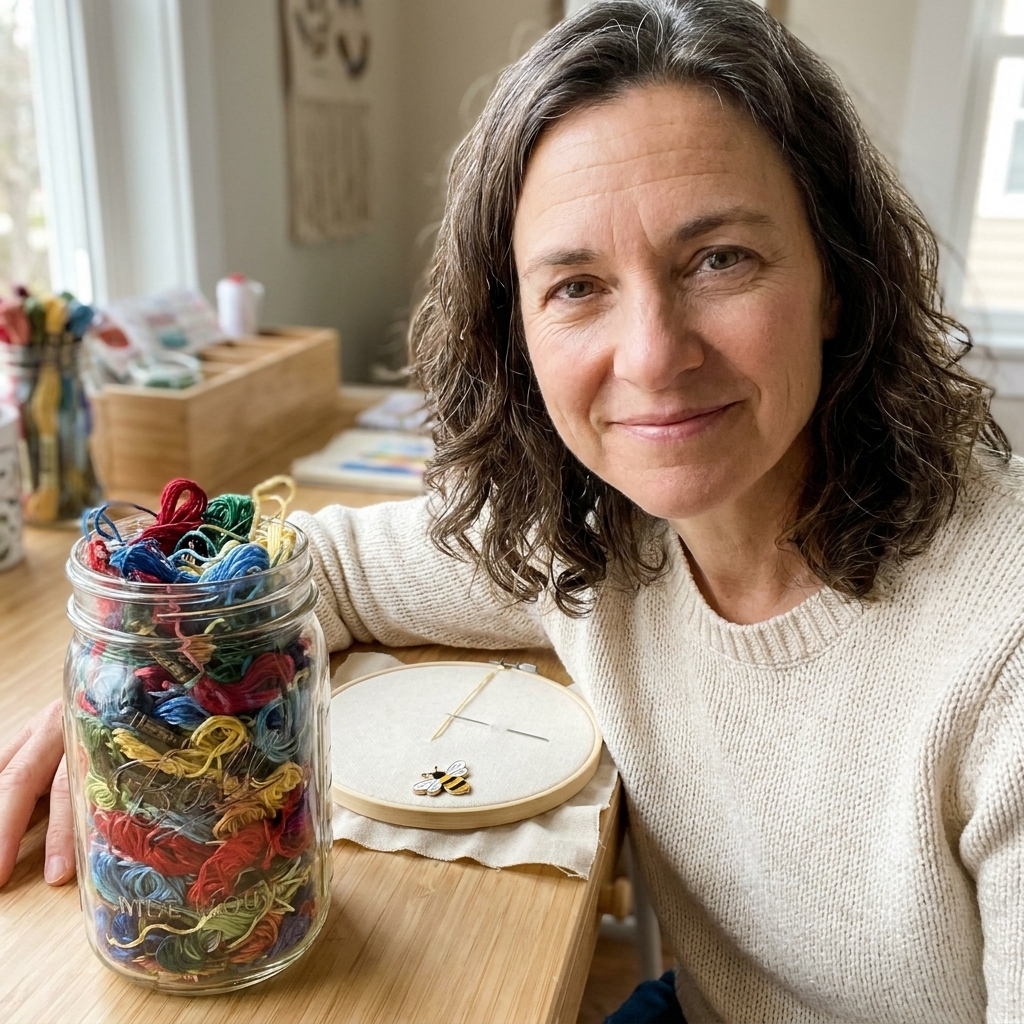
- A small jar for under 6-inch snippets (confetti, knots, tiny accents).
- A snack-size zip pouch for 6 to 12-inch lengths (my prime stitching scraps).
- A bobbin or floss card for anything longer than 12 inches (that is “real floss” again).
Then I keep a single “scrap project” hoop going on the side, so whenever I finish a pattern, the leftovers immediately have a place to land.
One last wash note
If you are stitching something that will be laundered (linens, patches on clothes, tote bags), pre-wash your fabric, keep your hands clean while stitching, and consider testing dark or saturated floss for color bleed. Scraps are fun, but not when your cute pink flower turns your whole napkin blush.