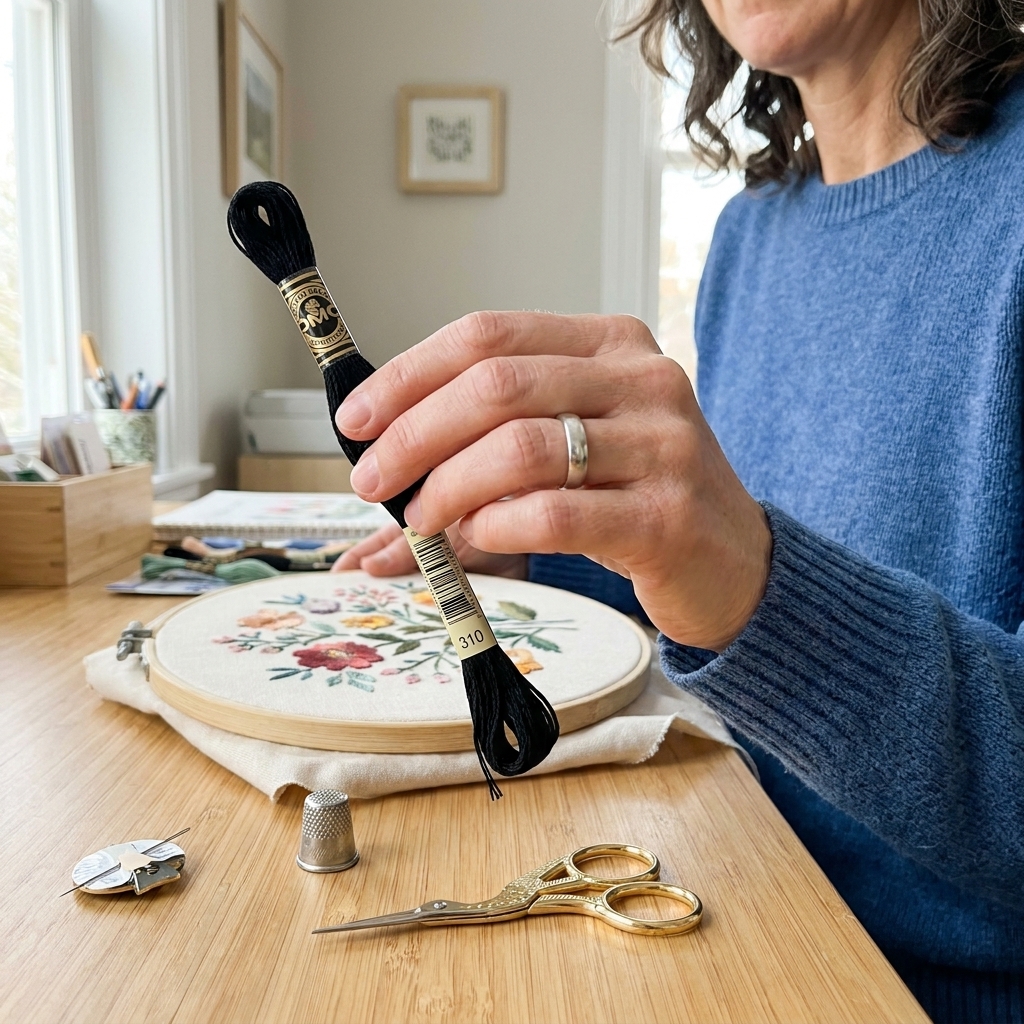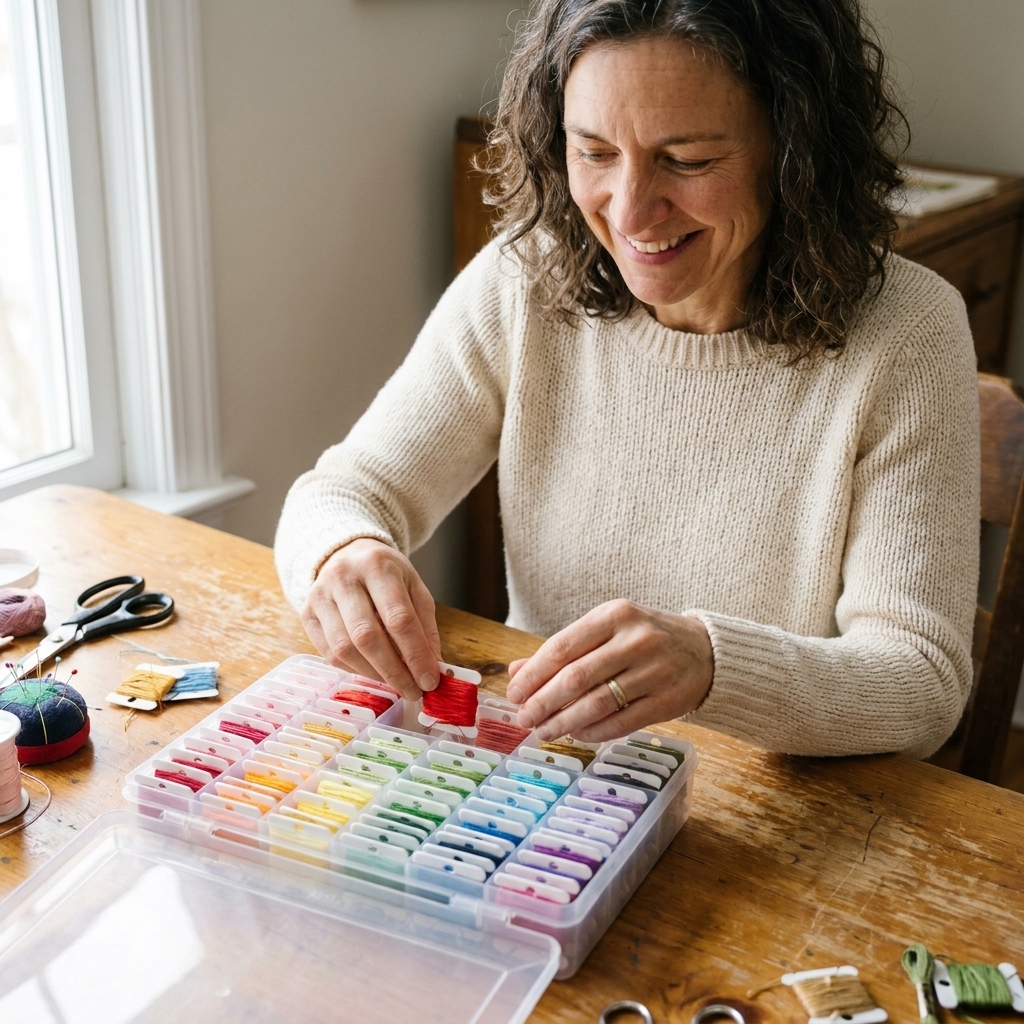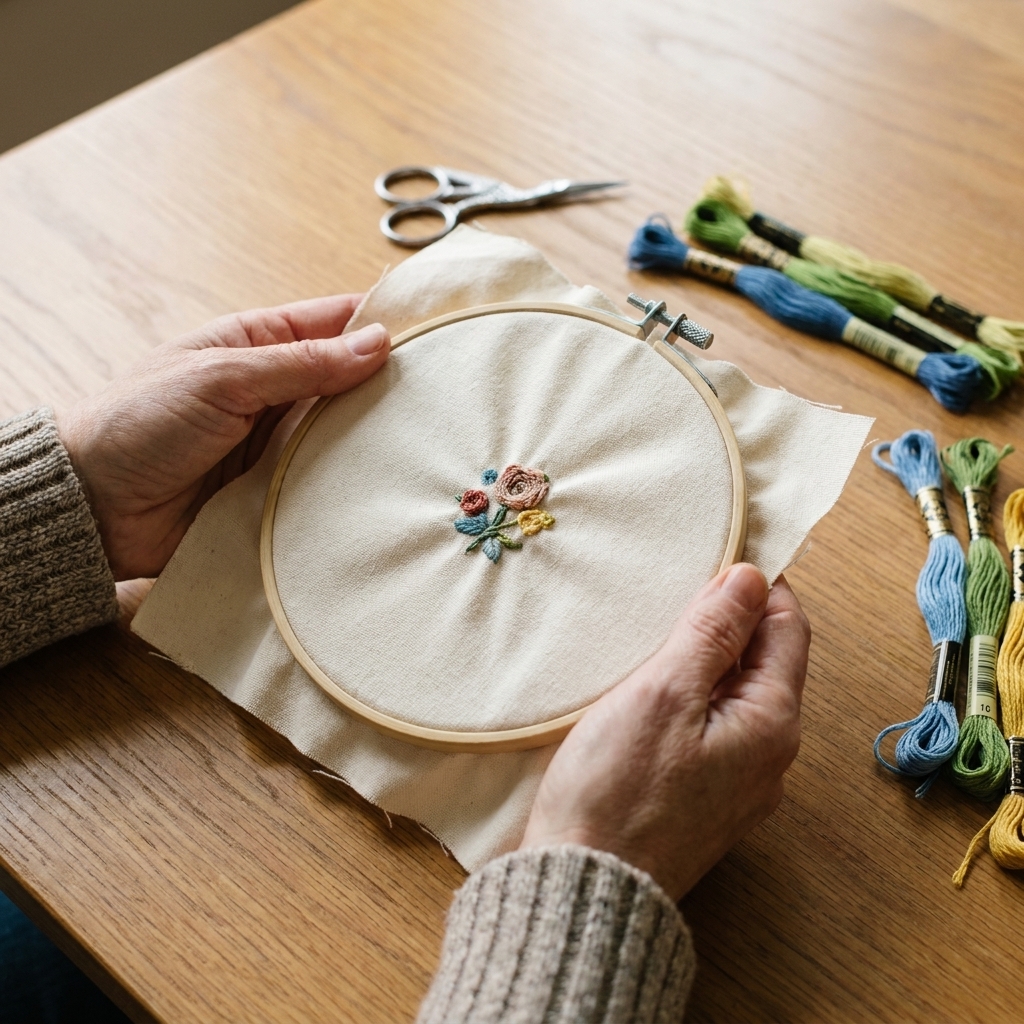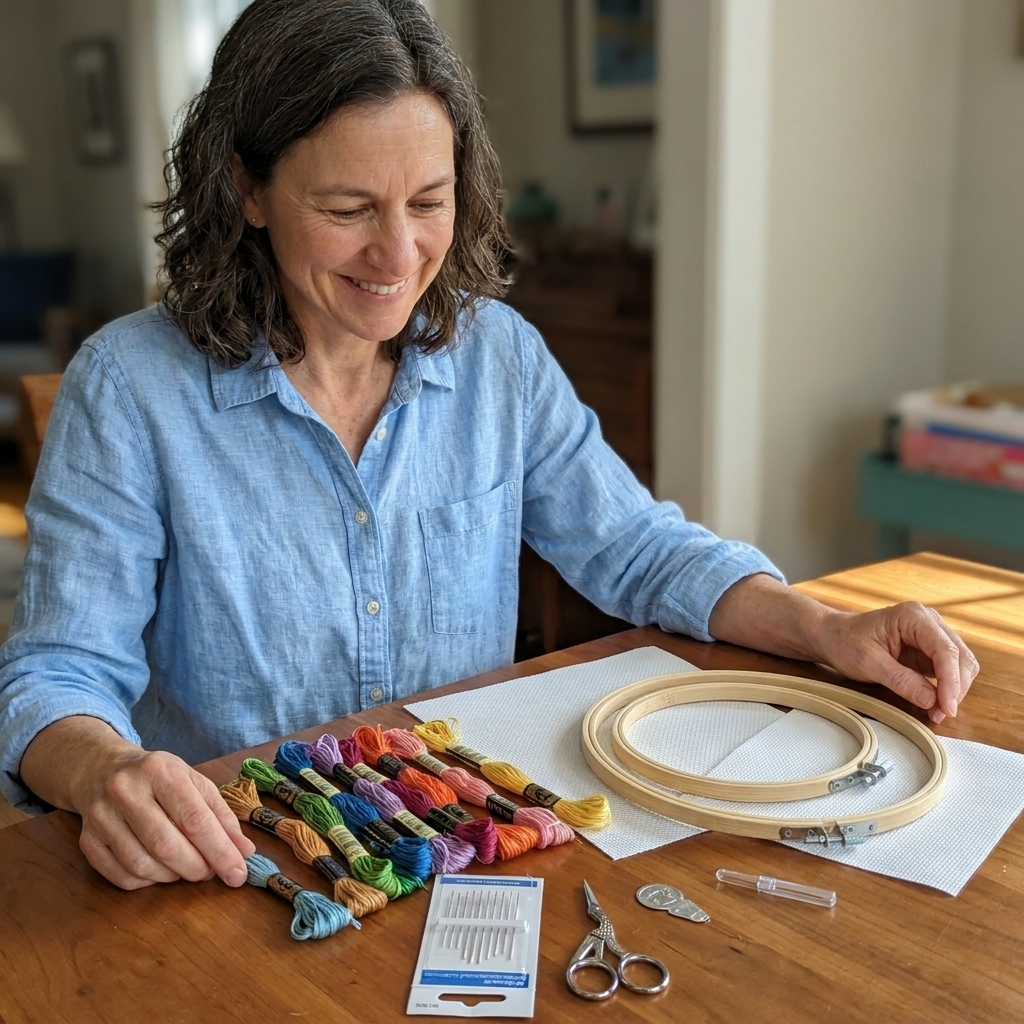
If you have ever stood in the floss aisle holding a DMC skein in one hand and an Anchor skein in the other, welcome. This is one of those wonderfully nerdy maker debates that can also be very practical, especially when a pattern calls for one brand and your local shop stocks the other.
Both DMC and Anchor make high-quality stranded cotton floss that works beautifully for cross stitch and hand embroidery. The differences are real, but they are more “personality and preferences” than “good vs. bad.” Let’s break it down in a way that helps you pick what to buy, what to substitute, and how to keep your stitches looking consistent.
Quick note: This comparison focuses on each brand’s standard 6-strand stranded cotton floss, not pearl cotton, metallics, or specialty/variegated lines.
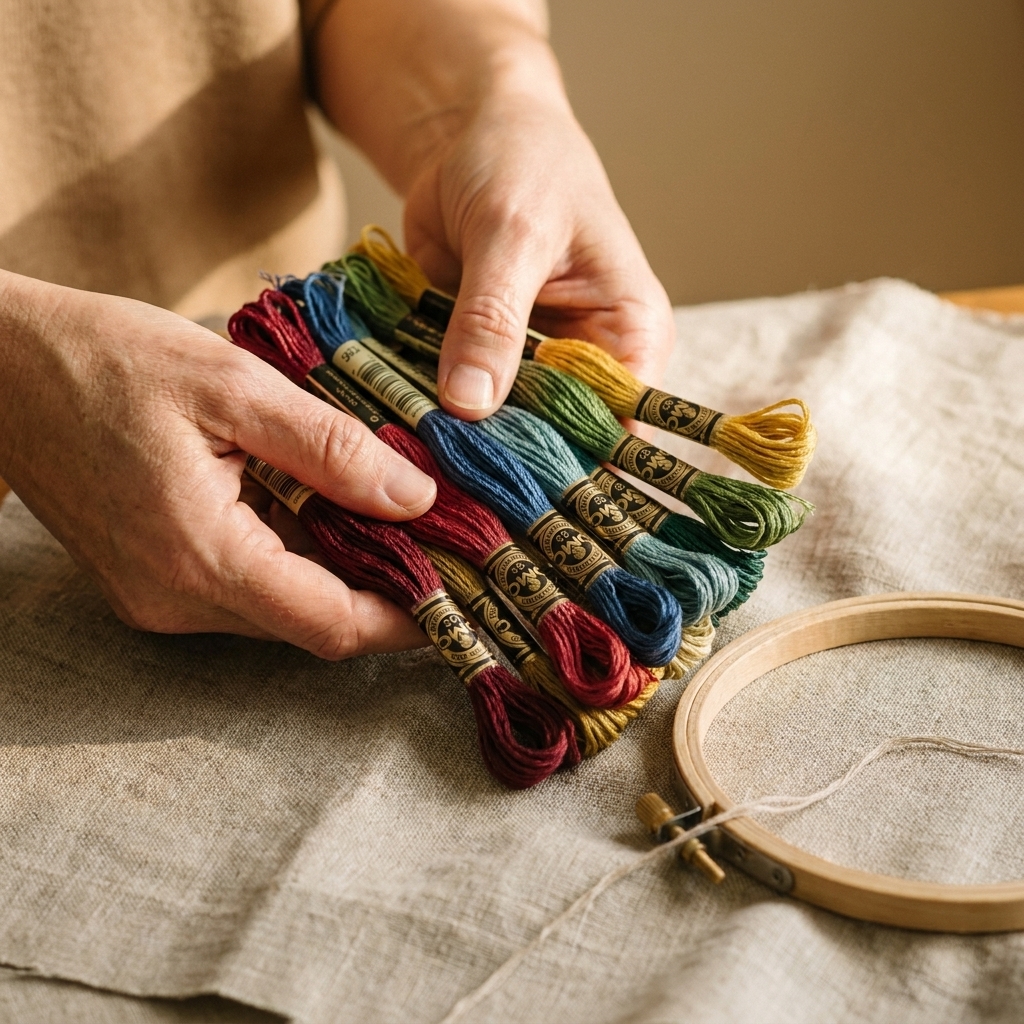
At a glance
If you just need the quick version before we go deep, here is the practical snapshot.
| Feature | DMC | Anchor |
|---|---|---|
| Fiber type | Stranded cotton (6 strands) | Stranded cotton (6 strands) |
| Feel and stitch behavior | Smooth, consistent, widely familiar | Often described as a touch softer by many stitchers, though experiences vary |
| Sheen | Clean, classic sheen | Often perceived as slightly more lustrous by some stitchers, though this can vary by color and batch |
| Color range | Very broad and commonly charted in many English-language patterns and kits | Broad range with strong coverage, but less commonly listed on charts in some markets |
| Availability | Often widely stocked in North America and the UK, and common in many other regions | Excellent availability in many countries, but shelf space varies by region and retailer |
| Pattern compatibility | Many modern patterns default to DMC numbering | Some patterns provide Anchor conversions, but not always |
| Mixing brands in one project | Possible, but test first for sheen and color match | Possible, but test first for sheen and color match |
Quality and consistency
Both brands are considered top tier for everyday stitching. The reason you will hear people passionately defend one over the other usually comes down to consistency from skein to skein, and how the floss behaves in their hands.
Strand separation
DMC and Anchor are both 6-strand floss, meaning you can split them into 1 to 6 strands depending on the look you want. In general:
- DMC tends to separate cleanly and predictably. If you are brand new, this can feel reassuring.
- Anchor also separates well, and many stitchers describe it as slightly softer through the fingers, which can make separating and laying strands feel extra smooth. That said, some stitchers feel the opposite depending on the specific color or batch.
Beginner tip from someone who has absolutely stitched with a tiny “floss beard” on her shirt: no matter the brand, pull strands apart one at a time, slowly, and let the remaining strands dangle so they can untwist.
Fuzzing, tangling, and knotting
Thread drama happens with both brands, and it is not a moral failing. Tangling is usually about twist, length, and technique rather than brand.
- Keep your working length around 18 inches (45 cm) or shorter.
- Let your needle dangle every so often to unwind the twist.
- Consider railroading (guiding the strands so they sit side by side instead of twisting together) for cross stitch, or using a laying tool for satin stitches if you want ultra-smooth coverage.
Sheen and texture
If you stitch a solid block of color in DMC and the closest Anchor match beside it, you may notice a subtle difference in how light hits the stitches. This is where preference really shows up.
DMC: classic, even shine
DMC’s finish tends to read as a clean, traditional sheen. It photographs nicely, it behaves predictably, and it is the baseline many of us learned on. If you want a dependable “standard floss look,” DMC is a safe bet.
Anchor: often a touch silkier
Anchor floss is also stranded cotton, but many stitchers perceive it as slightly more lustrous or silky in finish. On certain colors, especially darker shades, this can make the stitches catch the light a little differently. Like any dyed product, there can be variation across colors and production runs, and not everyone sees a difference.
Practical takeaway: if you are mixing brands in one project, the most noticeable difference is usually sheen. If your piece includes large blocks of color or smooth gradients, do a quick test so the finish feels cohesive under the lighting where the piece will live.
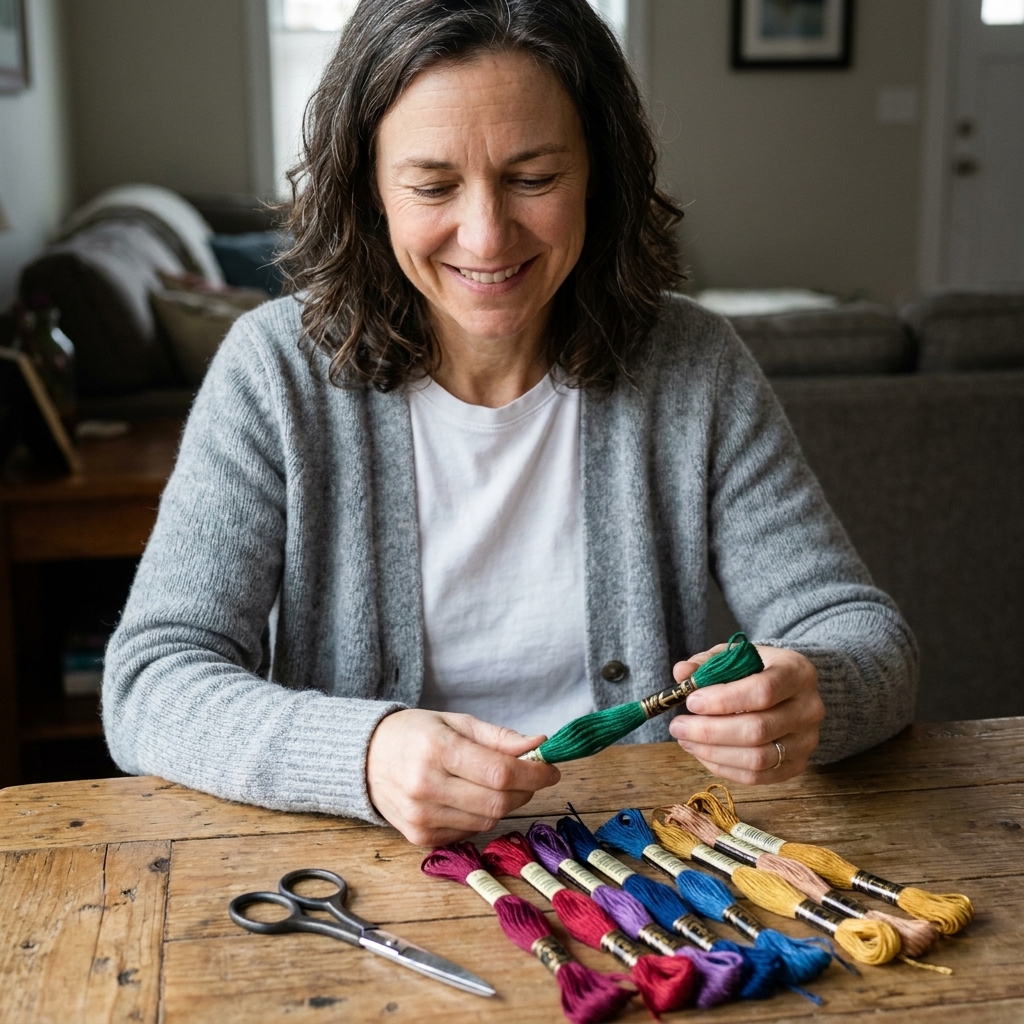
Color range and shade families
For cross stitch, color availability is everything. For embroidery, it is still a big deal, especially if you like subtle shading in florals or portraits.
DMC color ecosystem
DMC’s biggest advantage is how often it is used as a default in many patterns, kits, and conversion tools, particularly in North American and UK markets. It also has a robust set of neutrals, skin tones, and incremental shade steps in many color families, which is why designers lean on it.
Anchor’s palette
Anchor has a strong color range too, and plenty of stitchers love its blues, greens, and rich brights. The important thing is not whether one has “better” colors, but whether the brand you choose has the specific shades your pattern needs and whether you can reliably restock them later.
Dye lots and restocking
Here is the quiet truth nobody tells you until it bites them: even high-quality brands can have slight dye lot variation. If you are working on a large piece, or you know you will need multiple skeins of one color, buy them at the same time when possible.
If your skein band or packaging includes a lot or batch identifier, keep it (or snap a quick photo) so you have a reference if you need to match later.
Availability and price
Your best brand is often the one you can get easily and replace easily. That means:
- Local shop access: In some regions, DMC takes up more shelf space. In others, Anchor is just as common, especially through independent needlework shops.
- Online ordering: Both brands are widely sold online, but shipping costs can change the real price fast.
- Restocking mid-project: Choose the brand you can reliably reorder without a scavenger hunt.
If you are stitching a gift on a deadline, consistency and availability matter more than theoretical differences. Ask me how I know.
Cross stitch performance
For most stitchers on 14 count to 18 count Aida or evenweave, both brands give excellent coverage with the usual strand counts. Common starting points are:
- Two strands for 14 count and 16 count.
- One strand for 28 count over one, or for a lighter, more delicate look.
- Three strands for fuller coverage on 14 count if you love a plush finish.
If you notice your crosses looking a bit more “ropey” with either brand, it is usually twist. Let your needle drop and unwind, and try railroading if you want crisp, tidy Xs.
Embroidery performance
Hand embroidery tends to highlight texture more than cross stitch, so differences in sheen and softness can feel more noticeable.
Satin stitch and fills
Both flosses can create beautiful satin stitches. If you struggle with thread splitting or fuzzy edges, the fix is usually technique: shorter lengths, a sharp needle, and using fewer strands so it lays flatter.
Outlines and line work
For clean outlines, either brand works well. If you are picky about line smoothness, try:
- Using one or two strands instead of three
- Switching to a slightly sharper needle so you pierce cleanly
- Keeping your tension steady and relaxed
Blending
If you like blending two colors in the needle (for that painterly, shaded look), both brands blend nicely. The main caution: when you blend across brands, match not just color, but also sheen so the blend looks intentional.
Mixing DMC and Anchor
Yes, and many stitchers do. But I recommend mixing with a plan, not out of desperation at 10 pm the night before a deadline.
When it works well
- Small motifs where each color is isolated (tiny flowers, confetti areas)
- Projects with lots of texture where sheen differences are less obvious
- When you have tested the two threads under the light where the piece will live
When it can look off
- Large solid blocks of color side by side
- Smooth gradients where subtle shading matters
- Samplers with solid fills that show light reflection clearly
My simple test: stitch a small square of each floss on the same fabric, step back, then look at it in daylight and at night. If it looks cohesive in both, you are good.
How to convert colors
Pattern conversion is the part that makes people nervous, but you do not need to be a color scientist. You just need a method.
1) Use a chart, then verify
Conversion tables are a great starting point, but they are not perfect because thread colors do not map one to one across brands. As a general rule, trust charts published by established thread sellers, distributors, or needlework retailers, and be cautious about lists that look like they were copied from screen colors with no source.
Once you have the suggested equivalent, verify it by:
- Comparing skeins in the same lighting
- Checking value (lightness vs. darkness) first
- Then checking undertone (warm vs. cool)
2) Match value before hue
This is my biggest “save your project” tip. If you have to compromise, keep the light to dark steps consistent. A slightly different blue that has the correct darkness will usually look better than the “right” blue that is too light or too dark and breaks the shading.
3) Convert gradients as a set
If a pattern uses five close shades for a rose or a sky, do not convert them one at a time in isolation. Convert the whole family so the steps still feel evenly spaced.
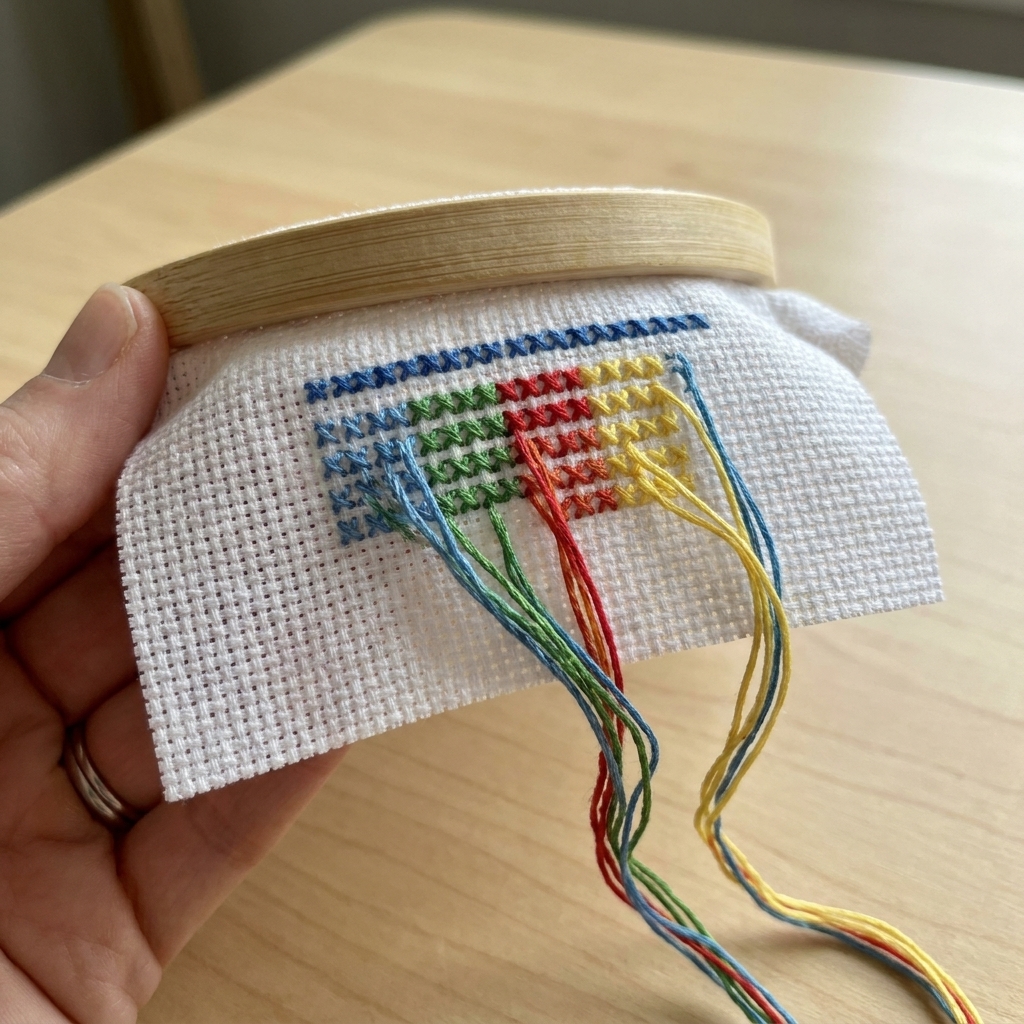
4) Stitch a tiny swatch
I know, I know. Swatching sounds like extra work. But a 10-minute test can prevent hours of unpicking. Even a small row of stitches will reveal whether your substitution is too bright, too dull, or oddly different in sheen.
Choosing a brand
If you are still torn, here are the most sensible ways to decide.
Pick DMC if
- You want the easiest time following many modern cross stitch patterns and kits
- You like a very familiar, classic floss look
- You want the simplest restocking experience in your area
Pick Anchor if
- Anchor is easier to buy where you live
- You love the feel and finish you get from it
- You already have an Anchor stash and want to stick with one system
Go mostly one brand
My most beginner-friendly advice is to choose one brand as your main collection, then keep a small “wild card” section for substitutions. That way, most of your projects stay visually consistent, and you can still be flexible when a color is out of stock.
Beginner FAQ
Are DMC and Anchor the same thickness?
They are both 6-strand cotton floss intended for the same uses. In practice, any perceived thickness difference is usually subtle, and what you notice more often is sheen and twist behavior.
Will the same number look identical across brands?
No. DMC and Anchor use different numbering systems, and their colors do not match by number. Always convert by color, not by number.
Is one brand more colorfast?
Both brands are designed for embroidery use and are generally reliable, but colorfastness can vary by color and dye. If you are making something that will be washed often, gentle handling helps.
General precautions: wash in cool water, use a mild detergent, do not soak for long periods, and consider a color catcher if you are worried about bleeding, especially with intense reds and darks. When in doubt, test a small strand in water before committing.
What if my pattern lists DMC and I can only buy Anchor?
Convert using a chart, then double-check in person if possible. Prioritize matching value for shading, and swatch the key colors that sit next to each other.
Conclusion
DMC and Anchor are both excellent floss brands, and you truly cannot make a “wrong” choice for cross stitch or embroidery. If you love the feel of one more than the other, follow that joy. Crafting is supposed to be relaxing, not a high-stakes thread election.
If you want the simplest path, stick with the brand your patterns use most often and that you can restock easily. If you love experimenting, keep a conversion chart bookmarked, do a quick swatch when it matters, and let your stitches be the judge.