If you have ever looked at a cross stitch pattern and thought, “Why is that little square only half filled in?” you have met fractional stitches. They look fussy at first, but they are one of the simplest ways designers create smoother curves, sharper corners, and tiny details like letters, faces, petals, and delicate outlines.
In this guide, I will walk you through quarter stitches, half stitches, and three-quarter stitches step by step, plus how to read them on a chart and how to keep them neat on different fabric counts. No perfection required, just a willingness to poke your fabric a few extra times.
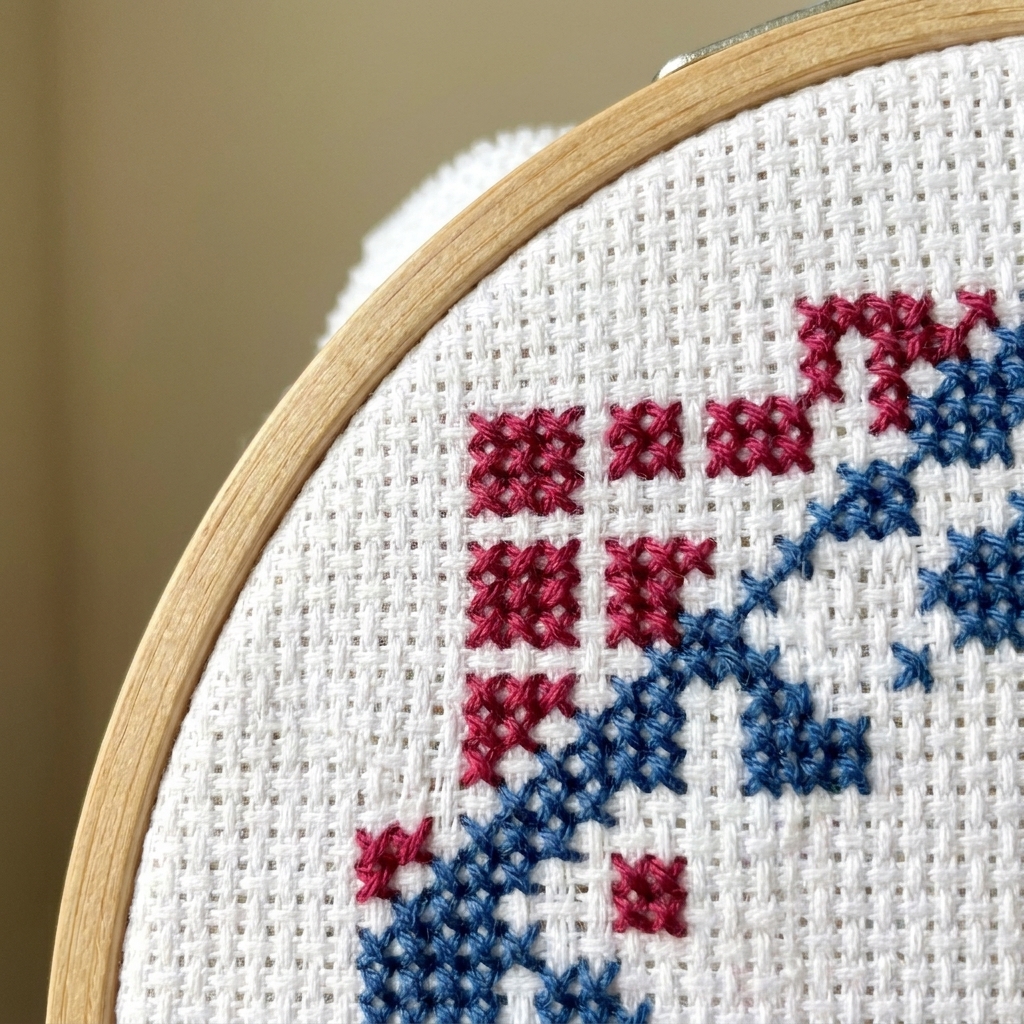
What fractional stitches are
A regular cross stitch fills one whole fabric square with an X. Fractional stitches fill only part of that square by using the square’s corners and a center point, sometimes by splitting fabric threads or carefully piercing between them to create that center.
- Quarter stitch: one diagonal leg from a corner to the center of the square.
- Half stitch: one diagonal across the square, corner to corner. It is literally half an X.
- Three-quarter stitch: a half stitch plus one extra quarter leg, creating a three-armed X that covers three quarters of the square.
Designers use these partial stitches to “cheat” a smoother edge without changing the whole stitch size. That is why they show up constantly in patterns with curves, diagonals, backstitched outlines, and anything with shading.
Before you start: fabric and tools that make this easier
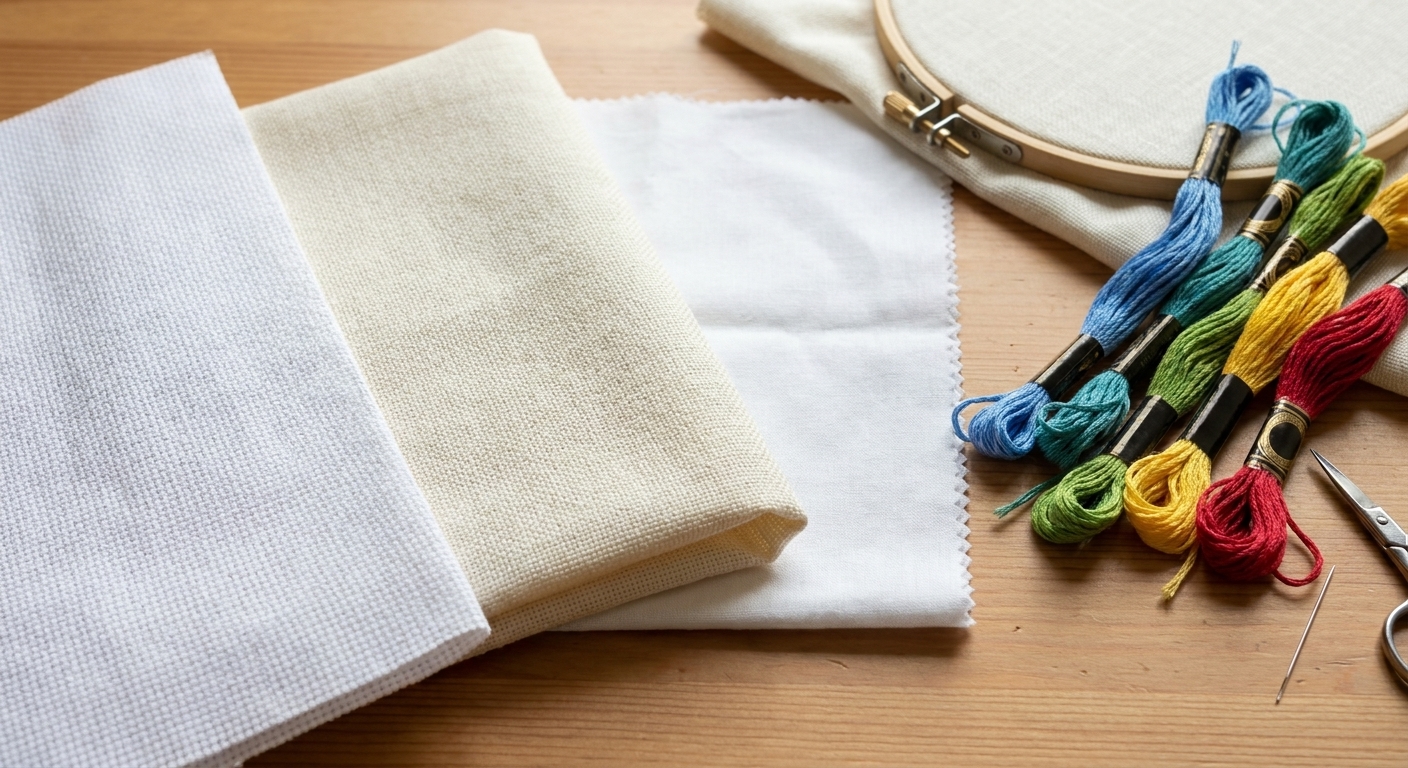
Best fabrics for fractional stitches
Fractionals can be done on almost anything, but the experience changes depending on your fabric.
- Evenweave and linen: often easier for fractionals because you can split threads predictably to hit a true center point.
- Aida: totally doable, just a little trickier because the center of a block is not an actual hole. You will usually pierce between threads to create that center point.
Needle and floss tips
- Use a sharp needle if needed: If you stitch on Aida and struggle to pierce the block cleanly, switching from a tapestry needle to a small sharp (or a petite needle) can help. If you do, go slowly so you do not split fabric threads too aggressively.
- Railroad your stitches: Keeping the strands lying neatly side by side matters more on fractionals because there is less coverage and every bump shows.
- Mind your tension: Fractionals are easy to pull too tight, which can distort the square. Aim for “snug, not cinched.”
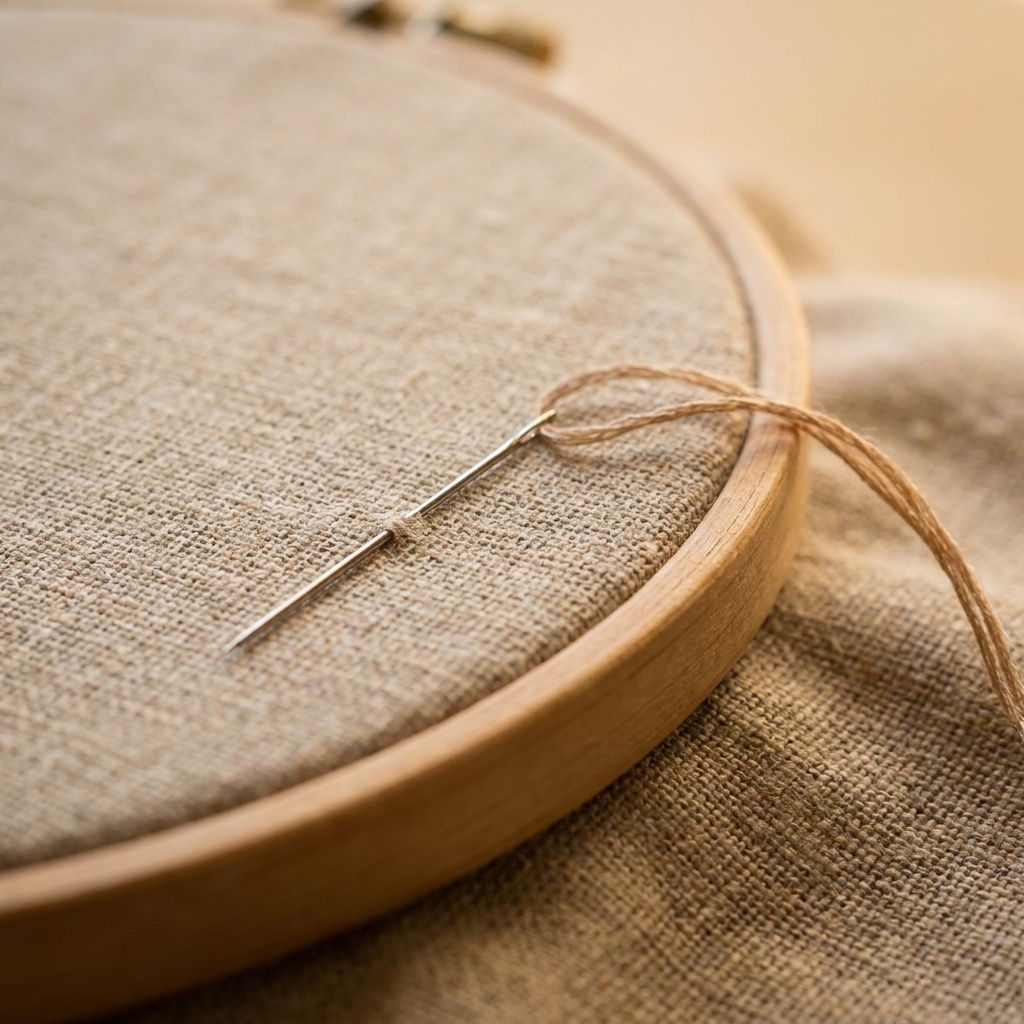
How to read fractional stitches on a chart
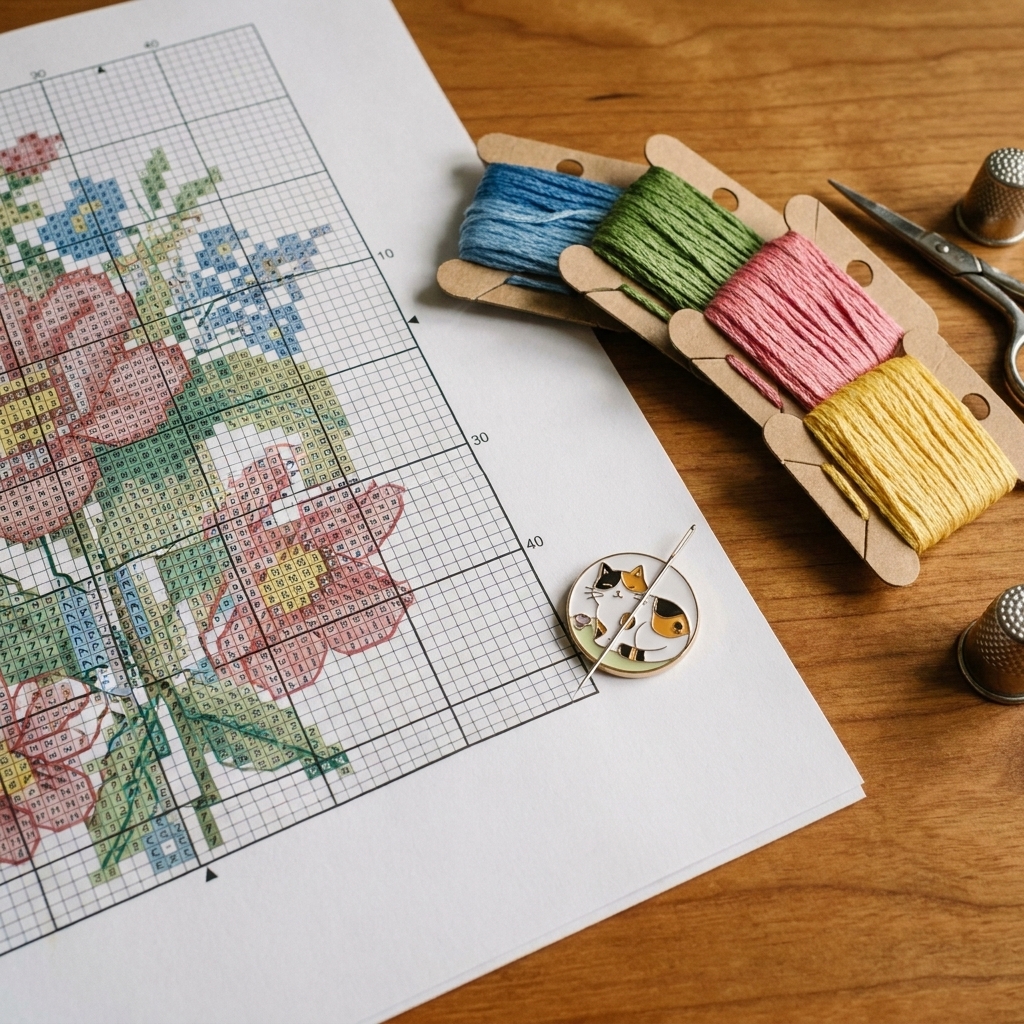
Charts vary by designer and software, so always check the pattern key first. That said, most fractional symbols follow a few common conventions.
Common chart symbols you will see
- Half stitches are often shown as a triangle filling half the square, or as a diagonal slash (either / or \) through the square.
- Quarter stitches are often shown as a small triangle in one corner of the square.
- Three-quarter stitches often look like a half-filled triangle plus a small triangle in one corner, or as a diagonal slash with an extra little corner marking.
Important detail: which direction does the diagonal go?
Half and three-quarter stitches depend on the diagonal direction. A / diagonal is different from a \ diagonal. If you accidentally flip it, the curve can look jagged or the shading edge can shift.
When in doubt, zoom in on the pattern preview or look at any backstitch lines around that area. Fractionals usually exist to support an outline or curve, so the “right” direction tends to match the edge that needs smoothing.
Quarter stitches
A quarter stitch is one diagonal leg that goes from a corner of the square to the center of the square. Think of it as a single “arm” of an X.
How to stitch a quarter stitch (step by step)
- Bring your needle up at the corner hole of the square.
- Insert your needle down at the center of the square.
- Gently snug the thread so it sits cleanly on the surface.
Finding the center of the square
On evenweave or linen: the center is naturally defined by the weave. You can usually place your needle between threads neatly.
On Aida: you will typically pierce the block between fabric threads to create a center point. Try to always pierce in the same spot so your fractionals stay consistent.
My favorite trick for clean quarter stitches
If your quarter stitch looks like it is slipping to one side, you are probably entering the center point at slightly different places each time. Pause and aim your needle carefully, especially on 14 count Aida where the blocks are chunkier.
Half stitches
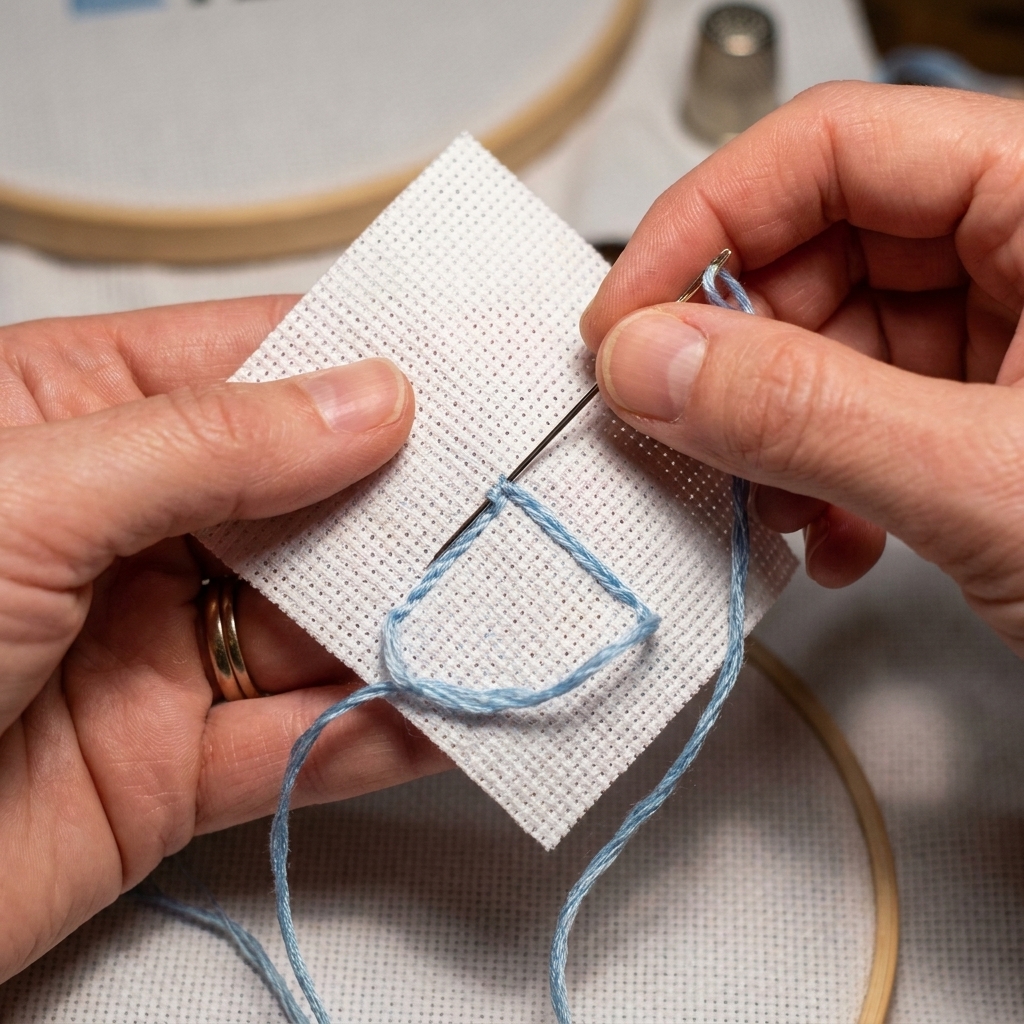
A half stitch is a single diagonal that goes corner to corner across one square. It covers half the area a full cross stitch would cover.
How to stitch a half stitch (step by step)
- Bring your needle up at one corner of the square.
- Go down at the opposite corner, creating one diagonal line.
Which direction should your half stitch slant?
Patterns usually specify the slant by symbol. If you are freehanding or adapting a design, pick one direction and be consistent within that area. Consistency is what makes half stitch sections look intentional instead of “oops I forgot the second leg.”
When half stitches are especially useful
- Background fills: They are faster and softer looking, great behind a focal motif.
- Shading: They can create lighter coverage, especially on darker fabrics.
- Blending and gradients: They help transitions look less blocky.
Three-quarter stitches
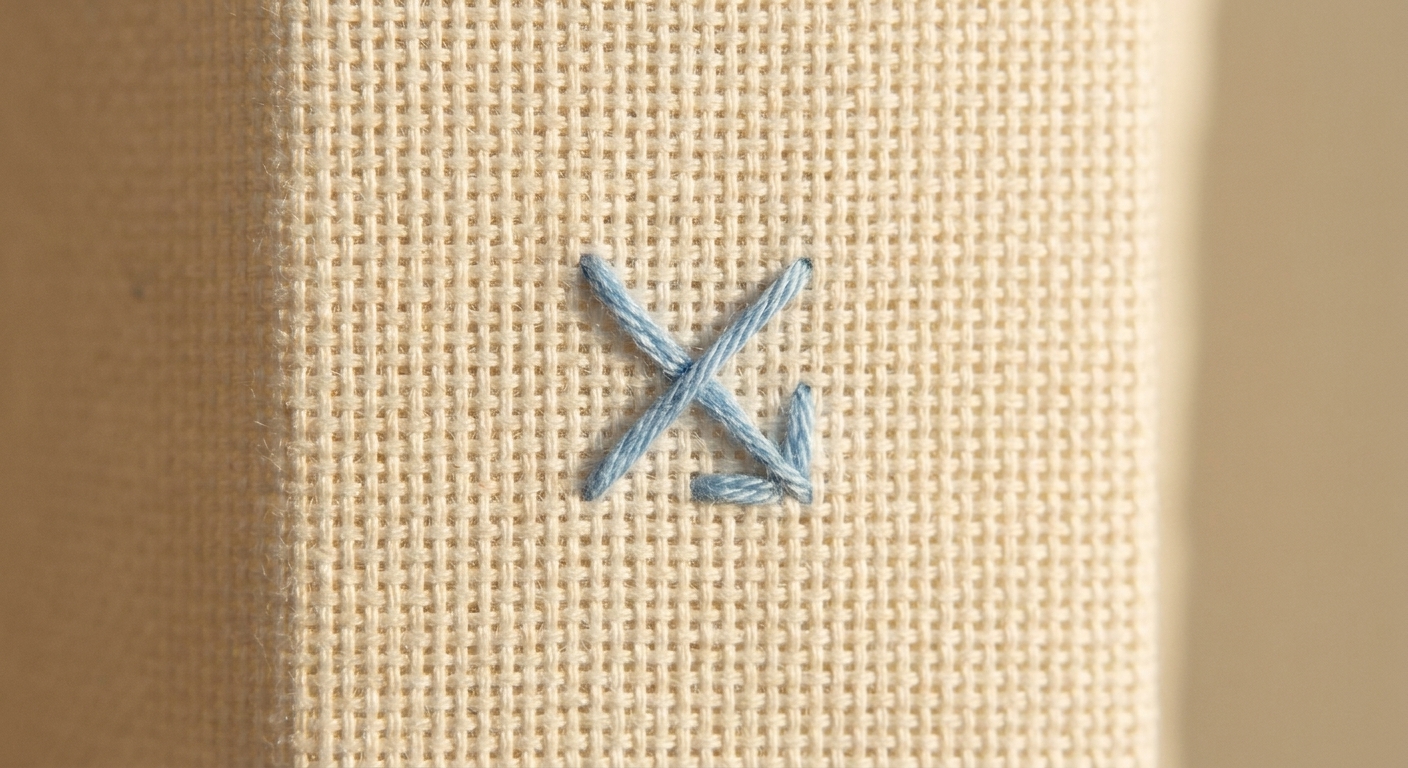
Three-quarter stitches are the ones that make people squint at their pattern. The good news is they are just a half stitch plus one extra quarter leg.
How to stitch a three-quarter stitch (step by step)
- Work a half stitch across the square (corner to corner) in the direction shown on your chart.
- Add a quarter stitch from the remaining empty corner to the center of the square.
That extra quarter leg is what rounds out curves and creates crisp diagonals. The key is identifying which corner your chart assigns to the quarter leg, because it can sit on either side of the diagonal depending on the symbol.
Order matters (a little)
If multiple threads will meet in the center of the same square, I usually stitch the longer diagonal first, then add the quarter leg. It helps the center point feel less crowded and keeps the quarter leg from getting squished underneath.
What if a three-quarter stitch shares a square with another color?
This is common in detailed patterns, especially faces, florals, and lettering. The chart might show two colors in the same square, each taking a quarter or three-quarter portion.
General approach:
- Stitch the part that sits “under” first if you want a cleaner edge on top, similar to layering. Often that means doing the half stitch first, then the quarter stitch that defines the visible curve.
- If the center gets bulky, use a laying tool or your needle tip to coax the strands into place rather than pulling tighter.
Keeping fractional stitches neat
1) Watch for fabric distortion
Fractionals are tiny leverage points. If you tug too hard, the square can warp and your neighboring full crosses may look slightly tilted. If you notice puckering, loosen your tension a touch and make sure your fabric is drum-tight in the hoop or frame.
2) Reduce bulk at the center
Centers can get crowded when several fractional stitches meet. A few ways to keep it flatter:
- Use one strand fewer in extremely detailed areas, if the pattern allows and the coverage still looks good.
- Stitch fractionals with slightly lighter tension than full crosses.
- Bring your needle up and down cleanly, avoiding repeated pokes in the exact same spot if you can route your thread differently.
3) Keep your top leg direction consistent
This is not specific to fractionals, but it matters more when you mix full crosses with half and three-quarter stitches. Decide which direction your top leg runs for full crosses and keep it consistent across the piece. That consistency makes fractional areas blend in instead of standing out.
4) Consider parking or doing details last
If you stitch in big color blocks, it is often easier to add fractional stitches after the surrounding full stitches are in place. You can see the curve the designer intended and you will be less likely to misread a tiny symbol.
If your pattern includes backstitching to sharpen edges, do your fractional stitches first, then add backstitch last so the line sits exactly where it is meant to.
Fractional stitches on different fabric counts
14 count and 16 count Aida
These are the counts where people notice fractionals “feeling hard” because you are often piercing the center of an Aida block. Go slowly, and consider a sharper needle if you are fighting the fabric.
18 count Aida
Fractionals can actually look extra crisp here because the stitches are smaller. The center point is still a pierce point, but it tends to behave a bit better because the blocks are tighter and the stitch spans are shorter.
Evenweave and linen (over 2)
Fractionals are usually smooth and pleasant on evenweave and linen because the weave gives you a natural grid. If you stitch over two threads, your “square” is larger and the center point is easier to target consistently.
Troubleshooting
My quarter stitches look lopsided
- You are likely entering the center point inconsistently. Slow down and aim for the same spot every time.
- Check that your fabric is evenly tensioned in the hoop.
The fabric is shredding when I try to pierce the center on Aida
- Try a slightly smaller needle, and pierce gently rather than forcing it.
- Stitch fractionals before the area is too crowded. If the surrounding stitches are already bulky, the fabric threads have less room to flex.
My three-quarter stitches look bulky in the middle
- Use lighter tension and railroad the strands.
- If multiple colors meet, stitch the diagonal first, then the quarter leg, and nudge the strands into place with your needle tip.
I cannot tell which fractional symbol is which
It is not you. Some chart renderings are tiny. Try these fixes:
- Zoom in on a digital chart or photocopy and enlarge the relevant page.
- Highlight fractional stitches on a working copy with colored pencils.
- Cross-reference with the finished preview image and any backstitch lines in that area.
Quick reference: what to stitch
| Stitch type | What it looks like on fabric | How many “legs” | Where the needle goes |
|---|---|---|---|
| Quarter stitch | One short diagonal to the center | 1 | Corner to center |
| Half stitch | One full diagonal across the square | 1 | Corner to corner |
| Three-quarter stitch | A diagonal plus one extra short leg | 2 | Corner to corner, then corner to center |
Fractional stitches are worth the tiny extra effort
Once your hands learn the corners-and-center rhythm, fractional stitches stop feeling like a surprise pop quiz and start feeling like a superpower. They are the reason a round teacup rim looks round, a script letter looks delicate, and a rose petal edge looks soft instead of stair-stepped.
If you are practicing, try stitching a small circle or heart motif and intentionally add quarter and three-quarter stitches along the curve. It is the fastest way to see the magic happen.
FAQ
Do I always need to pierce the fabric for fractional stitches on Aida?
For quarter and three-quarter stitches, yes, you usually need a center point, which means piercing between the Aida threads. Half stitches are corner to corner, so they use existing holes.
Can I replace fractional stitches with full cross stitches?
You can, but you will lose detail and curves will look more jagged. If a pattern uses fractionals heavily, they are doing important shaping work. I recommend trying them first, even if you only practice on a spare scrap.
Should fractional stitches match the top-leg direction of my full crosses?
They do not have a “top leg” the same way full crosses do, but the diagonal direction matters. Follow the pattern’s direction so the curve and edge shaping land where intended.
What is the difference between a half stitch and a tent stitch?
On the front, they usually look the same: one diagonal. The difference is typically the stitch path on the back (and sometimes the method used in rows). Many stitchers use “tent stitch” to mean a half-cross worked in a way that keeps the back more compact and consistent. If your pattern specifies tent stitch, follow its instructions. If it just says half stitch, the simple corner-to-corner diagonal is usually fine.