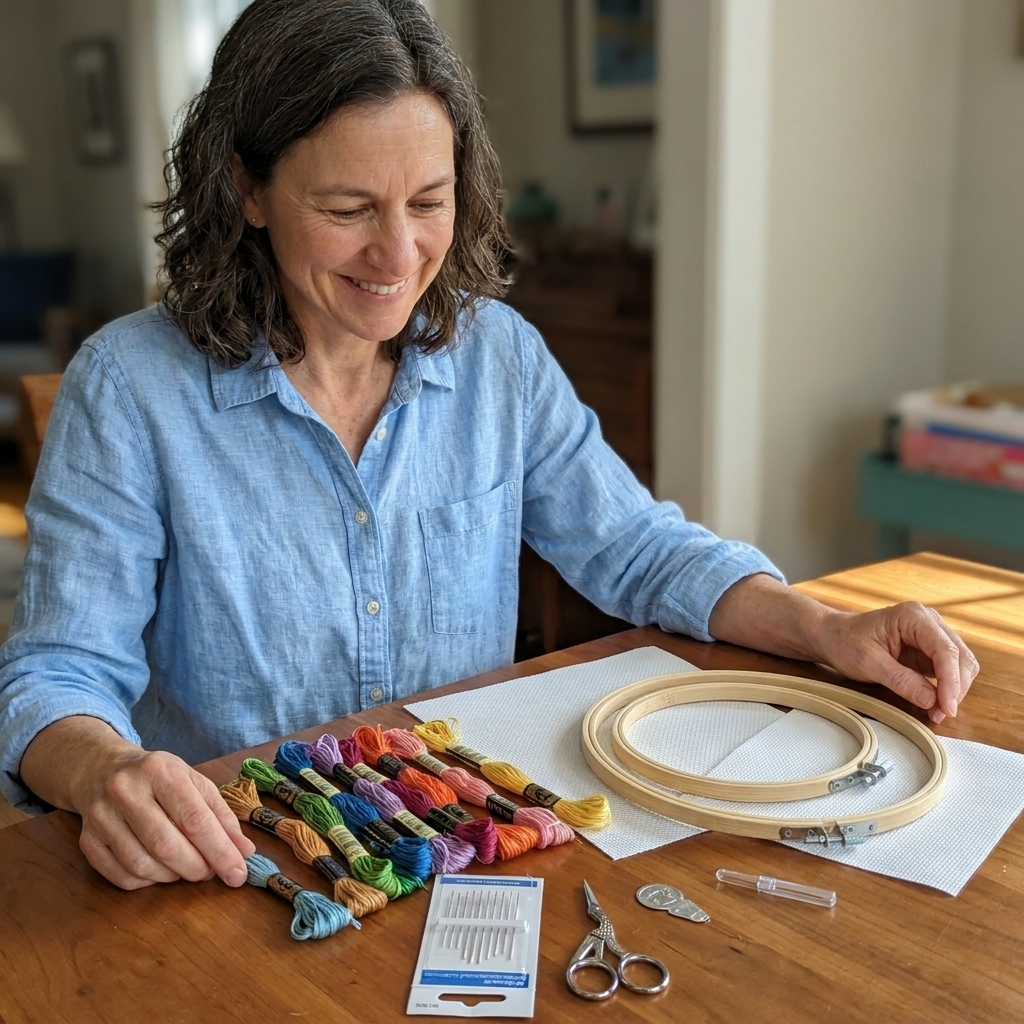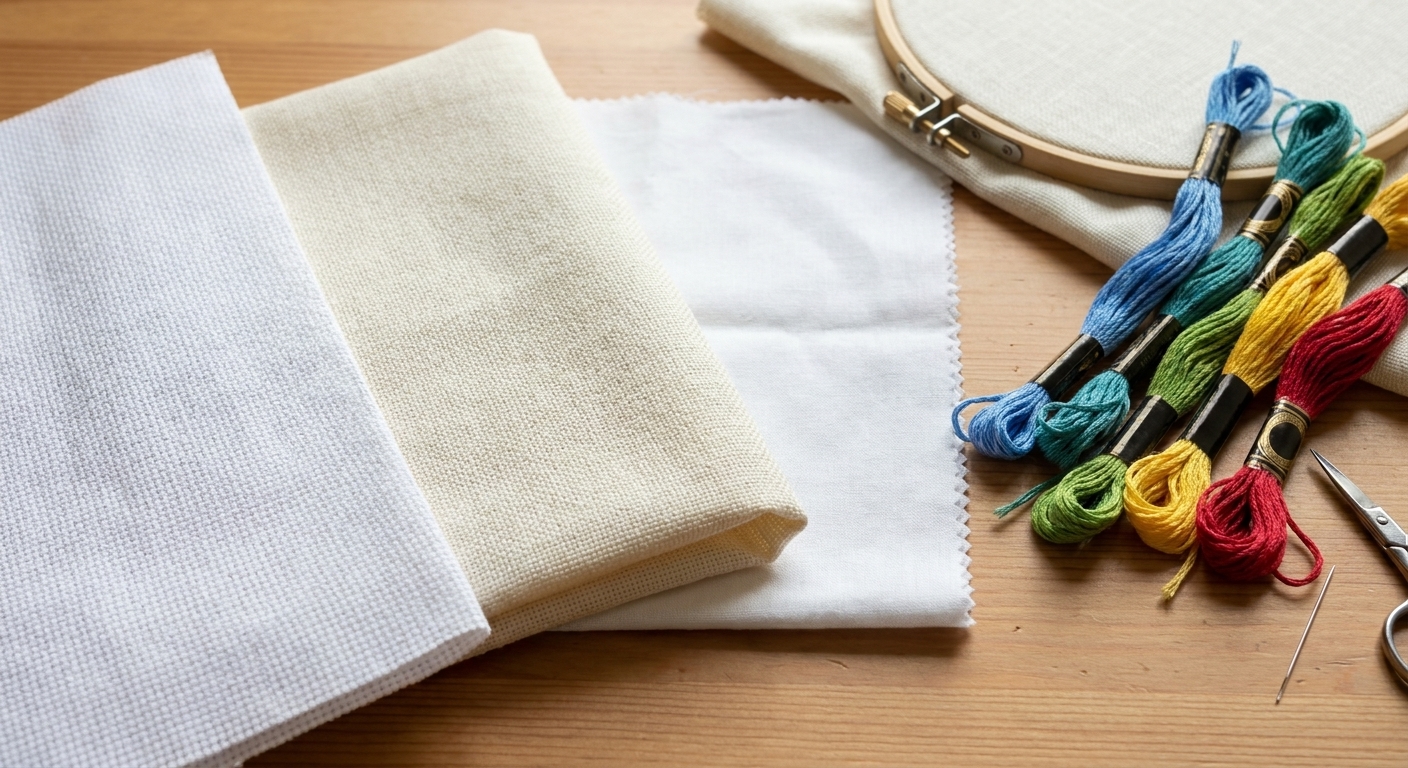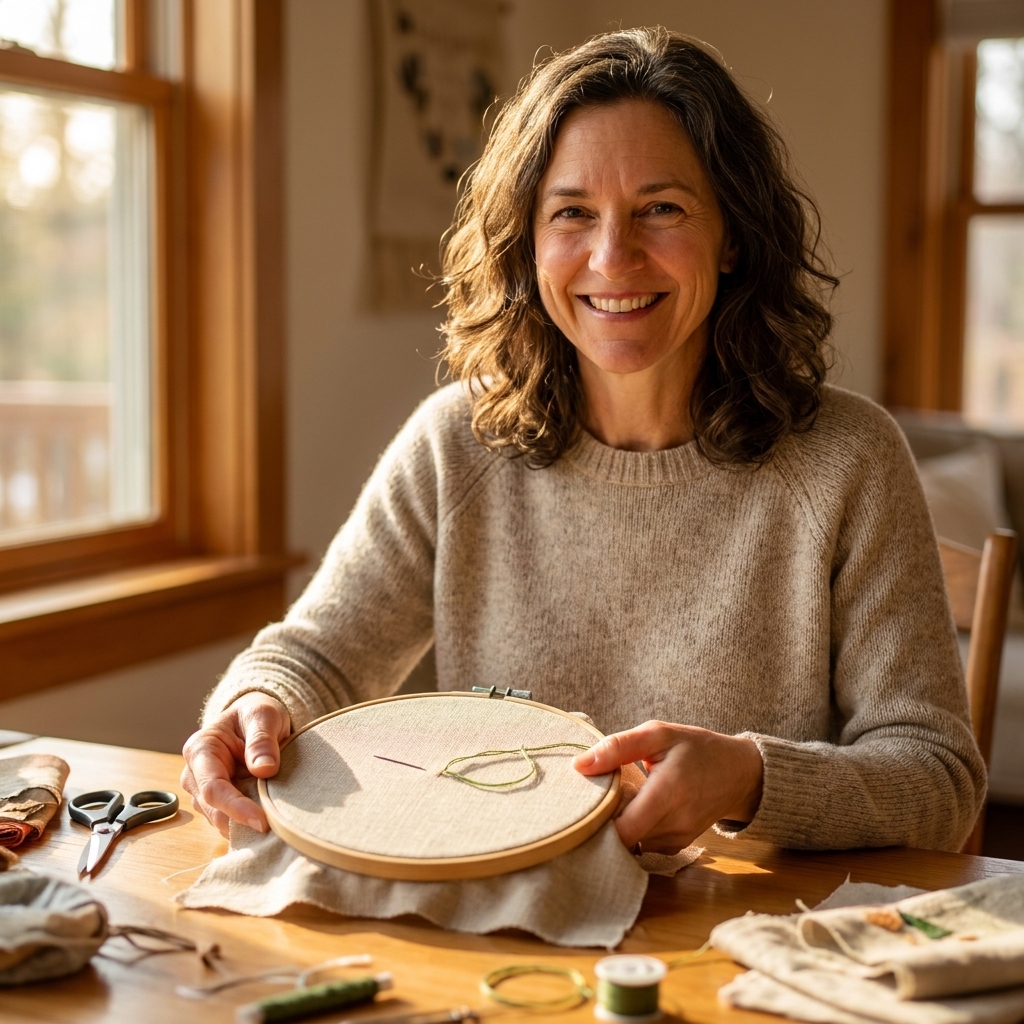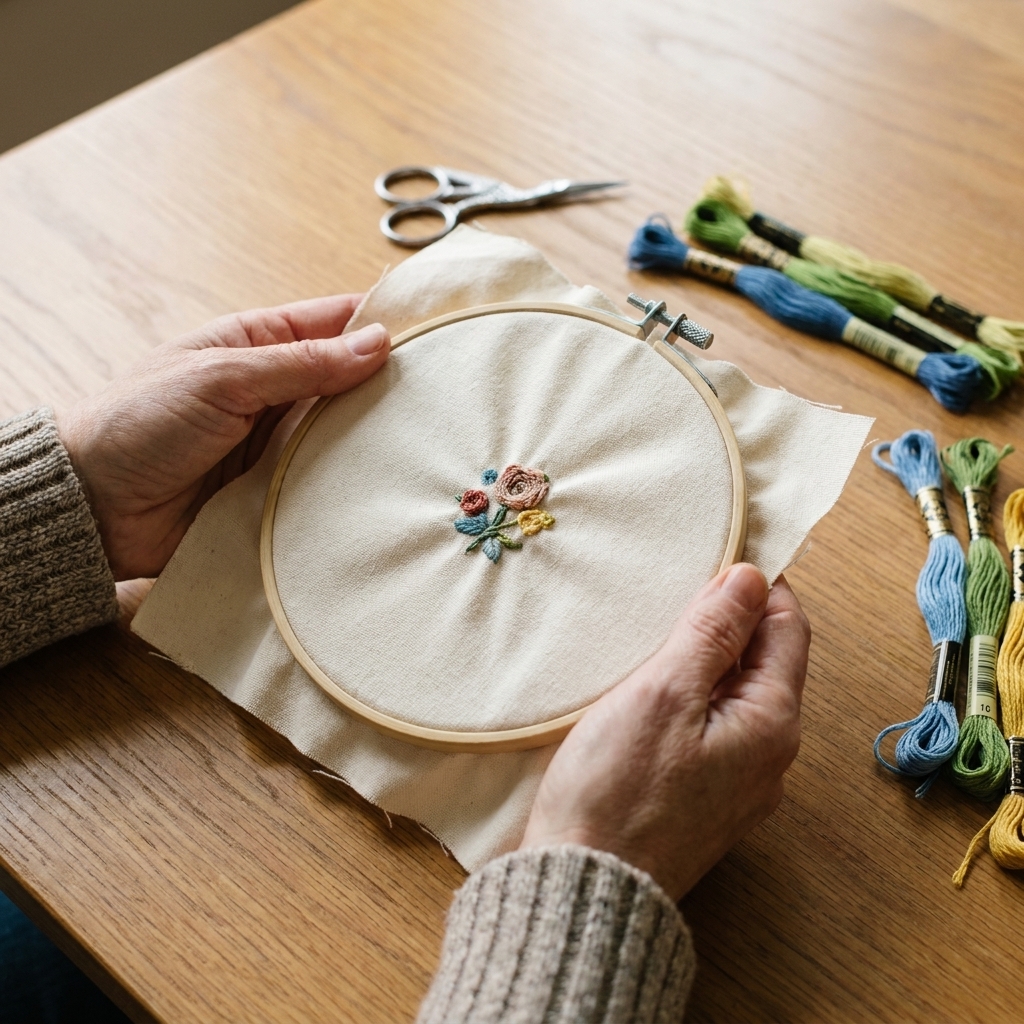
If you have ever sat down to stitch, threaded a needle, then immediately thought, “Why does this feel… wrong?” I have been there. The good news is that needle confusion is usually a simple mix-up between two workhorses that look similar at a glance: sharp embroidery needles and blunt tapestry needles. Choosing the right one makes stitching smoother, reduces fraying, and saves your fabric from unnecessary wrestling.
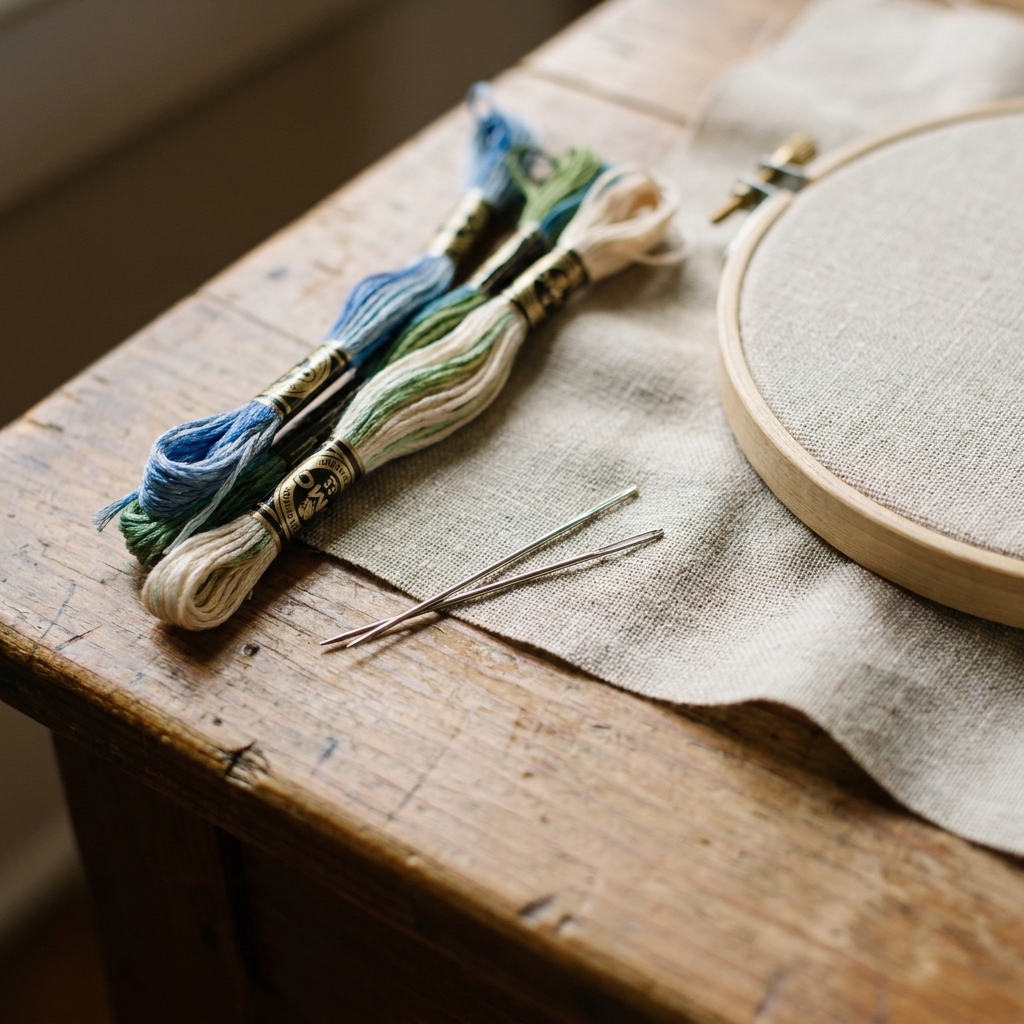
Let’s break down what each needle is for, how sizing works (yes, needle sizes are backwards), and exactly what to grab for cross stitch on Aida, linen, and even everyday surface embroidery.
The quick difference
Embroidery needles (sharps)
Embroidery needles are sharp. They are designed to pierce fabric fibers cleanly, which is perfect for surface embroidery where you are not always following pre-made holes.
- Tip: sharp point
- Typical eye: medium to large, depending on type
- Best for: surface embroidery (backstitch, satin stitch, stem stitch), freehand designs, stitching on tightly woven fabrics where you need to make your own holes
- Common names you will see: Embroidery needles, Sharps, Crewel needles
Tapestry needles
Tapestry needles are blunt. They slide between fabric threads instead of splitting them, which is exactly what you want for cross stitch and counted work where the fabric already has a grid or visible weave.
- Tip: rounded or blunt
- Typical eye: large (friendly for stranded cotton, pearl cotton, and some specialty threads)
- Best for: cross stitch, needlepoint-style stitches on evenweave/linen, working over 1 or over 2 on counted fabrics, stitching where you want to avoid snagging and splitting threads
My simple rule: If you can clearly see where the needle should go (Aida holes, linen weave), reach for tapestry. If you need to poke your own path through fabric, reach for a sharp.
Why the wrong needle is annoying
Using the “wrong” needle is not dangerous, but it can turn relaxing stitching into a tiny personal feud.
- Sharp needle on Aida: more likely to split the Aida threads (and your floss), which can make stitches look fuzzy and can distort holes over time.
- Blunt needle on tightly woven fabric: you end up pushing hard, bending needles, and feeling like the fabric is refusing to cooperate.
- Too large a needle: leaves visible holes, stretches the fabric, and can chew up delicate threads.
- Too small a needle: is annoying to thread and increases friction, which can shred floss, especially metallics and rayon.
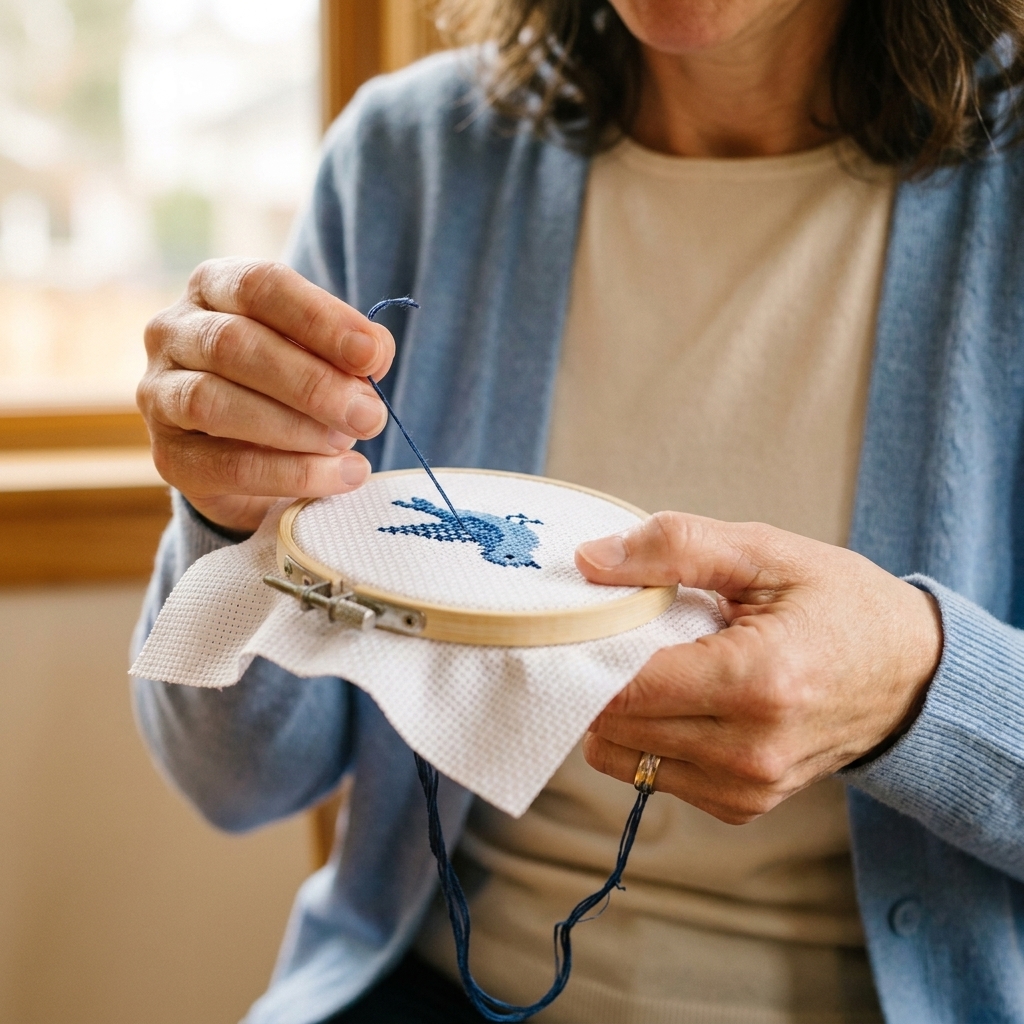
Needle sizing basics
Needle sizes can feel a little rude at first because the numbers run opposite of what you expect:
- Higher number = finer (thinner) needle
- Lower number = thicker needle
Length can vary by manufacturer and needle line, so “thinner vs. thicker” is the most reliable takeaway.
So a tapestry needle size 24 is larger than a size 28. This is why you will see cross stitchers talk about “going up to a 28” when they want a finer needle for higher-count fabric.
One more concrete example, because it helps: in embroidery needles, a size 7 is thicker than a size 10.
Picking a tapestry needle
For most cross stitch, you want a tapestry needle. The fabric type and count guide your size choice because the needle needs to pass through the holes without stretching them, while still having an eye big enough for your thread.
Easy sizing chart
| Fabric | Count | Needle type | Common sizes to try | Notes |
|---|---|---|---|---|
| Aida | 11 count | Tapestry | 20 or 22 | If you use more strands or like a roomier eye, 20 can feel nicer. 22 is a common starting point. |
| Aida | 14 count | Tapestry | 24 | The classic cross stitch combo. |
| Aida | 16 count | Tapestry | 24 or 26 | Try 26 if you want a finer feel or less hole widening. |
| Aida | 18 count | Tapestry | 26 | Helps reduce bulk and friction. |
| Evenweave or linen (over 2) | 28 count | Tapestry | 26 or 28 | Many stitchers love 26 here, but 28 can look a touch finer and feel smoother on delicate threads. |
| Evenweave or linen (over 2) | 32 count | Tapestry | 26 or 28 | Pick 28 if you want a finer needle and less hole widening. |
| Evenweave or linen (over 2) | 36 count | Tapestry | 28 | Great for delicate, high-count work. |
| Evenweave or linen (over 1) | 28 to 40 count | Tapestry | 28 | Over 1 is tiny, so a slimmer needle keeps things tidy. |
If you are between sizes: choose the smaller (finer) needle if it still passes comfortably and the eye is not squeezing your thread. A needle that is too large is more likely to distort holes and abrade thread.
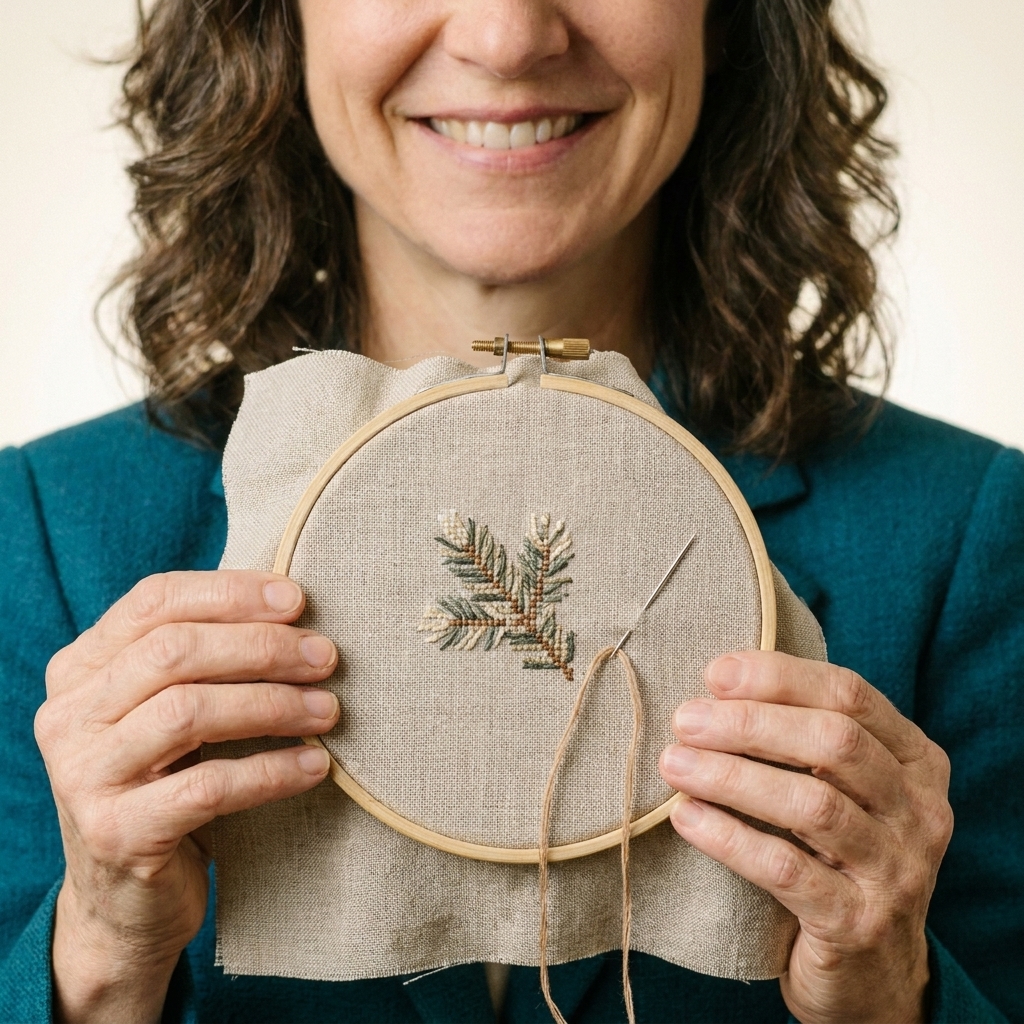
Picking an embroidery needle
For surface embroidery, you usually want a sharp embroidery (crewel) needle, because you are piercing the fabric, not following pre-made holes.
Embroidery sizing chart
| Fabric | Thread | Needle type | Common sizes to try | Notes |
|---|---|---|---|---|
| Cotton quilting fabric | 2 to 3 strands floss | Embroidery (sharp) | 7 to 9 | Size 7 for thicker stitching, 9 for finer lines. |
| Cotton quilting fabric | 1 strand floss | Embroidery (sharp) | 9 to 10 | Great for delicate outlines and tiny lettering. |
| Linen (surface embroidery) | 2 strands floss | Embroidery (sharp) | 7 to 9 | Linen varies a lot. Let the fabric feel decide. |
| Linen (surface embroidery) | Pearl cotton #8 | Embroidery (sharp) | 5 to 7 | Pearl cotton is twisty and likes a bigger eye. |
| Denim or heavy canvas | 3 to 6 strands floss | Embroidery (sharp) | 3 to 5 | Use a thimble. Your fingers deserve it. |
| Felt or wool felt | Pearl cotton #5 or wool | Embroidery (sharp) | 3 to 5 | Felt is forgiving, but a bigger needle helps with drag. |
Helpful translation: In hand embroidery, many beginners do best starting with an embroidery needle in size 7 or 8 and adjusting from there.
Crewel needles
Crewel needles are typically sharp embroidery needles used for surface embroidery, often with stranded cotton. Depending on the brand and size, you may notice slight differences in eye length and proportions, but in many modern needle lines, “crewel” and “embroidery” get used interchangeably.
If you are doing surface embroidery with DMC floss, a packet labeled Crewel sizes 5 to 10 is a perfectly sensible thing to keep in your kit.
Needle eye vs. thread
A smooth stitch depends on friction. The thread should slide through the eye without being pinched. If your floss is looking fuzzy, snapping, or untwisting a lot, your needle eye may be too small.
Quick thread tips
- Stranded cotton floss (1 to 2 strands): a smaller eye is usually fine. Choose a finer needle if the fabric is high count.
- Stranded cotton floss (3 strands): if it feels tight in the eye or looks fuzzy quickly, switch to a needle with a roomier eye (often a lower number), as long as it still suits your fabric holes.
- Pearl cotton: likes a bigger eye. If threading feels like a fight, go up to a larger needle (lower number).
- Metallics: need more space and less friction. Use the largest eye that still suits your fabric, shorten your working length, and let the thread relax occasionally.
If you stitch with metallics a lot, it can also be worth trying specialty options like long-eye or metallic needles (names vary by brand). The goal is the same: less abrasion at the eye.
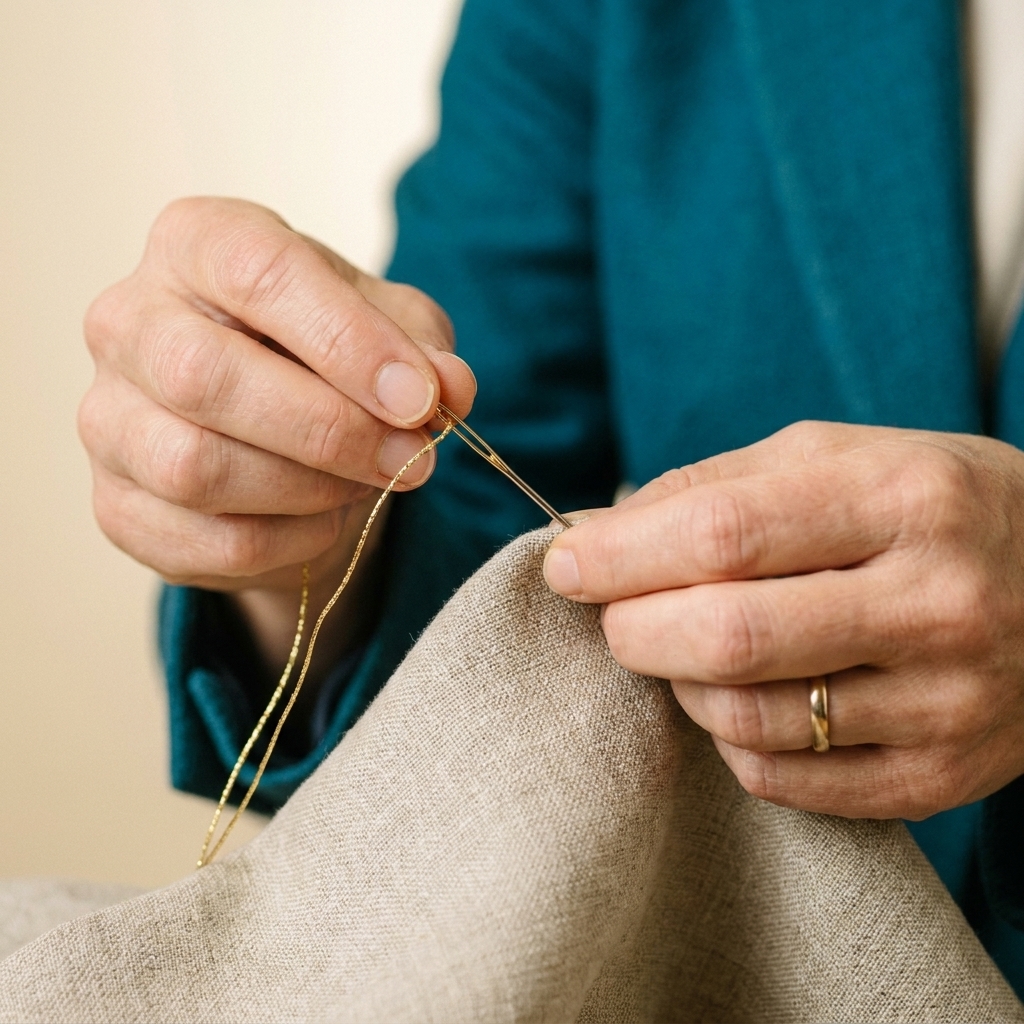
Needle shopping list
If you are building a starter stash, you can cover a lot of projects with just a few sizes.
For cross stitch
- Tapestry 24: the everyday choice for 14 count Aida
- Tapestry 26: lovely for 16 to 18 count Aida, and many stitchers’ go-to for 28 count over 2
- Tapestry 28: great for 32 count and up, or when you want a finer feel
For hand embroidery
- Crewel (embroidery) assorted 5 to 10: lets you experiment without overthinking
- Embroidery size 7 or 8: a beginner-friendly sweet spot for most cotton fabrics and 2 to 3 strands
And yes, I absolutely keep backups because needles love to wander off into couch cushions, especially when you own cute magnetic needle minders and still somehow misplace them.
Troubleshooting
If your thread keeps knotting
- Try a slightly larger eye.
- Use a shorter length of floss (I aim for about the length from fingertips to elbow).
- Let the needle and thread dangle now and then to unwind.
If you are splitting strands constantly
- Switch from sharp to tapestry for counted work.
- For embroidery, stab a little more deliberately and consider a slightly larger needle so the floss is not sawing through itself.
If holes look stretched or fabric looks distorted
- Your needle may be too large for the fabric count.
- On linen/evenweave, make sure you are going between threads rather than piercing them when doing counted work.
If the needle feels hard to pull through
- For embroidery, you might need a sharper needle or a larger needle for thicker thread.
- For cross stitch, you might be using too many strands for the fabric count, or the needle is too thick for the holes.
FAQ
Can I use an embroidery needle for cross stitch?
You can, but I do not recommend it for most cross stitch. A sharp point is more likely to split Aida threads and snag floss, which can make stitches look fuzzy. A tapestry needle is gentler and usually feels immediately easier.
Can I use a tapestry needle for hand embroidery?
Sometimes, yes, if you are stitching on an open weave where the needle can pass between threads and you do not need to pierce the fabric. For most surface embroidery on cotton or densely woven linen, a sharp embroidery needle will save your hands.
What size tapestry needle for 14 count Aida?
Size 24 tapestry is the classic choice for 14 count Aida.
What size tapestry needle for 16 or 18 count Aida?
Try size 26 tapestry. If you prefer a slightly sturdier feel on 16 count, you can also use a 24, but 26 often glides more smoothly with less hole stretching.
What size tapestry needle for 28 count evenweave?
If you stitch over 2, start with size 26 tapestry. If you want a finer needle, consider size 28 and see which one your hands prefer.
Why do my needles say “sharps”?
“Sharps” is another name for sharp-point hand sewing needles, including the ones used for embroidery. If you see “sharps” on a packet and you are doing surface embroidery, you are in the right aisle.
Final takeaway
If you only remember one thing, let it be this: cross stitch likes blunt tapestry needles, surface embroidery likes sharp embroidery needles. After that, it is just fine-tuning size so the needle glides easily and your thread stays happy.
And if you end up with a needle you do not love, toss it into your notions tin anyway. Future-you will absolutely find a weird little use for it, probably at 10 p.m. when the craft store is closed.