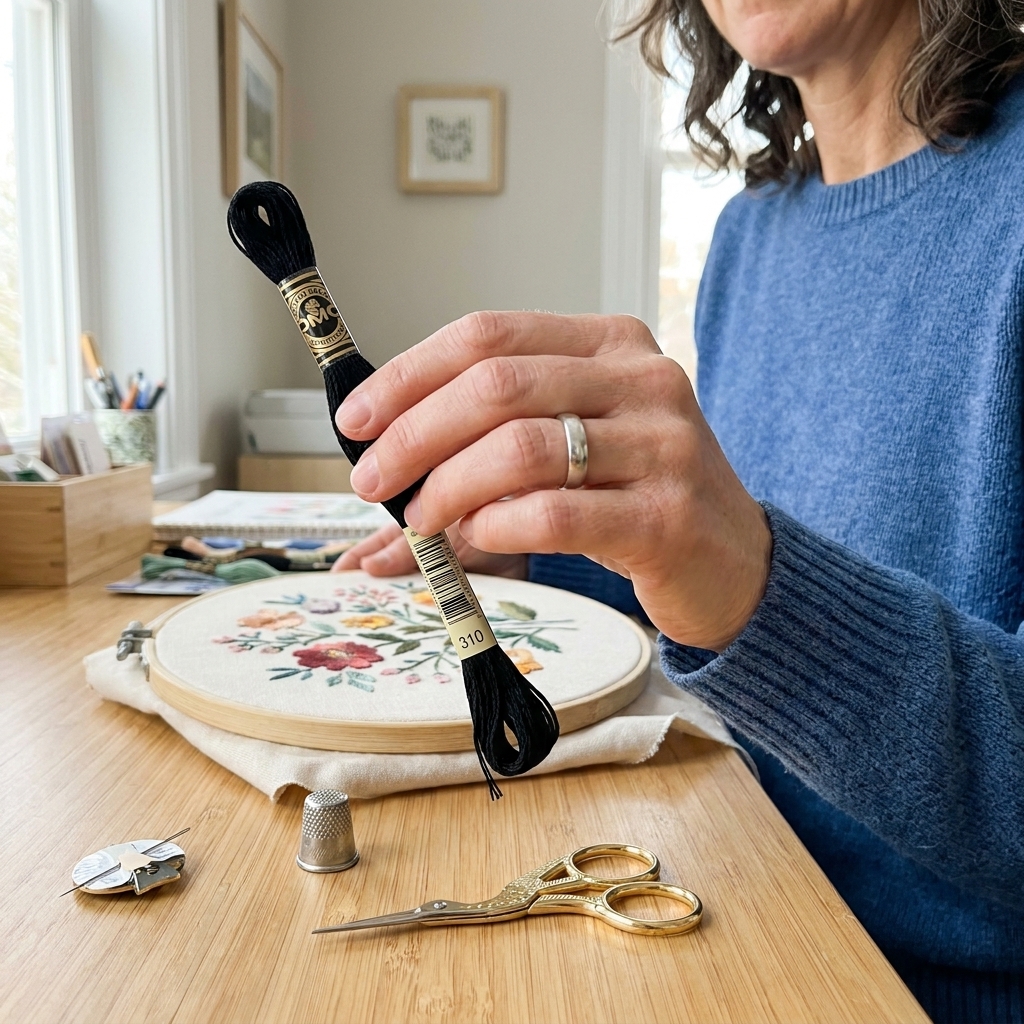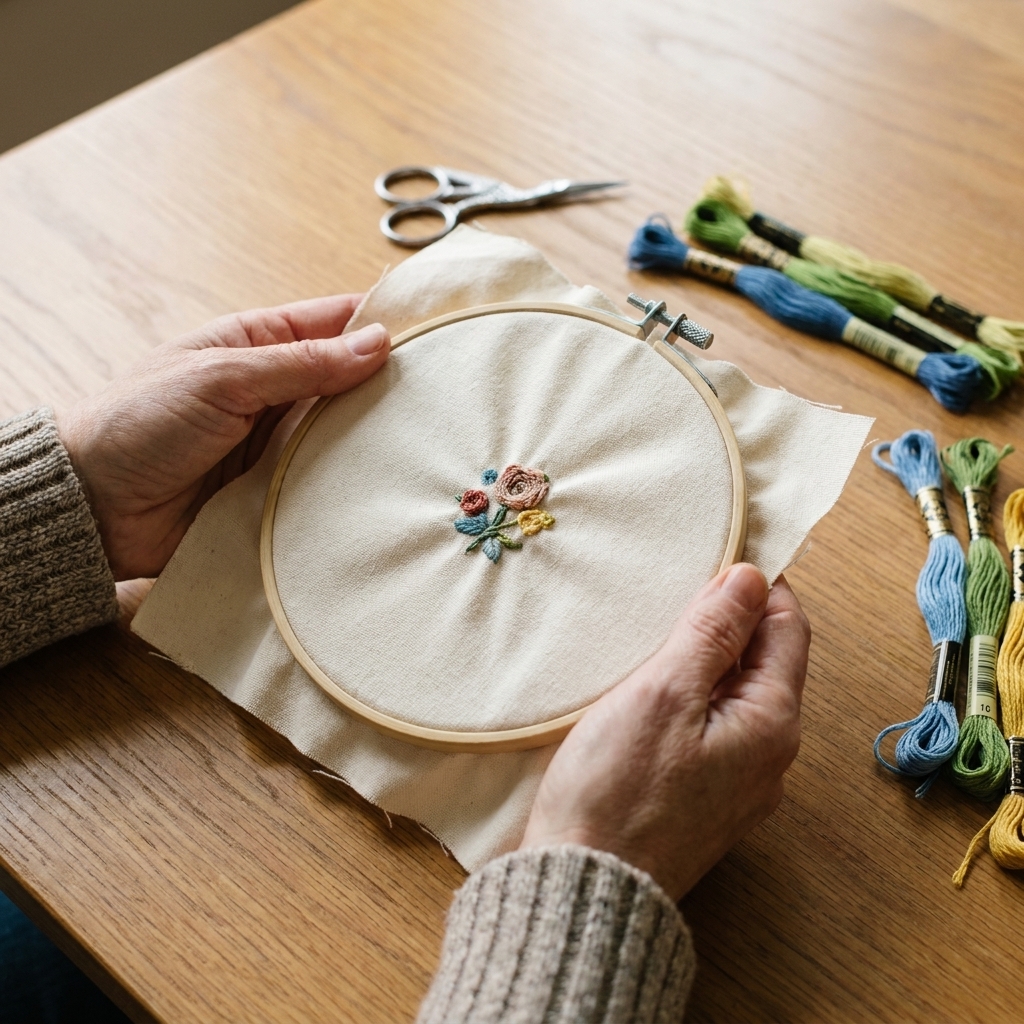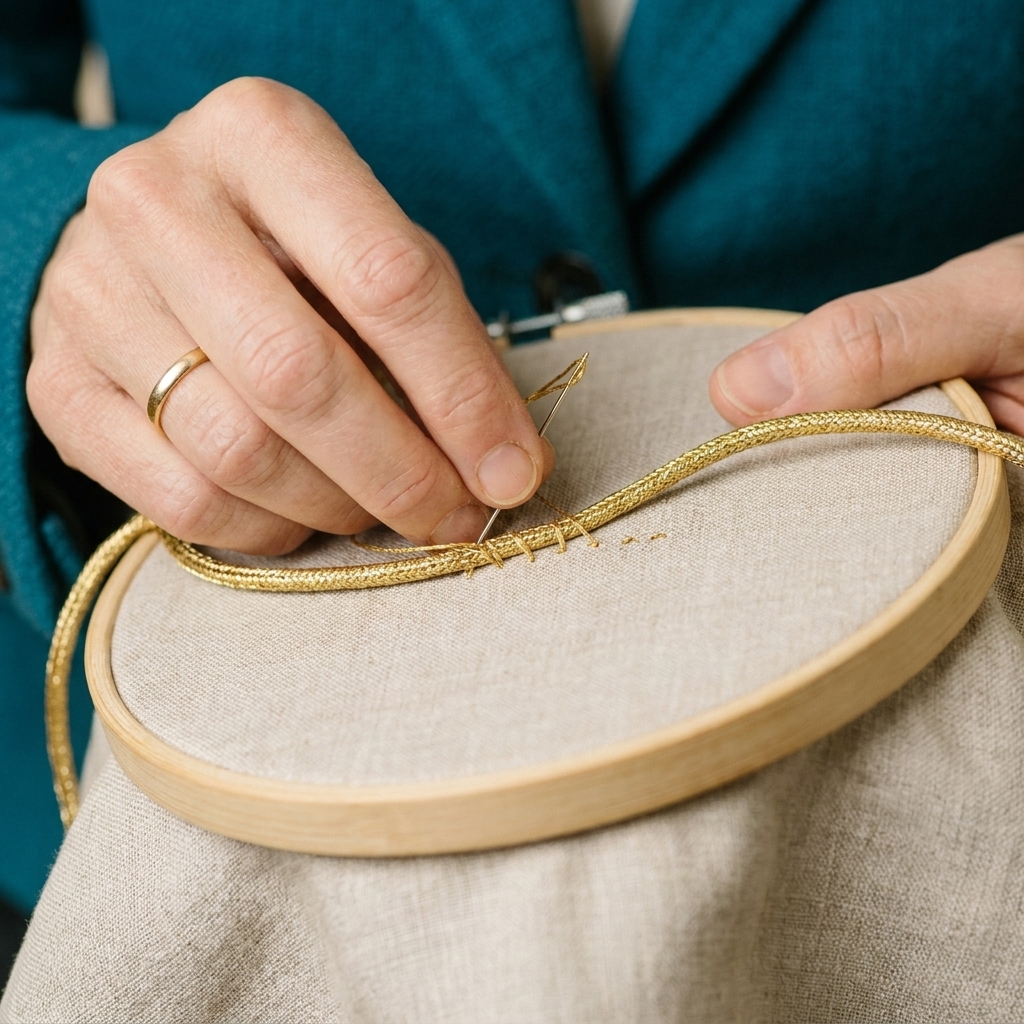
There is a very specific kind of annoyance in needlecraft: you are in a cozy groove, your floss is behaving, and then suddenly you are wrestling a snarl the size of a lentil that somehow contains all your patience. Thread conditioner is one of those tiny, not-very-glam tools that can quietly fix a lot of that friction, literally.
In embroidery and cross stitch, conditioners are used to help thread glide through fabric, resist fraying, and reduce twisting and knotting. Two of the most common options are natural beeswax and synthetic conditioners (like Thread Magic). There are other specialty products out there too (including different waxes and liquid or silicone-based options), but these two cover most stitchers’ day-to-day needs. They are not identical, and choosing the right one depends on what you are stitching, what thread you are using, and how fussy you want to be about finish.
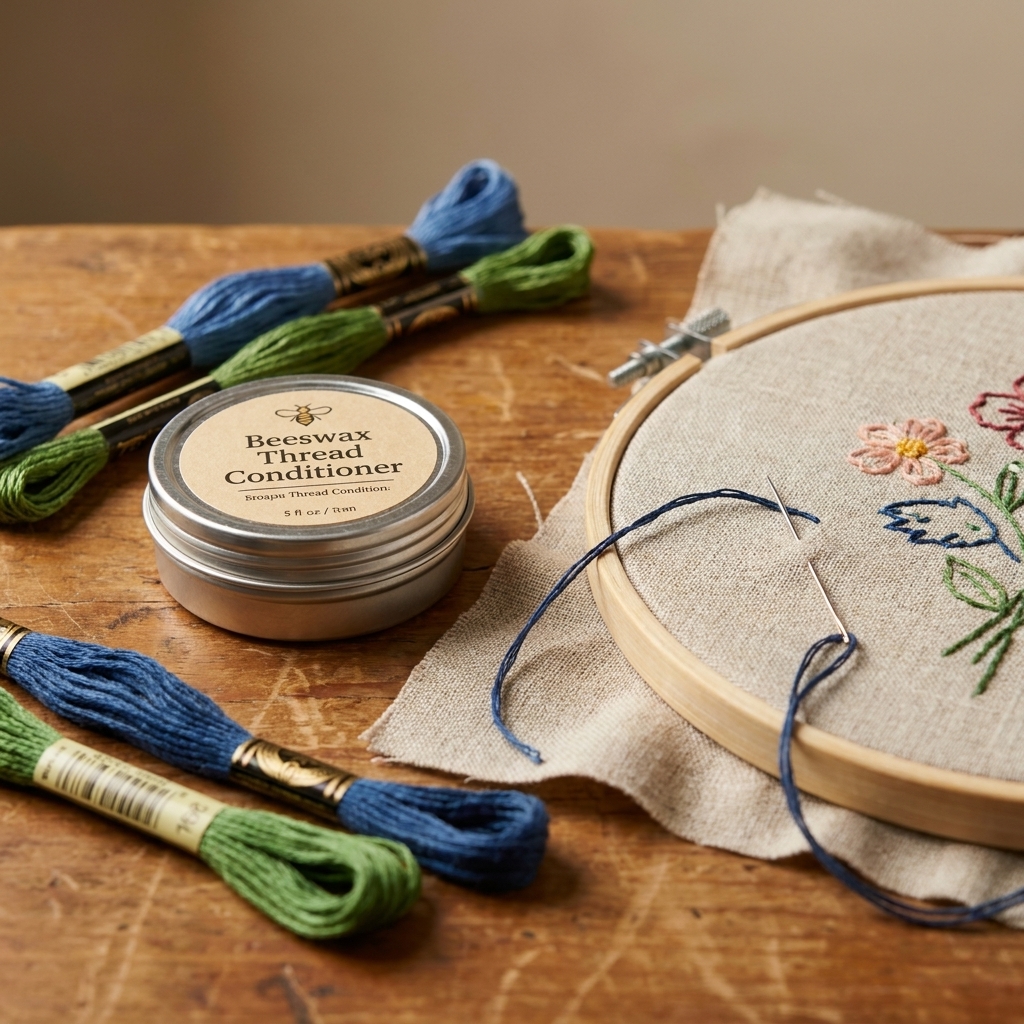
What it does
Thread conditioner is a light coating that changes how your thread behaves. Depending on the product and how much you use, it can:
- Reduce friction as the thread passes through fabric, especially tight weaves or dense stitches.
- Help prevent knots by making the strand a bit more cohesive and less prone to fuzzing and catching on itself.
- Add body and abrasion resistance to fragile threads (metallics, rayon, silk, vintage cottons) so they survive the needle eye and repeated passes more gracefully.
- Encourage smoother coverage because the thread lays flatter and twists less.
It is not magic, though. It will not fix a thread that is too long, a needle with a rough eye, or fabric that is fighting you because the needle is too large. Think of conditioner as the finishing touch that makes everything run more smoothly.
Beeswax vs. synthetic
Beeswax
Beeswax is the classic option. It adds a slightly firmer, grippier feel and can make thread feel tougher by giving it more body and protection against abrasion. That effect is most noticeable with hand sewing threads, and more subtle with stranded embroidery floss.
- Best for: cotton sewing thread, hand sewing, couching, hardanger, stitching on rougher fabrics, and situations where thread needs extra durability and control.
- Feel: a bit tacky at first, then smoother once worked in.
- Finish risk: can leave a waxy residue if overused, and it can slightly change the sheen or deepen the look of some threads. Results vary by thread color, brand, and how heavy-handed you get.
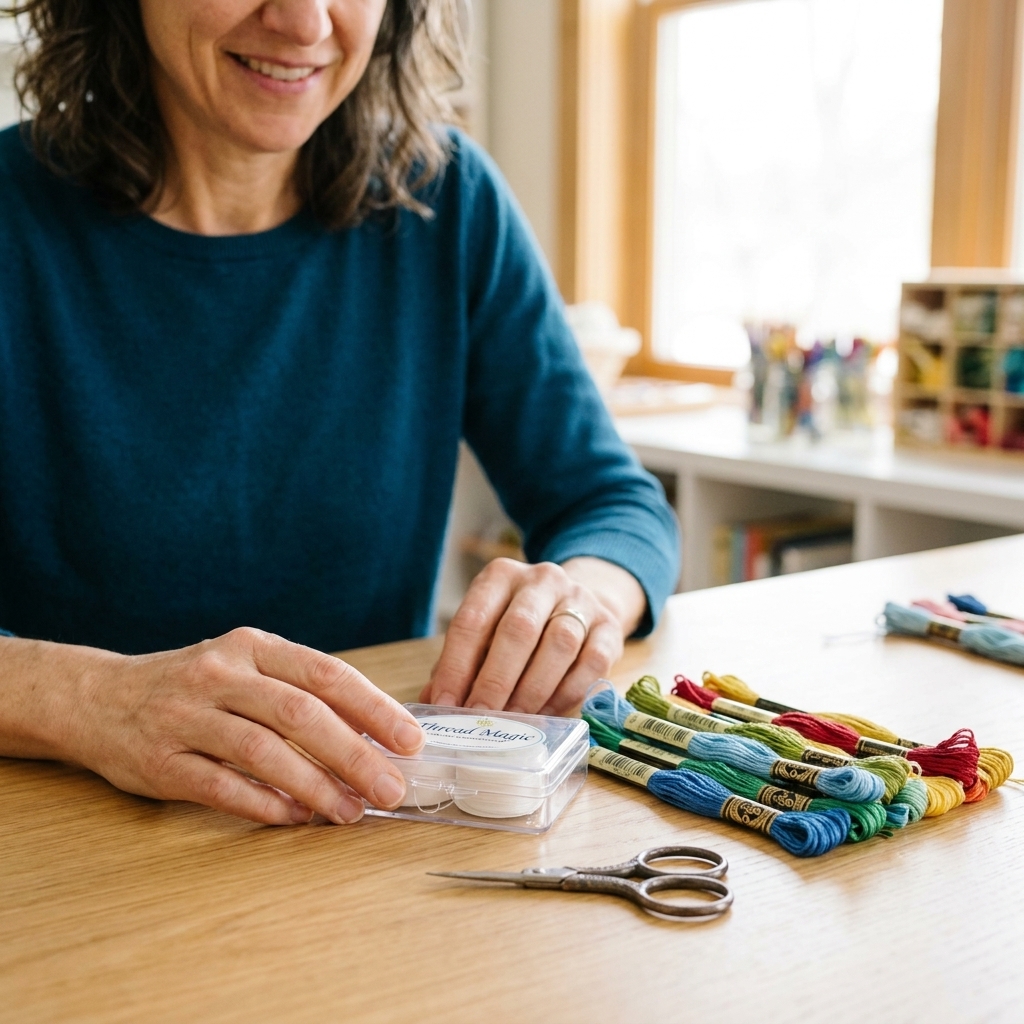
Synthetic conditioners (Thread Magic and similar)
Synthetic thread conditioners typically feel smoother and lighter, with less grab. They are designed to reduce static, tangles, and abrasion without leaving a heavy coating. Formulas vary by brand, so if you have sensitivities or conservation concerns, it is worth a quick glance at the product notes.
- Best for: embroidery floss, metallics, rayon, silk, and high-friction situations like stitching on dense linens or through lots of previous stitches.
- Feel: slicker and cleaner than wax.
- Finish risk: usually minimal, but too much can still make thread look a little flattened or slightly shinier in certain light. Again, it depends on the brand and the amount used.
If you are a beginner and you just want fewer knots with the least fuss, a synthetic conditioner is often the easiest starting point. Beeswax shines when you need extra control, especially for hand sewing.
When to use it
I do not condition every strand I stitch with. Most days, good habits do most of the work: shorter lengths, a needle that matches the thread, and letting the needle dangle to untwist. But conditioner is absolutely worth it in a few common scenarios.
1) Metallics that shred or snap
If metallic thread makes you want to dramatically leave the room, conditioner can help. Metallics are notorious for fraying at the eye and splitting as you pull through fabric. A light coat reduces abrasion and can keep the filament from peeling.
2) Fuzzy, older, or bargain floss
Some floss is just more prone to fuzzing. Vintage floss, heavily handled skeins, or less tightly spun threads often benefit from a conditioner that helps the fibers stay together.
3) Dense stitches and high friction
Satin stitch, long and short shading, turkey work, heavy backstitch outlines, or any area where you are passing through the same holes again and again creates friction. Conditioner makes those passes feel less like tug-of-war.
4) Stitching on coarse linen or evenweave
On some linens, the surface texture can grab your thread. Conditioner helps the thread glide, which can reduce fuzz and keep your stitches looking crisp.
5) Hand quilting or long hand-sewn seams
If you are doing any hand sewing alongside embroidery, beeswax can be wonderful for keeping a sewing thread strong and manageable.
When to skip it
Conditioner is helpful, but there are times I reach for a different fix first.
- If your thread keeps knotting because it is too long: try 14 to 18 inches for embroidery floss. Metallics often prefer even shorter lengths.
- If your thread is twisting up: let the needle dangle every few stitches so it can unwind naturally.
- If you are worried about finish on light fabric: avoid heavy beeswax use on whites and very pale linens, especially if the work will be stored for a long time. Overapplication can sometimes leave faint waxy marks, especially if pressed.
- If your project will be ironed or heat set often: beeswax can soften with heat and, if overheated or pressed hard, may transfer. Use a light touch, press from the back when appropriate, and consider a lighter synthetic conditioner if you are concerned.
- If you plan to wash the finished piece: many stitchers still use conditioner, but go lightly and test first. Heavy wax can trap lint and may be harder to rinse cleanly.
If you are stitching heirloom-style work and you want maximum predictability, test on a scrap first. It is boring advice, but it is also the advice that saves your sanity.
How to use beeswax
Beeswax is powerful stuff. The goal is a whisper-thin layer, not a candle-making session.
Step by step
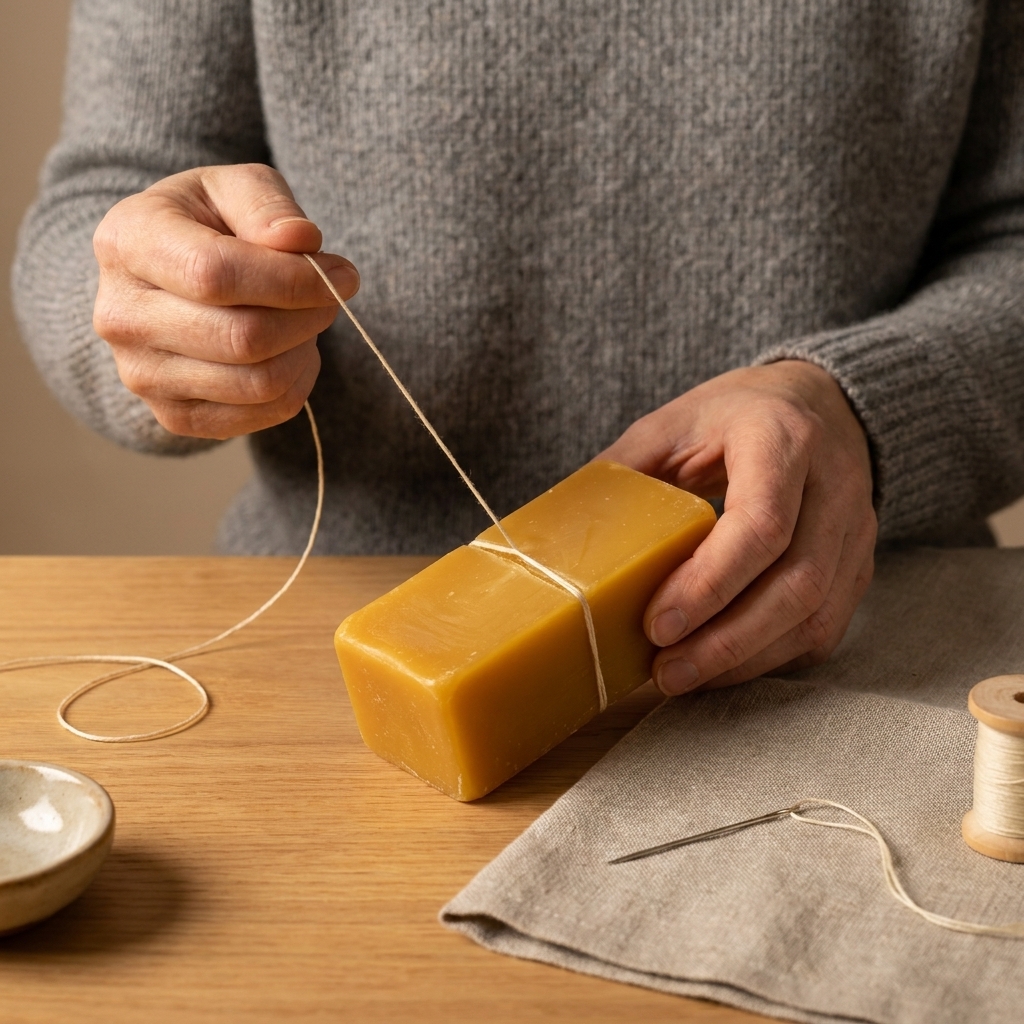
- Cut your thread length. Condition after you cut, not before, so the coating is only on what you stitch.
- Draw the thread across the wax once or twice. Use light pressure. If you can see clumps, that is too much.
- Warm it in. Pinch the thread between your fingers and run along the length to help the wax melt into the fibers. Some stitchers press the thread between folded scrap fabric to remove excess and smooth it out.
- Thread your needle and stitch. If the needle eye starts collecting wax, you used more than you need. Wipe the needle and try a lighter pass next time.
My practical rule: For embroidery floss, beeswax is usually a special-occasions product, not a daily driver. I use it most on sturdy sewing threads, couching, or when I need extra control.
Keep it clean: Store wax in a closed container and avoid setting it down on dusty surfaces. Wax loves to pick up lint, and lint loves to show up at the worst possible moment.
How to use synthetic conditioner
Synthetic conditioner tends to be more beginner-friendly because it is less likely to leave visible residue, and it plays nicely with embroidery floss.
Step by step
- Cut your floss. Separate strands first if you are using stranded cotton, then condition the combined working strands.
- Swipe the thread over the product. One or two passes is plenty.
- Smooth with your fingers. Run your fingers down the length to distribute the coating evenly.
- Stitch and adjust. If the thread starts to feel limp or looks flatter than you like, back off the amount. You want smoother handling, not a coated-rope feeling.
If you are using metallic braid, I often condition, stitch a short section, then condition again if I feel drag. Small, frequent help beats one heavy coating.
Does it change stitches?
It can, slightly. Conditioned thread usually pulls through more easily, which means you might accidentally tighten a touch more than usual at first. If your stitches look like they are sinking into the fabric, slow down and use a gentler hand.
In satin stitch and long and short stitch, conditioner can help threads lay flatter, which many stitchers love. In cross stitch, it can reduce fuzz and keep Xs crisp, but too much product can make stitches look a little compressed or reduce that soft, plump coverage you get from fresh cotton floss.
If you are chasing perfect, fluffy coverage in cross stitch, start with good strand control and shorter lengths. Add conditioner only if you are seeing fray, drag, or tangles you cannot tame.
Quick pick guide
| Your situation | Try this first | Why |
|---|---|---|
| Metallic thread shredding | Synthetic conditioner | Reduces abrasion at the needle eye and along the fabric |
| Rayon or silk snagging | Synthetic conditioner | Smooths the strand without heavy buildup |
| Hand sewing with cotton thread | Beeswax | Adds body and control, helps prevent snarls |
| Cross stitch on linen feels draggy | Synthetic conditioner | Helps floss glide through textured fabric |
| You want maximum grip and firmness | Beeswax | Wax gives the thread more body |
| You are nervous about residue | Synthetic conditioner | Generally lighter, less visible finish change |
Troubleshooting
My needle feels sticky
You used too much beeswax or did not warm it into the thread. Wipe the needle, then run the thread firmly between your fingers or through a piece of scrap cotton to remove excess.
My floss looks flattened
Too much synthetic conditioner can make strands sit very sleek. Use fewer passes, or condition only the last third of the thread length that gets the most wear (near the needle).
I still get knots
Conditioner helps, but the big knot triggers are still the usual suspects: thread too long, twisting, or stitching with the thread dragging across rough hands or a sticky project surface. Try shorter lengths and let the needle dangle to untwist every few stitches.
The thread keeps shredding at the eye
Check your needle first. If the eye has a burr or is too small, conditioner cannot fully solve it. Move up a needle size, or try a needle known for a smoother eye (especially helpful with metallics).
FAQ
Do I need thread conditioner for regular DMC floss?
Usually no. DMC stranded cotton is very well behaved. I reach for conditioner when I am dealing with metallics, a grabby fabric, very dense stitching, or floss that is older or fuzzier than usual.
Will conditioner make my finished embroidery dirty over time?
Used lightly, it is unlikely to cause problems for most pieces. Heavy beeswax use can attract lint or dust more easily, especially if the work is not framed or stored carefully. If you are stitching something meant to be washed and used (like a towel or clothing), test your thread and conditioner combo on a scrap and wash it the same way you plan to wash the final item.
Can conditioner spot light fabric?
It can if you overdo it, especially with beeswax, or if you press hard with a hot iron. Use the lightest possible application, keep your conditioner clean, and test on a scrap when the fabric is very pale or the project is meant to be stored for years.
Can I use beeswax on cross stitch?
You can, but go very lightly. Cross stitch often looks best with soft, full strands, and too much wax can make stitches look compact. For most cross stitch situations, a synthetic conditioner is the easier option.
Do I condition before or after I separate floss strands?
Separate first, then recombine your working strands and condition that bundle. Conditioning a full six-strand length can make it slightly harder to separate cleanly.
Is there a substitute if I do not have conditioner?
For a quick fix, shorten your thread length, switch to a fresh needle, and let your needle hang to untwist often. Those three habits solve a surprising amount of “my floss is fighting me” without adding any product.
The cozy takeaway
Thread conditioner is not a must-have, but it is a lovely little helper when your stitching session needs to feel smoother and less fussy. If you are battling tangles and fray, start with a light-touch synthetic conditioner. Keep beeswax in your toolkit for the moments you want extra control, and remember: the right amount is always less than you think.
And if you still end up with a tiny thread nest on the couch, welcome to the club. I will be right there with my lint roller.